



Choosing the right porcelain tile adhesive Pakistan is important for a strong tile installation. Porcelain tiles are hard and dense.
They also absorb very little water. So, they need an adhesive that is made for this type of tile.
The right adhesive can help keep tiles firm and secure for a long time.
The wrong product, poor surface preparation, or bad application can cause loose tiles, hollow spots, cracks, and bonding problems.
This guide explains what porcelain tile adhesive is, why it matters, what to check before buying, and how to use it.
It also explains how Power Grip can be considered for porcelain tile projects in Pakistan.
Quick Answer
The right porcelain tile adhesive depends on the tile, surface, size, and location.
Porcelain tiles have very low water absorption, so use an adhesive that is approved for porcelain tiles. Always check the latest product instructions before use.
What Is Porcelain Tile Adhesive?
Porcelain tile adhesive is a material used to fix porcelain tiles to walls and floors.
It is made for tile installation and can provide a strong bond when used on a suitable surface. Depending on the product, it may also offer good workability, open time, and slip control.
Not every tile adhesive is right for every porcelain tile.
A small wall tile may have different needs from a large floor tile.
The tile size, surface, location, and moisture level should all be checked before choosing an adhesive.
Why Does Porcelain Tile Need the Right Adhesive?
Porcelain tiles are dense and have low water absorption.
This makes them strong and useful for many areas. But it also means that the adhesive must be chosen with care.
If the wrong product is used, the bond may not be strong enough.
Poor surface preparation can also cause loose tiles, hollow areas, cracks, or other problems.
Large porcelain tiles need even more care.
Their size makes a flat surface and good adhesive coverage very important.
A good result depends on the whole system. The tile, surface, adhesive, and installation method should all be suitable for the project.
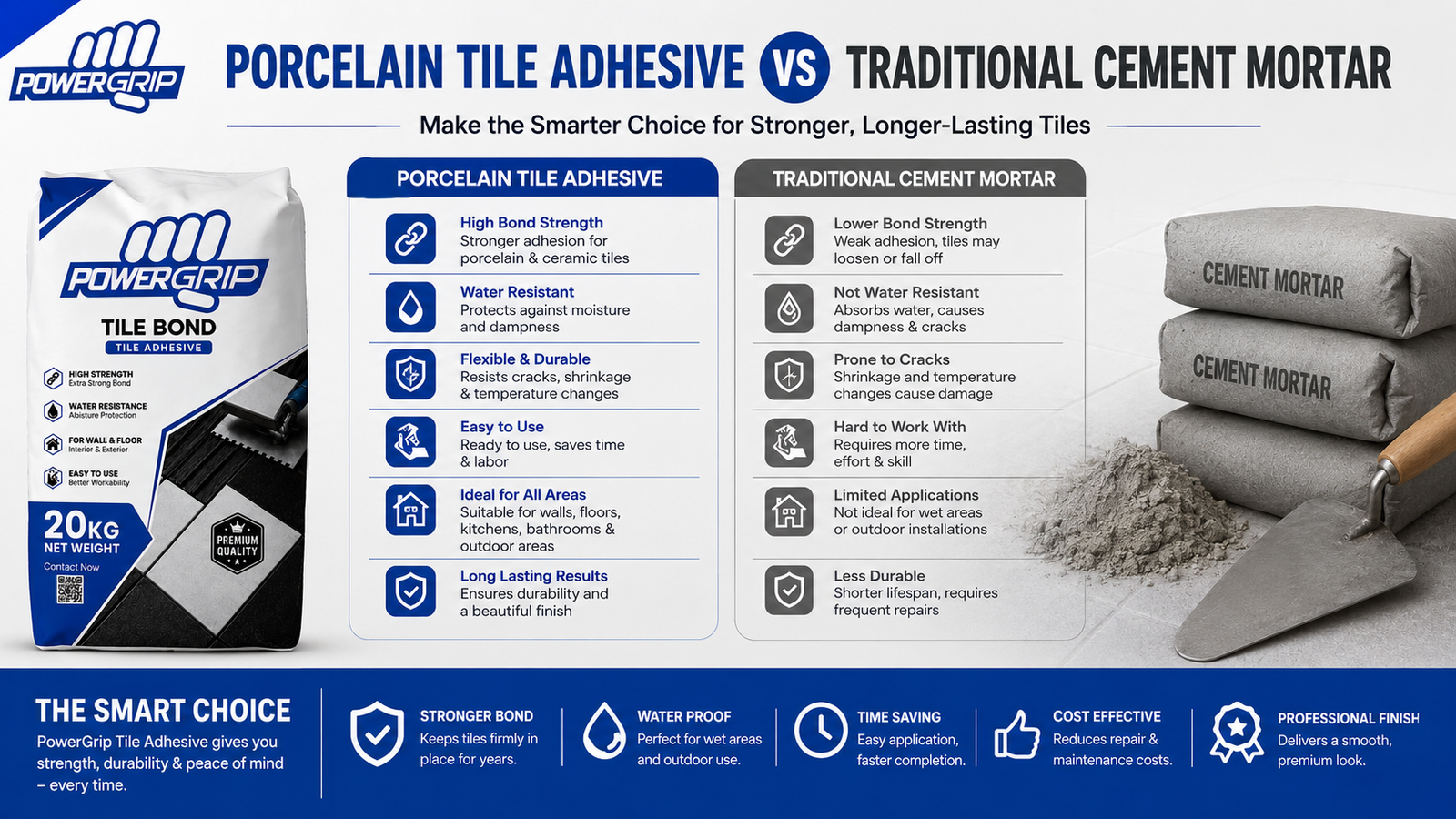
Porcelain Tile Adhesive vs Traditional Cement Mortar
Cement and sand mortar has been used for tile work for many years.
Tile adhesive is different because it is made mainly for fixing tiles.
Both methods have their own uses. The right choice depends on the tile, surface, and project needs.
Factor | Tile Adhesive | Traditional Cement Mortar |
Main use | Made for tile fixing | Used for bedding and fixing |
Porcelain tiles | Suitable when approved for porcelain | May not suit every porcelain project |
Application | Usually used with a notched trowel | Usually used as a mortar bed |
Thickness | Easier to control | Depends on the mortar bed |
Large tiles | Needs good surface preparation | May need a different method |
Selection | Based on tile, surface, and conditions | Based on mix and installation method |
The main point is simple: tile adhesive is not just stronger cement. It is made for tile fixing and should be chosen for the actual job.
What Should You Check Before Buying Porcelain Tile Adhesive in Pakistan?
There is no single adhesive that works best for every porcelain tile project.
Start by checking the tile and the place where it will be installed.
Tile Type and Size
First, check what type of tile you have and how large it is.
Porcelain, ceramic, mosaic, marble, and natural stone tiles can have different needs.
Large porcelain tiles need extra care. If the adhesive does not cover the tile well, empty spaces may form below it. This can lead to problems later.
Surface Condition
The surface must be clean, strong, and stable.
Dust, grease, loose plaster, paint, and weak material can reduce the bond. Adhesive should not be used to cover serious surface problems.
If the surface has large cracks, movement, moisture problems, or major uneven areas, fix these issues before installing the tiles.
Installation Location
Think about where the tiles will be used.
A bedroom floor has different needs from a bathroom, kitchen, balcony, shop, or outside wall.
Areas exposed to water, heat, weather, or heavy traffic may need a product made for those conditions.
Product Information
Do not choose an adhesive only because it says “extra strong” on the bag.
Read the product information and check its intended use.
Some tile adhesives follow standards such as EN 12004 or ISO 13007.
A rating such as C2TE gives information about product performance. Still, you should check the manufacturer’s instructions to make sure the product fits your project.
For example, STILE Superfix is listed as a C2TE cement-based adhesive for ceramic and porcelain tiles.
This shows why product details are more useful than marketing words alone.
Is Power Grip Suitable for Porcelain Tiles?
According to the current information published by Power Grip, its Tile Bond is made for ceramic, porcelain, mosaic, and natural stone tiles.
It is also presented for wall and floor use.
This makes Power Grip a product worth considering when comparing porcelain tile adhesive in Pakistan.
The final choice should still be based on your project.
Check the tile size, surface, location, and exposure before buying.
For large porcelain tiles, outdoor areas, or commercial work, check the latest product instructions before placing a large order.
For buyers in Karachi, Power Grip also provides product and dealer information through its published contact channels.
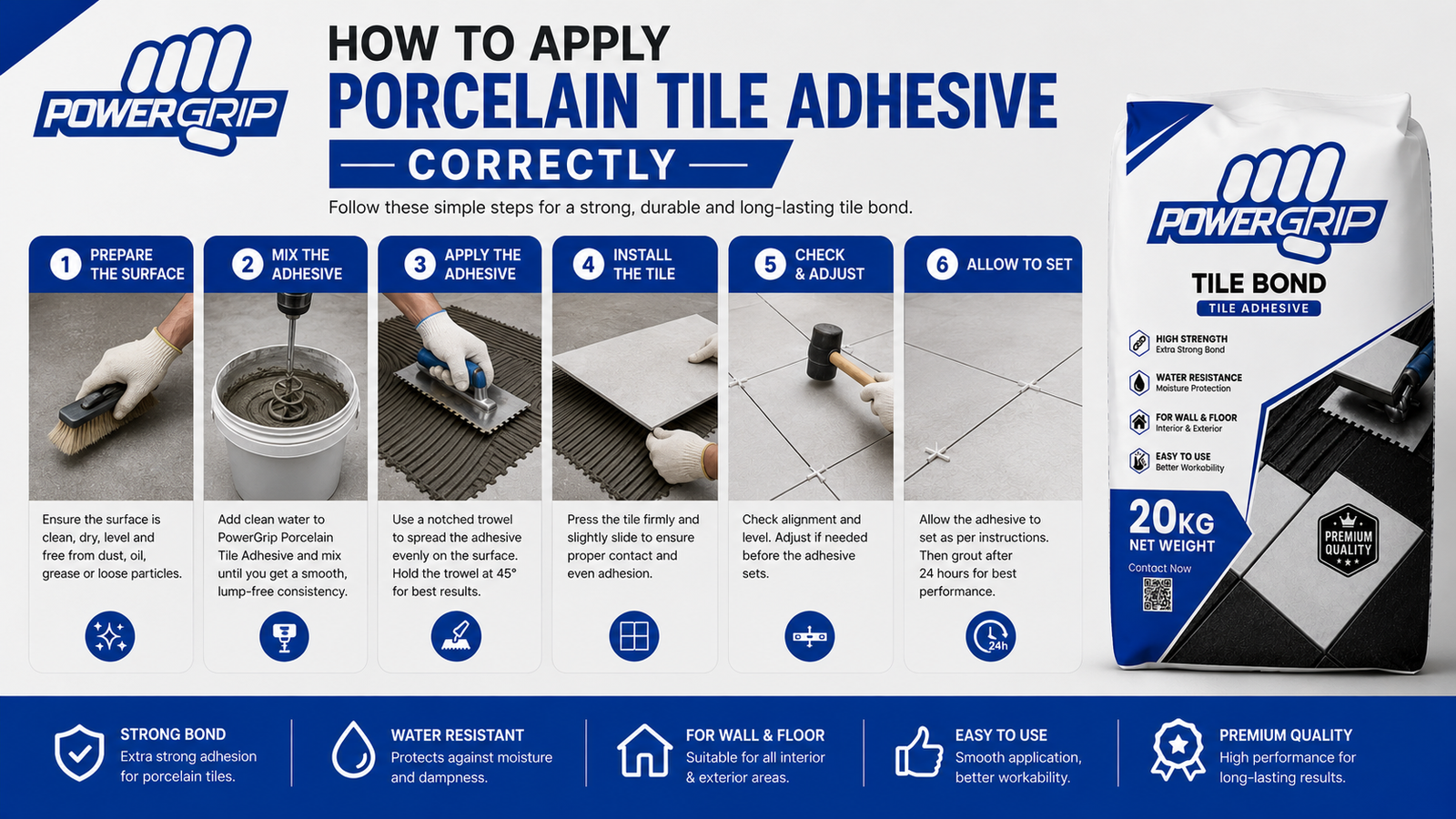
How to Apply Porcelain Tile Adhesive Correctly
Even the right adhesive may not work well if it is applied the wrong way.
Good surface preparation, correct mixing, and proper tile placement are all important.
Power Grip’s published application guide includes surface preparation, mixing, adhesive application, tile placement, and setting time.
Prepare the Surface
Start by cleaning the surface.
Remove dust, grease, loose particles, and anything else that may affect the bond.
The surface should be strong and ready for tile installation.
Check for cracks, movement, moisture, or large uneven areas before starting.
Mix the Adhesive Correctly
Mix the adhesive according to the manufacturer’s instructions.
Use the recommended amount of water. Do not add extra water just because it makes the mixture easier to spread.
Too much water can affect the way the adhesive works and may reduce its final performance.
Apply With the Right Trowel
Spread the adhesive over the prepared surface with a suitable notched trowel.
The goal is to get good contact between the tile and adhesive.
The right trowel size depends on the tile size, surface, adhesive, and installation method.
Large porcelain tiles may need extra care to get proper adhesive coverage.
Place the Tile
Place the tile while the adhesive is still within its working time.
Press and adjust the tile as advised by the product instructions.
For large tiles, back buttering may be needed in some installation systems.
Follow the adhesive and tile manufacturer’s instructions.
Allow Enough Setting Time
Do not walk on the tiles or start grouting too soon.
Power Grip currently publishes about 24 hours for setting and 48 hours for full strength.
Actual time can change because of temperature, moisture, surface conditions, and other site factors.
Always follow the latest instructions on the product packaging.
Common Mistakes When Installing Porcelain Tiles
Many tile problems come from poor preparation or incorrect application.
Avoiding these mistakes can help improve the final result.
- Choosing an adhesive only because it is cheap or says “strong.”
- Using a product without checking if it is suitable for porcelain.
- Applying adhesive over dust, grease, or a weak surface.
- Adding too much water while mixing.
- Ignoring an uneven or unstable surface.
- Using the wrong trowel size.
- Leaving poor adhesive coverage under large tiles.
- Waiting too long after spreading the adhesive.
- Rushing the setting or curing time.
- Using bags that have been damaged by moisture.
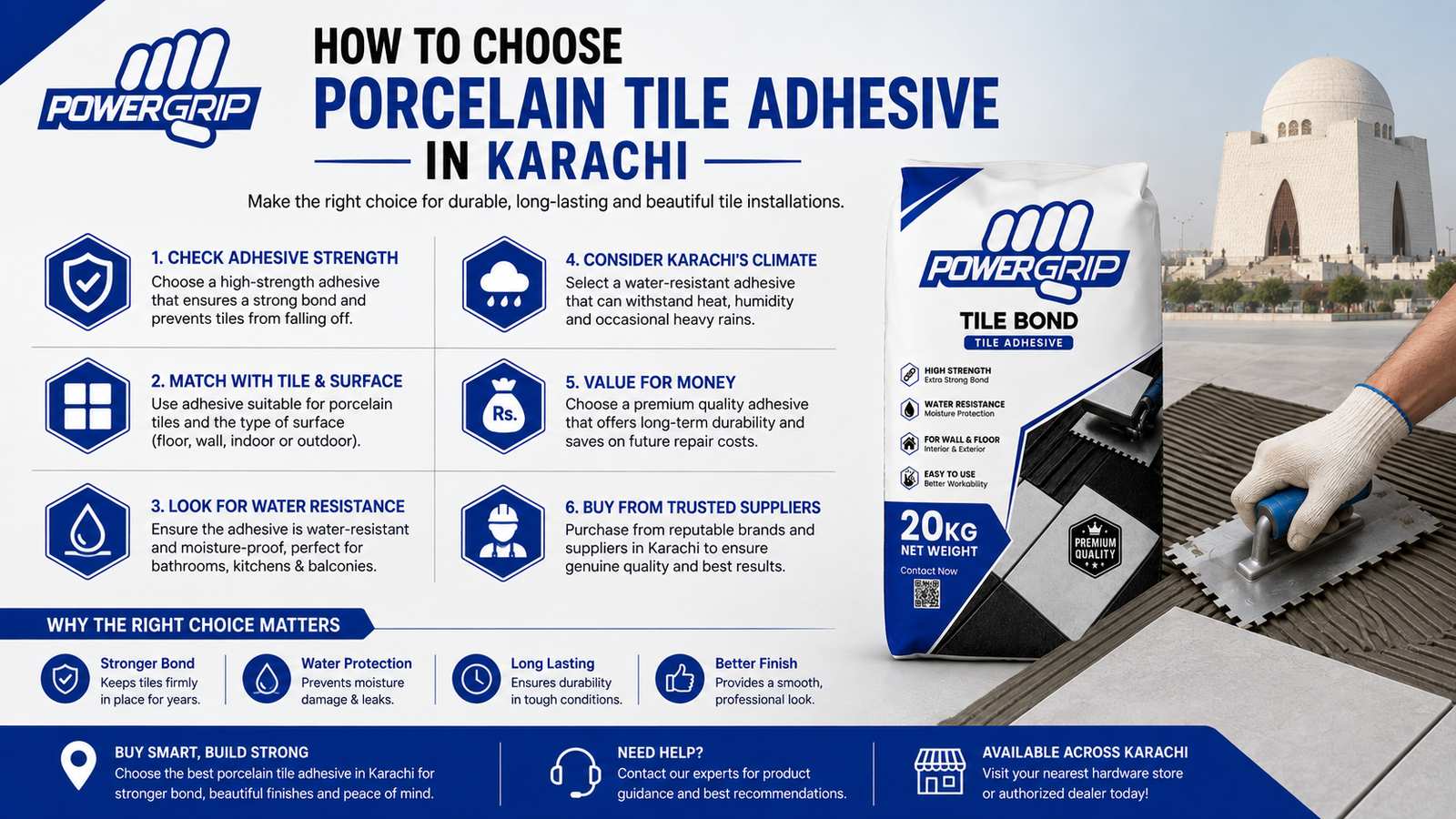
How to Choose Porcelain Tile Adhesive in Karachi
When buying porcelain tile adhesive in Karachi, start with the project, not just the brand.
First, decide where the tiles will go. Check if they are for a wall or floor.
Also check if the area is indoors or outdoors.
Think about water, heat, weather, and foot traffic. These conditions can affect the type of adhesive you need.
For a large project, ask the supplier or manufacturer for the latest product information.
Make sure the adhesive is suitable for your tile and surface before placing a large order.
You should also check the product’s coverage. The amount needed can change with tile size, surface condition, adhesive thickness, and trowel size.
How Much Porcelain Tile Adhesive Do You Need?
The amount of adhesive needed depends on the project.
Tile size, surface flatness, trowel size, adhesive thickness, and installation method can all change the amount used.
Large porcelain tiles may need more careful coverage than smaller tiles.
Start by measuring the area you need to cover.
Then check the coverage information for the exact product you plan to use.
Do not depend only on a general statement such as “one bag covers X square meters.” Actual coverage can be different on site.
Where Can Porcelain Tile Adhesive Be Used?
A suitable porcelain tile adhesive can be used in many areas when the product is approved for that use.
These areas may include home floors, interior walls, kitchens, bathrooms, shops, offices, and some outdoor surfaces.
Power Grip currently states that its Tile Bond is suitable for porcelain, ceramic, mosaic, and natural stone tiles.
It is also presented for walls and floors in residential and commercial applications.
Wet areas, balconies, terraces, and outdoor surfaces should be checked carefully. These areas may have extra requirements.
Remember that tile adhesive does not replace waterproofing when a waterproofing system is required.
Practical Buying Checklist
Before buying porcelain tile adhesive in Pakistan, check the main details of your project.
- Tile: Check the tile type, size, weight, and use.
- Surface: Check if the surface is concrete, cement plaster, screed, or another approved material.
- Location: Check if the tile will be used indoors, outdoors, on a wall, or on a floor.
- Exposure: Consider water, heat, weather, movement, and foot traffic.
- Product: Make sure the adhesive is suitable for porcelain tiles.
- Technical details: Check coverage, working time, classification, and other product information.
- Packaging: Make sure the bag is sealed, dry, and stored correctly.
- Quantity: Estimate the amount needed based on the product’s actual coverage.
Why Does Correct Adhesive Selection Matter for Long-Term Tile Performance?
A good tile installation needs more than a good adhesive.
The tile, surface, adhesive, grout, joints, and installation method all play a part.
A high-priced adhesive does not always mean a better result.
Even a good product can fail if the surface is weak or the adhesive is mixed and applied incorrectly.
For porcelain tiles, it is important to choose an adhesive that is approved for this type of tile.
Good surface preparation, correct mixing, proper coverage, careful tile placement, and enough setting time can all help create a stronger installation.
Frequently Asked Questions
What is the best adhesive for porcelain tiles in Pakistan?
The best adhesive depends on the tile, surface, size, location, and conditions. Choose a product that clearly says it is suitable for porcelain tiles and matches your project.
Is Power Grip suitable for porcelain tiles?
Yes. Power Grip’s current product information states that its Tile Bond is suitable for porcelain tiles.
It is also listed for ceramic, mosaic, and natural stone tiles and for wall and floor use. Check the latest product instructions before use.
Can porcelain tiles be installed with cement?
Cement-based mortar can be used in some tile systems. However, it should not be assumed to work for every porcelain tile project.
A tile adhesive approved for porcelain may be a better choice for many modern installations.
How much tile adhesive is required for porcelain tiles?
The amount depends on the tile size, surface, trowel size, adhesive thickness, and installation method. Check the coverage given for the product you are using.
Can porcelain tile adhesive be used on walls?
Yes, some tile adhesives are made for both walls and floors.
Power Grip currently states that its Tile Bond can be used for porcelain and other listed tile types on walls and floors. Always check the product instructions before use.
Is tile adhesive suitable for bathroom porcelain tiles?
Yes, a suitable adhesive can be used for bathroom porcelain tiles when it is approved for the tile, surface, and moisture conditions.
Waterproofing should also be handled separately when required.
How long should porcelain tile adhesive dry before grouting?
The time can vary from one product to another. Temperature, moisture, surface type, and site conditions can also affect it. Follow the current manufacturer’s instructions for the adhesive you are using.
Where can I buy porcelain tile adhesive in Karachi?
You can compare products from construction material suppliers and manufacturers in Karachi.
Power Grip also provides product and dealer information through its published contact channels. This can help you check current availability.
Conclusion
Choosing the right porcelain tile adhesive Pakistan is an important step in a good tile installation.
Porcelain tiles have very low water absorption, so the adhesive should be made for porcelain and suitable for the surface.
Before buying, check the tile size, surface condition, location, moisture, traffic, and product instructions.
Power Grip Tile Bond is one option to consider because its current product information lists porcelain tiles among its suitable uses.
However, always check the latest product information before buying.
Make sure the product fits your exact project.
Good installation is just as important as choosing the right adhesive.
Clean the surface, mix the product correctly, use the right application method, and give the tiles enough time to set.
For a porcelain tile project in Karachi or elsewhere in Pakistan, choose the adhesive based on your actual project needs instead of price or marketing claims alone.