
A beautiful tile installation can completely transform a home, office, or commercial space.
However, even the most expensive tiles can fail if the wrong bonding material is used.
Loose tiles, cracks, hollow sounds, and water damage often happen because people choose an unsuitable adhesive or apply it incorrectly.
Tile glue has become an essential solution for modern construction because it provides a stronger, cleaner, and more reliable bond compared with traditional methods.
Whether you are installing ceramic tiles in a kitchen, porcelain tiles in a bathroom, or floor tiles in a commercial building, selecting the correct adhesive plays a major role in durability.
Many homeowners and contractors search for the best tile glue because they want a long-lasting finish without frequent repairs.
Factors such as tile type, surface condition, moisture exposure, and application method all influence the final result.
This detailed guide explains everything you need to know about choosing, applying, and maintaining tile adhesives so you can make an informed decision for your next project.
What Is Tile Glue and Why Is It Important?
Tile glue is a specially formulated bonding material used to attach tiles securely to surfaces such as concrete, plaster, cement boards, and walls.
It is commonly known as tile adhesive and is designed to create a strong connection between the tile and the installation surface.
Unlike ordinary cement mixtures, modern adhesives contain advanced compounds that improve flexibility, grip, and resistance against environmental stress.
A high-quality adhesive helps prevent:
- Tile movement
- Cracking
- Water penetration
- Uneven surfaces
- Premature tile failure
For example, a bathroom wall exposed to constant moisture requires a moisture-resistant adhesive, while a living room floor may need a stronger product designed for heavy foot traffic.
Professional installers often choose products based on international standards developed by organizations such as the International Organization for Standardization (ISO) and industry construction guidelines.
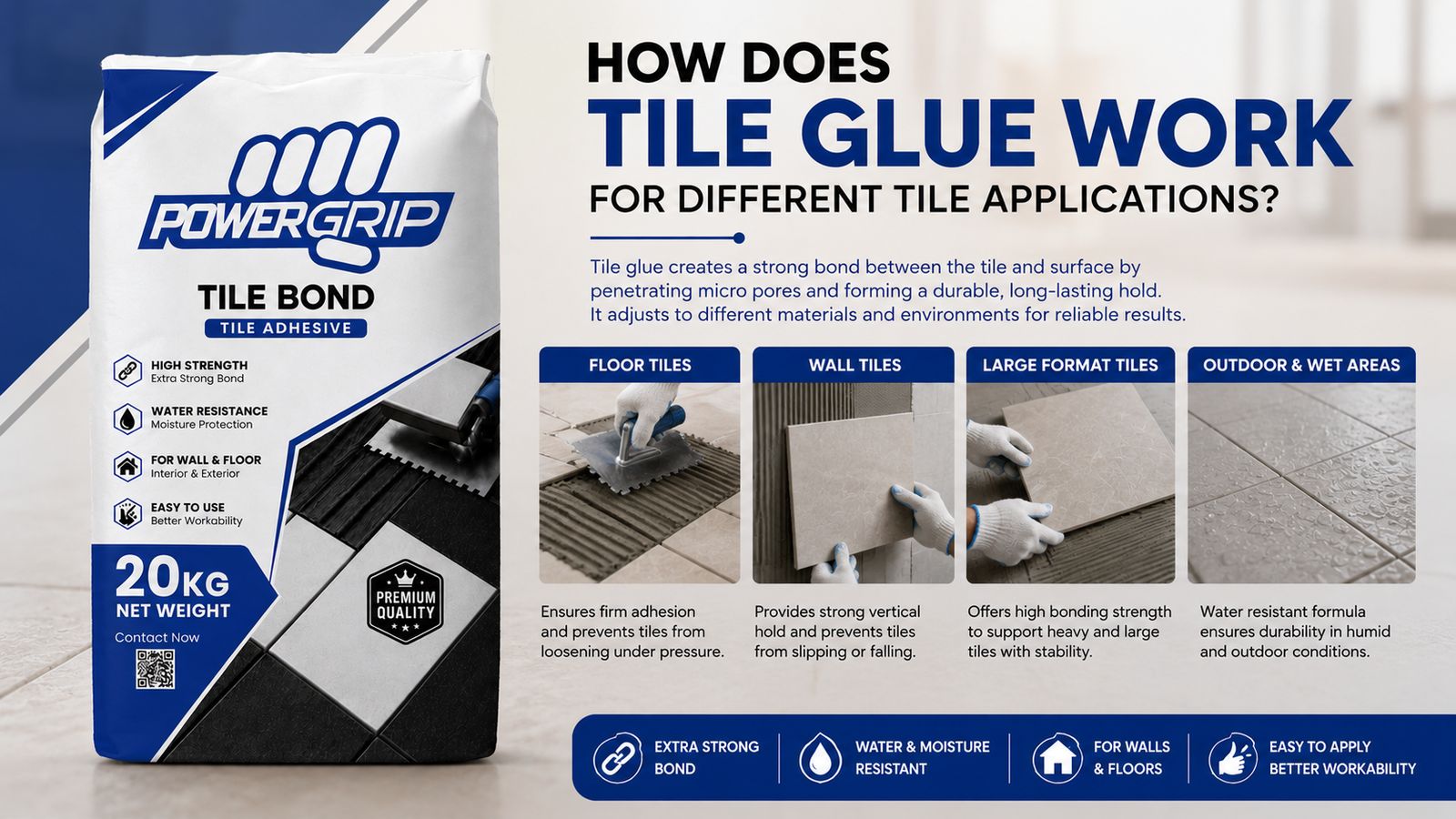
How Does Tile Glue Work for Different Tile Applications?
The working principle of tile adhesive is simple: it creates a chemical and mechanical bond between the tile and the surface.
When mixed and applied correctly, the adhesive spreads evenly behind the tile.
As it cures, it forms a strong layer that keeps the tile fixed in place.
Different applications require different adhesive properties.
Tile Glue for Floor Tiles
Floor surfaces experience constant pressure from walking, furniture movement, and temperature changes.
Therefore, floor installations require a product with excellent compression strength and flexibility.
A suitable floor adhesive should provide:
- Strong tile grip
- Resistance against movement
- Long-term durability
- Better load handling
For example, porcelain floor tiles are heavier than regular ceramic tiles, so they usually require a stronger bonding solution.
Tile Glue for Wall Tiles
Wall tiles require an adhesive that prevents slipping before the material fully sets.
A good wall tile adhesive provides:
- Strong initial grab
- Vertical holding power
- Smooth application
- Moisture resistance
Kitchen backsplashes and bathroom walls often benefit from adhesives designed specifically for wet areas.
What Are the Different Types of Tile Glue Available?
Choosing the correct product depends on your project requirements.
The market offers several types of adhesives with different features.
Type | Best Use | Main Benefit |
Cement Based Tile Adhesive | Floors and walls | Reliable and cost-effective |
Ready Mix Adhesive | Small indoor projects | Easy application |
Flexible Tile Adhesive | Areas with movement | Prevents cracking |
Epoxy Adhesive | Commercial and wet areas | Extremely strong and chemical resistant |
Cement Based Tile Adhesive
This is one of the most commonly used options in construction.
It contains cement, sand, and special additives that improve bonding strength.
It works well for:
- Ceramic tiles
- Porcelain tiles
- Indoor flooring
- Exterior applications (depending on formulation)
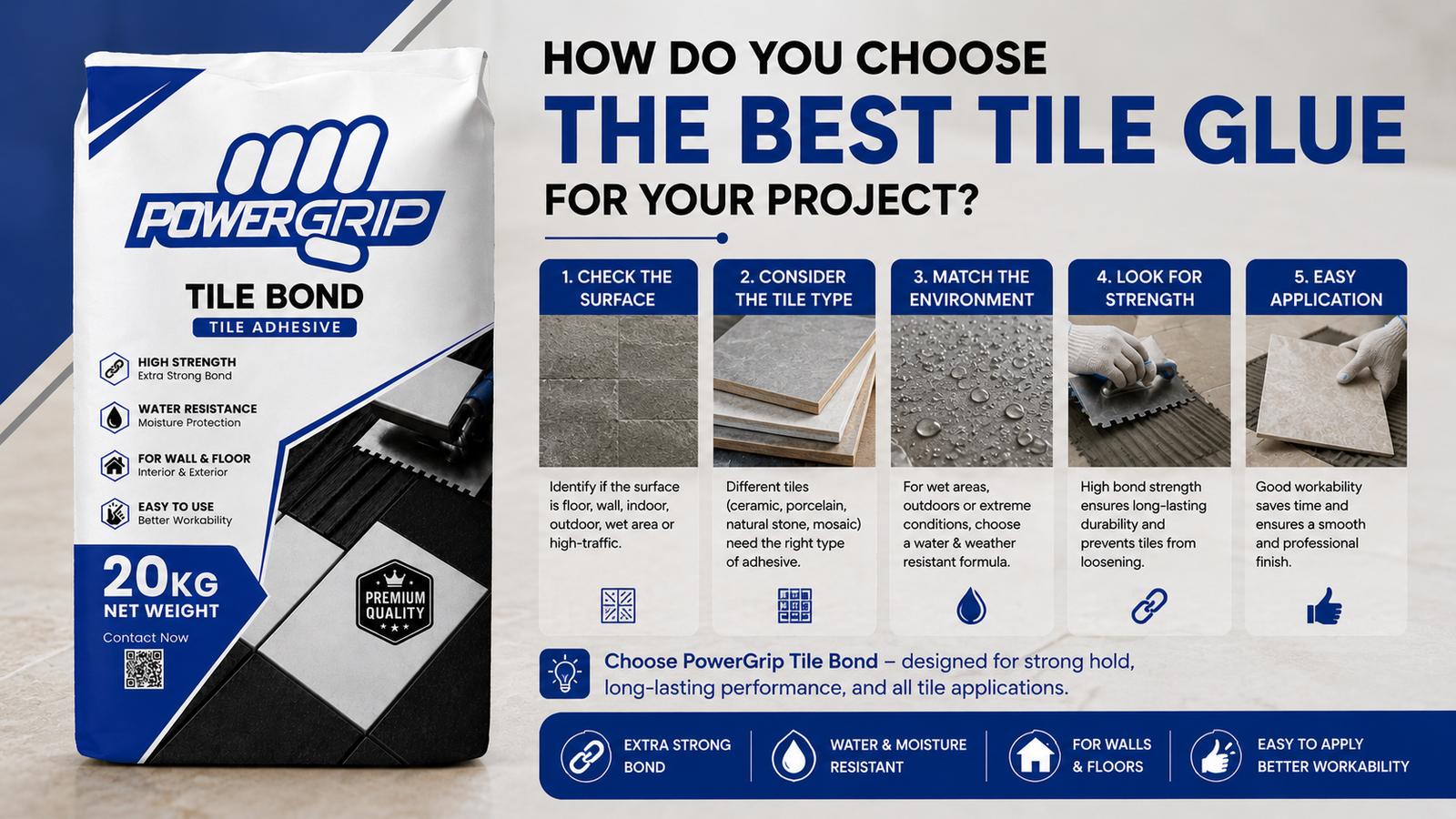
How Do You Choose the Best Tile Glue for Your Project?
Selecting the best tile glue requires more than choosing the cheapest option.
The correct product depends on several factors.
Consider these points:
1. Tile Material
Different tiles have different absorption rates.
Ceramic tiles usually work well with standard adhesives, while porcelain tiles need stronger bonding because they absorb less moisture.
2. Location
A bathroom, swimming pool area, or outdoor surface requires a water-resistant adhesive.
3. Surface Condition
The base surface should be:
- Clean
- Dry
- Level
- Free from dust and oil
Poor surface preparation can reduce bonding strength.
4. Tile Size
Large-format tiles require adhesives that provide better coverage and support.
What Factors Affect Tile Glue Price?
Many customers compare tile glue prices before purchasing, but cost should not be the only deciding factor.
Several elements influence pricing:
- Brand quality
- Adhesive strength
- Packaging size
- Special features
- Indoor or outdoor performance
- Waterproof properties
A low-cost product may save money initially but can create higher repair expenses later if tiles start loosening.
For example, using a basic adhesive in a high-moisture bathroom may result in replacement costs that exceed the original savings.
A practical approach is to choose a product that matches your installation needs rather than simply selecting the cheapest option.
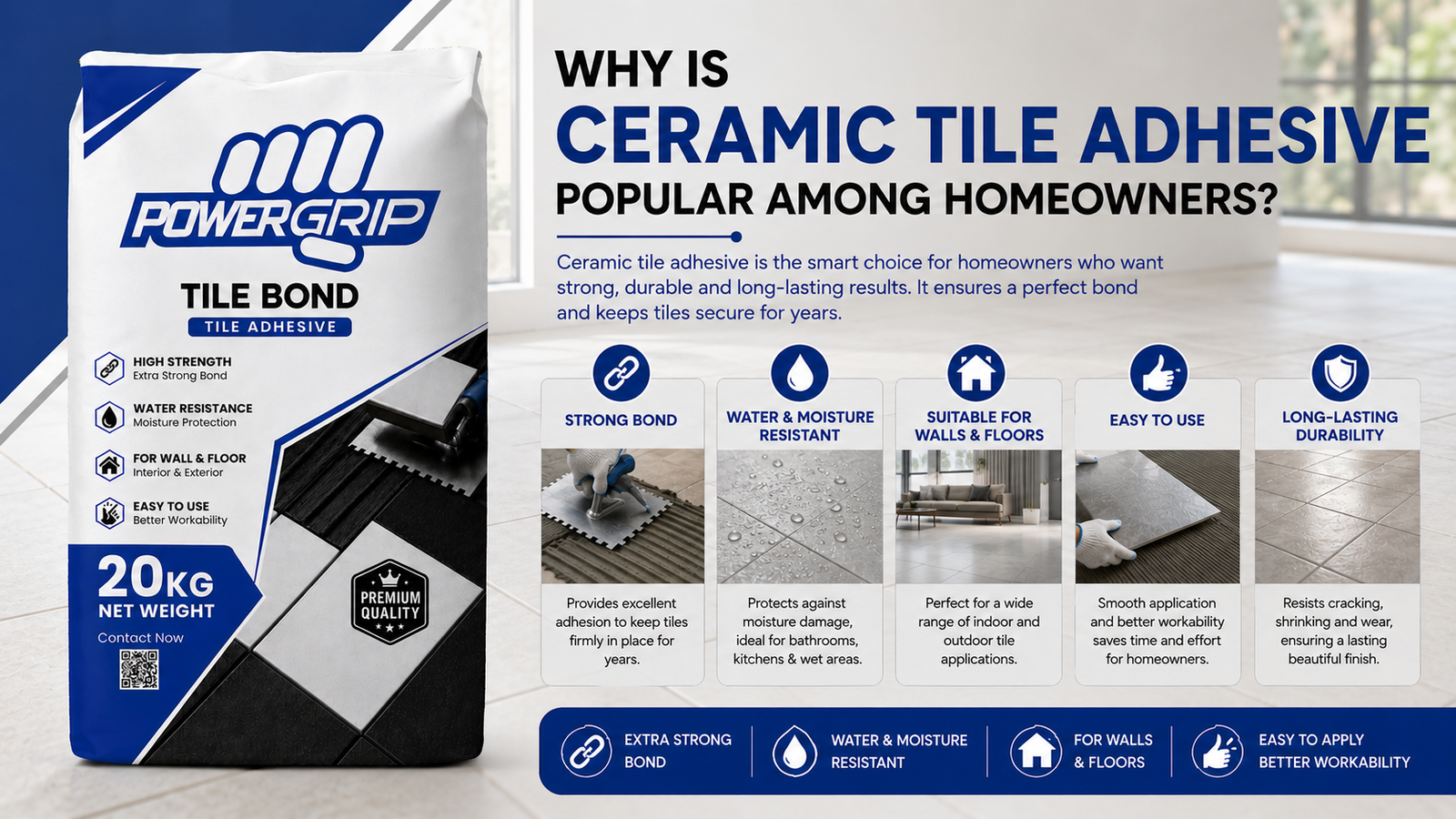
Why Is Ceramic Tile Adhesive Popular Among Homeowners?
Ceramic tile adhesive remains a popular choice because ceramic tiles are widely used in residential construction.
Benefits include:
- Easy application
- Strong bonding
- Affordable installation
- Compatibility with many surfaces
It is commonly used for:
- Kitchen walls
- Bathroom areas
- Bedroom floors
- Decorative walls
However, users should always check whether the adhesive is suitable for their specific tile type.
What Makes Porcelain Tile Glue Different From Regular Adhesive?
Porcelain tiles are dense, heavy, and less porous than ceramic tiles.
Because of this, they require stronger bonding materials.
Porcelain tile glue is usually designed with improved adhesion properties to create a reliable connection.
It helps with:
- Heavy tiles
- Low absorption surfaces
- High-traffic areas
- Long-term stability
Using ordinary adhesive on porcelain tiles may lead to poor bonding and future problems.
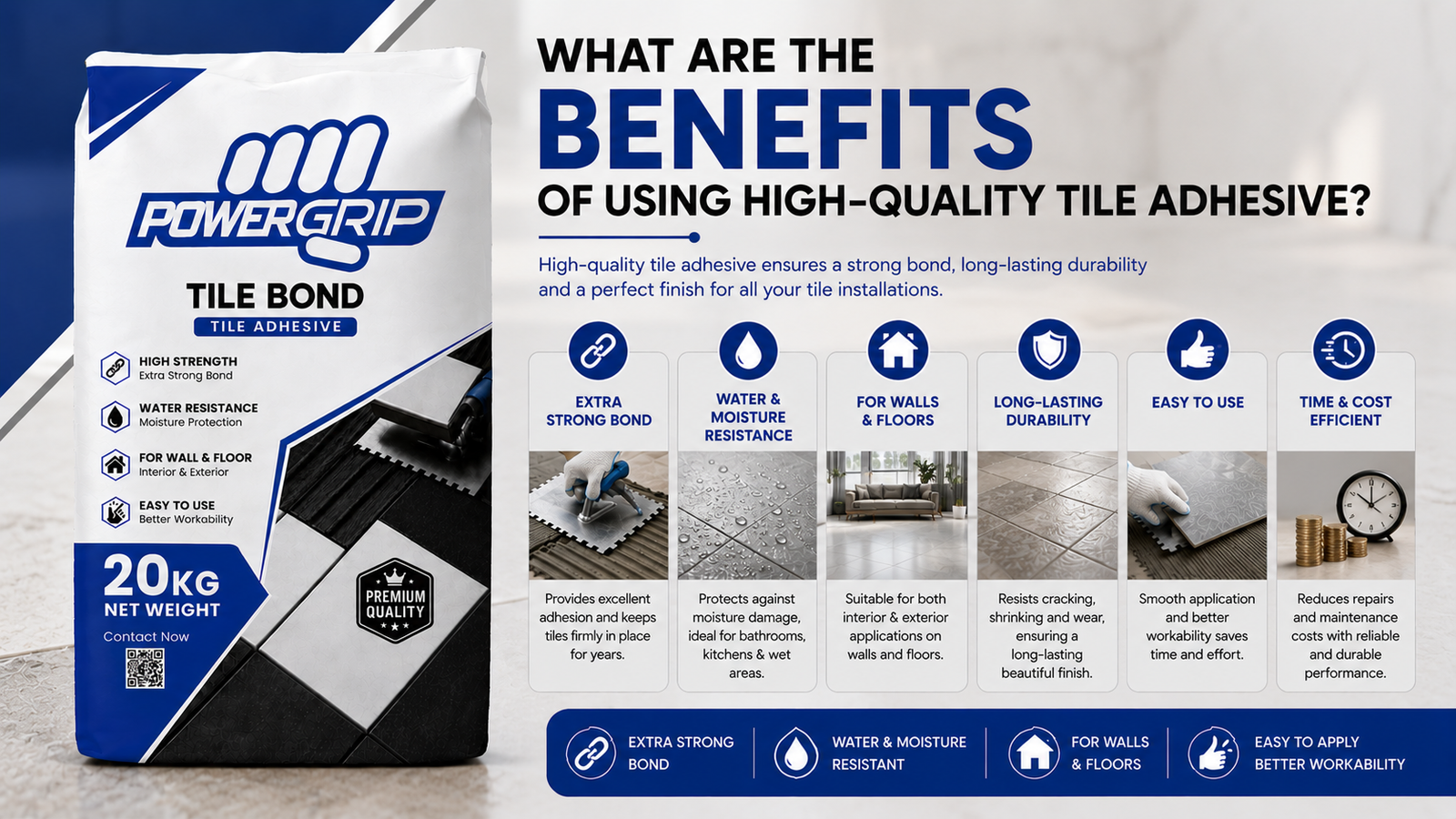
What Are the Benefits of Using High-Quality Tile Adhesive?
A premium adhesive provides several advantages:
Better Durability
A strong bond helps tiles remain fixed for many years.
Improved Safety
Loose tiles can become dangerous, especially on floors and stairs.
Better Appearance
Proper bonding prevents uneven tile placement and visible gaps.
Reduced Maintenance
Quality installation reduces repair frequency.
Professional contractors often focus on adhesive quality because the hidden layer behind tiles determines the overall success of the project.
What Common Mistakes Should You Avoid When Using Tile Glue?
Many tile problems happen because of incorrect installation practices.
Avoid these mistakes:
Using the Wrong Adhesive
Not every adhesive works for every tile.
Applying Too Much or Too Little
Incorrect thickness can weaken the bond.
Ignoring Surface Preparation
Dust and moisture reduce adhesive performance.
Mixing Incorrectly
Always follow manufacturer instructions.
Installing Tiles Too Quickly
Allow proper curing time before heavy use.
How Should Tile Glue Be Applied for Best Results?
A professional-quality installation follows these steps:
- Prepare the surface properly.
- Mix the adhesive according to instructions.
- Spread the adhesive using the correct trowel.
- Place tiles evenly.
- Apply proper pressure.
- Allow sufficient curing time.
- Apply grout after the adhesive sets.
For large projects, experienced installers often check tile alignment continuously to avoid uneven results.
Is Strong Tile Bond Important for Long-Term Performance?
Yes, strong tile bond is one of the most important factors in successful installation.
A weak bond can cause:
- Cracked tiles
- Empty spaces underneath tiles
- Water damage
- Expensive repairs
A reliable adhesive creates stability even when surfaces experience temperature changes or daily pressure.
What Are Expert Tips for Getting Better Tile Installation Results?
Experts recommend:
- Choose adhesive based on tile type, not appearance.
- Buy from trusted manufacturers.
- Check product instructions carefully.
- Avoid installing tiles on unstable surfaces.
- Use professional tools for better results.
A small investment in proper materials can significantly increase the lifespan of your tile work.
FAQs
What is the best tile glue for floor tiles?
The best option depends on tile material and usage.
For heavy or porcelain floor tiles, a strong cement based tile adhesive with excellent bonding strength is usually recommended.
Can tile glue be used for bathroom walls?
Yes, many tile adhesives are suitable for bathroom walls, but choose a water-resistant product designed for moisture-prone areas.
Is expensive tile glue always better?
Not always. The correct adhesive for your specific tile and location matters more than price alone.
How long does tile adhesive take to dry?
Drying time depends on the product, temperature, humidity, and surface conditions.
Always follow manufacturer recommendations.
Can I use regular cement instead of tile adhesive?
Traditional cement may work for some applications, but modern tile adhesive generally provides better bonding, flexibility, and durability.
Conclusion
Choosing the right tile glue is essential for creating durable, attractive, and long-lasting tile surfaces. From ceramic walls to porcelain floors, the correct adhesive improves strength, stability, and overall performance.
Before purchasing, consider tile type, location, surface condition, and durability requirements.
The best results come from combining quality materials with proper installation techniques.
Whether you are renovating your home or managing a large construction project, selecting the right tile glue can help you achieve a professional finish that lasts for years.