
Tile installation is one of the most important parts of any construction or renovation project. Whether you are building a new home, upgrading a commercial property, or renovating a bathroom, the quality of tile fixing materials directly affects durability and appearance.
This is why choosing the right Tile Bond Pakistan solution is essential for achieving a strong, reliable, and long-lasting tile installation.
Traditional cement and sand methods have been used for decades in Pakistan, but modern construction practices increasingly rely on tile bond adhesives because they offer superior bonding strength, better flexibility, improved water resistance, and easier application.
Professional contractors, builders, architects, and homeowners now prefer tile bond products for both residential and commercial projects. This guide explains everything you need to know about tile bond in Pakistan, including how it works, its benefits, different types, applications, installation methods, and how to choose the right product for your project.
What Is a Tile Bond?
Tile bond is a specially formulated adhesive used to fix ceramic, porcelain, vitrified, marble, granite, and stone tiles onto floors and walls. Unlike conventional cement mortar, tile bonds contain carefully balanced ingredients that create a stronger and more durable bond between the tile and the substrate.
In simple terms, tile bond acts as a high-performance adhesive that prevents tiles from loosening, cracking, hollow sounding, or detaching over time.
Modern tile bond products are designed to withstand temperature changes, moisture exposure, heavy foot traffic, and structural movement, making them suitable for a wide range of applications.
Why Is Tile Bond Important in Modern Construction?
The growing popularity of large-format tiles, porcelain tiles, and premium finishes has increased the demand for advanced tile fixing solutions.
Traditional mortar often struggles to provide adequate adhesion for modern tile materials. Tile bond helps solve this problem by offering a stronger grip and better performance.
Key Reasons Tile Bond Is Important
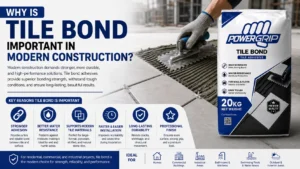
- Provides stronger adhesion than traditional cement mortar.
- Reduces tile cracking and detachment.
- Improves installation speed.
- Supports large-format and porcelain tiles.
- Enhances long-term durability.
- Offers better moisture resistance.
- Creates a more professional finish.
These advantages make tile bond a preferred choice across residential, commercial, industrial, and institutional construction projects throughout Pakistan.
How Does Tile Bond Work?
Tile bond works by creating a chemical and mechanical bond between the tile surface and the installation substrate.
When mixed with water, the adhesive forms a workable paste that spreads evenly across the surface. Once applied, it penetrates microscopic pores and irregularities, creating a secure connection that hardens over time. This process provides:
Mechanical Bonding
The adhesive physically locks into surface textures.
Chemical Bonding
Special polymers enhance adhesion at the molecular level.
Flexibility
The adhesive can accommodate minor movement without cracking.
The result is a strong, durable tile installation capable of lasting for many years.
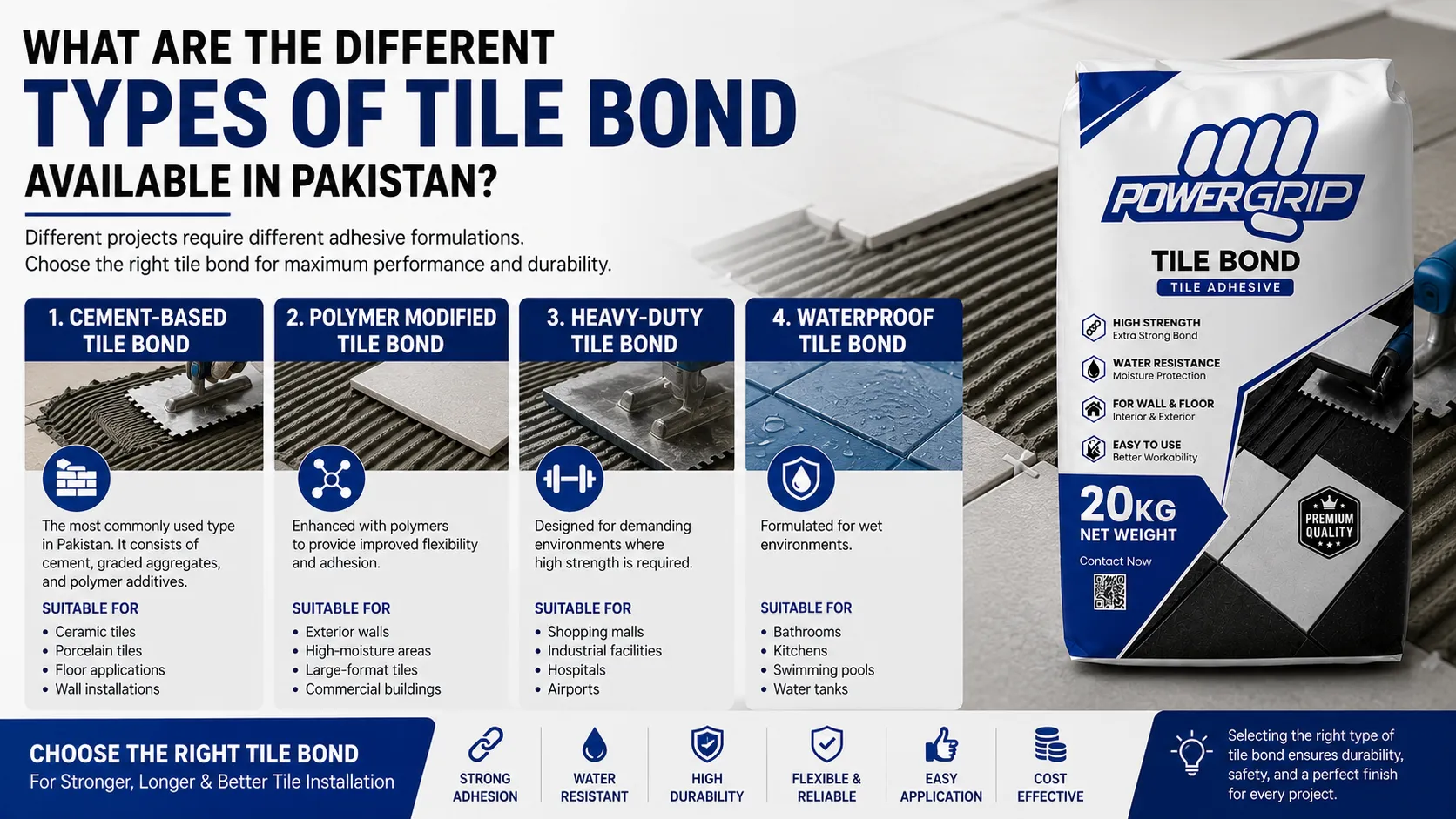
What Are the Different Types of Tile Bond Available in Pakistan?
Different projects require different adhesive formulations. Understanding the available options helps ensure optimal performance.
Cement-Based Tile Bond
This is the most commonly used type in Pakistan. It consists of cement, graded aggregates, and polymer additives.
Suitable for:
- Ceramic tiles
- Porcelain tiles
- Floor applications
- Wall installations
Polymer Modified Tile Bond
Enhanced with polymers to provide improved flexibility and adhesion.
Suitable for:
- Exterior walls
- High-moisture areas
- Large-format tiles
- Commercial buildings
Heavy-Duty Tile Bond
Designed for demanding environments where high strength is required.
Suitable for:
- Shopping malls
- Industrial facilities
- Hospitals
- Airports
Waterproof Tile Bond
Formulated for wet environments.
Suitable for:
- Bathrooms
- Kitchens
- Swimming pools
- Water tanks
Tile Bond vs Traditional Cement Mortar
Many homeowners in Pakistan still compare tile bond with traditional sand-cement fixing methods.
Feature | Tile Bond | Traditional Cement Mortar |
Adhesion Strength | High | Moderate |
Installation Quality | Consistent | Variable |
Water Resistance | Excellent | Limited |
Flexibility | Good | Poor |
Large Tile Support | Excellent | Limited |
Material Thickness | Thin Layer | Thick Layer |
Durability | Long Lasting | Moderate |
Risk of Tile Hollowing | Low | Higher |
Application Speed | Faster | Slower |
Maintenance Costs | Lower | Higher |
For modern construction projects, tile bond generally provides better long-term performance and value.
Which Tiles Can Be Installed Using Tile Bond?
One of the major advantages of modern tile adhesives is versatility.
Ceramic Tiles
Widely used in homes and commercial buildings.
Porcelain Tiles
Require stronger adhesion due to low water absorption.
Vitrified Tiles
Commonly installed in luxury residential projects.
Marble Tiles
Need high-quality bonding systems to prevent movement.
Granite Tiles
Heavy stone materials require enhanced bonding strength.
Mosaic Tiles
Used for decorative and specialty applications.
Most premium tile bond products in Pakistan can accommodate all of these tile types when used correctly.
Where Can Tile Bond Be Used?
Tile bonds can be applied in various environments.
Residential Applications
Living rooms, bedrooms, kitchens, bathrooms, balconies, terraces, and staircases.
Commercial Applications
Shopping centers, offices, restaurants, hotels, schools, and hospitals.
Industrial Applications
Factories, warehouses, production facilities, and heavy-duty workspaces.
Outdoor Applications
Exterior walls, patios, terraces, and exposed environments.
The specific product selected should match the environmental conditions and project requirements.
How to Choose the Best Tile Bond Pakistan Product?
Selecting the right adhesive requires evaluating several factors.
Tile Size
Large-format tiles need stronger adhesives with higher bonding capacity.
Tile Material
Porcelain and vitrified tiles generally require premium tile bond products.
Installation Area
Bathrooms and kitchens benefit from water-resistant formulations.
Traffic Conditions
High-traffic areas require stronger adhesives.
Environmental Exposure
Outdoor installations need weather-resistant and flexible products.
Surface Condition
Different substrates may require specialized bonding solutions.
A professional assessment can help determine the most suitable adhesive for specific project requirements.
What Is the Correct Tile Bond Installation Process?
Proper installation is essential for achieving maximum performance.
Step 1: Surface Preparation
The substrate should be clean, level, dry, and free from contaminants.
Step 2: Mixing
Mix tile bond according to the manufacturer’s recommendations.
Step 3: Adhesive Application
Apply the adhesive using an appropriate notched trowel.
Step 4: Tile Placement
Press tiles firmly into position while maintaining proper spacing.
Step 5: Alignment
Check tile alignment and level during installation.
Step 6: Curing
Allow sufficient curing time before grouting and use.
Following these steps helps ensure optimal adhesion and long-term durability.
Common Problems Caused by Poor Tile Installation
Many tile failures occur because incorrect materials or installation methods are used.
Hollow Tiles
Insufficient adhesive coverage can create empty spaces beneath tiles.
Tile Detachment
Poor bonding strength may lead to loose or fallen tiles.
Cracking
Structural movement and inadequate adhesion can cause cracks.
Water Damage
Improper installation can allow moisture penetration.
Uneven Surfaces
Poor workmanship may result in alignment issues.
Using quality tile bond products significantly reduces these risks.
What Are the Benefits of Using High-Quality Tile Bond?
Professional builders increasingly recommend premium tile adhesives because they offer long-term advantages.
Stronger Bonding Performance
Tiles remain firmly attached for many years.
Better Durability
The installation withstands heavy usage and environmental stress.
Improved Water Resistance
Suitable for wet and humid areas.
Reduced Maintenance
Lower risk of repairs and replacements.
Enhanced Appearance
Provides cleaner and more precise tile alignment.
Compatibility with Modern Tiles
Supports today’s larger and heavier tile formats.
These benefits contribute to lower lifecycle costs and improved project quality.
What Should Homeowners Know Before Buying Tile Bond?
Before purchasing tile bond in Pakistan, consider product quality rather than focusing only on price.
Look for:
- Reputable manufacturers
- Proven performance history
- Technical specifications
- Suitable application type
- Professional installation recommendations
Choosing a trusted product often saves significant repair costs in the future.
Is Tile Bond Worth the Investment?
Yes. For most modern construction and renovation projects, tile bond provides superior performance compared to traditional tile fixing methods.
Although the initial material cost may be slightly higher, the benefits often outweigh the difference through:
- Longer service life
- Reduced maintenance
- Better appearance
- Improved durability
- Lower risk of tile failure
For residential and commercial projects alike, tile bond is generally considered a cost-effective long-term solution.
Frequently Asked Questions
What is tile bond used for?
Tile bond is used to fix ceramic, porcelain, marble, granite, and other tiles securely onto floors and walls.
Is tile bond stronger than cement mortar?
Yes. Tile bond generally provides higher adhesion strength, better flexibility, and improved durability compared to traditional cement mortar.
Can tile bond be used in bathrooms?
Yes. Waterproof tile bond products are specifically designed for bathrooms, kitchens, and other moisture-prone areas.
How long does tile bond take to dry?
Most tile bond products begin setting within a few hours and fully cure within 24 to 48 hours, depending on conditions.
Can tile bond be used outdoors?
Yes. Exterior-grade tile bond products are designed to withstand weather exposure and temperature changes.
Conclusion
Choosing the right Tile Bond Pakistan solution is one of the most important decisions for ensuring durable and professional tile installation. Modern tile adhesives offer stronger bonding strength, improved flexibility, better water resistance, and greater compatibility with today’s tile materials than traditional fixing methods.
Whether you are installing ceramic tiles in a home, porcelain tiles in a commercial building, or stone surfaces in a high-traffic environment, selecting a high-quality tile bond and following proper installation practices can significantly improve performance and longevity.
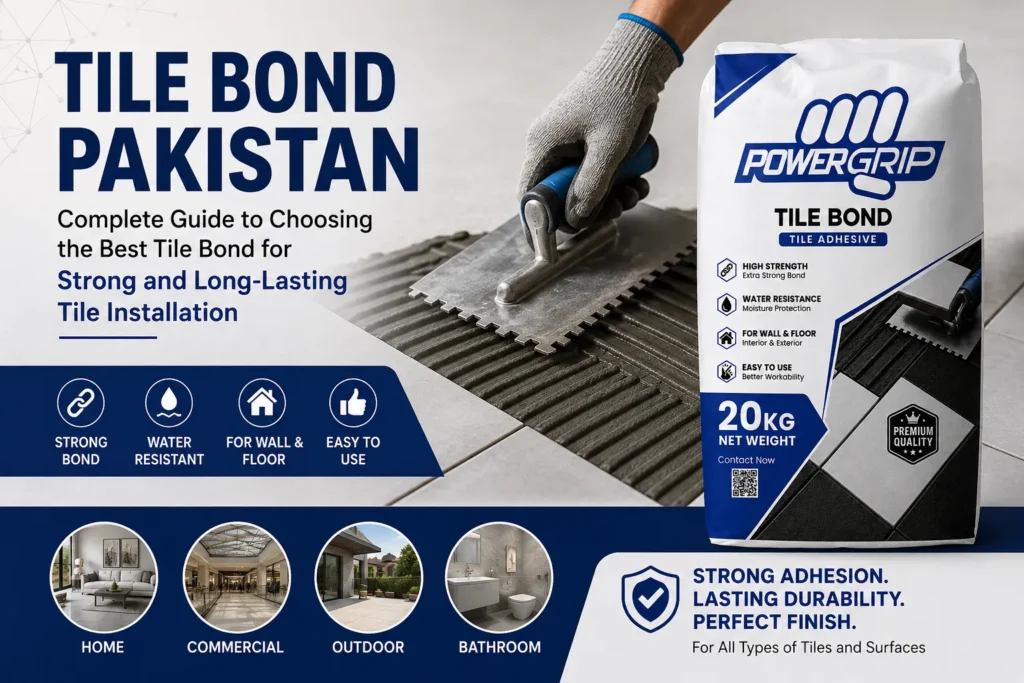
Among the available options in Pakistan, PowerGrip Tile Bond has gained popularity for its strong adhesion, reliable performance, ease of application, and suitability for a wide range of tile installation projects. It is a preferred choice for many contractors, builders, and homeowners looking for long-lasting tile fixing solutions.
Investing in the right tile adhesive today helps prevent costly repairs, reduces maintenance, and ensures your tiled surfaces remain strong, attractive, and reliable for years to come. For projects that demand durability and professional results, PowerGrip Tile Bond is a dependable option worth considering.