
Choosing the right material for tile installation can make the difference between a beautiful, long-lasting surface and a costly repair project.
Many homeowners focus only on selecting attractive tiles, but the real strength behind a successful flooring or wall project comes from the bonding material used underneath.
Poor-quality bonding solutions can lead to loose tiles, cracks, hollow sounds, moisture damage, and expensive maintenance.
Whether you are renovating a bathroom, upgrading your kitchen, or working on a commercial project, selecting the right fixing material is an important decision.
Modern construction professionals prefer advanced bonding solutions because they provide better grip, flexibility, and durability compared to traditional cement mixtures.
The right product helps tiles stay firmly attached even in areas exposed to water, temperature changes, or heavy traffic.
This complete guide explains everything you need to know about tile adhesive, including types, benefits, application methods, common mistakes, expert recommendations, and practical tips to achieve professional-quality results.
What Is Tile Adhesive and Why Is It Important?
Tile adhesive is a specially designed bonding material used to attach tiles to surfaces such as floors, walls, concrete, plaster, and other substrates.
It contains a combination of cement, polymers, minerals, and additives that improve bonding strength and flexibility.
Unlike traditional sand and cement mixtures, modern tile bonding products are engineered to handle different tile materials, including ceramic tiles, porcelain tiles, marble, and natural stone.
The main purpose of this material is to create a strong connection between the tile and the surface below. A high-quality option reduces the chances of:
- Tile movement
- Cracking
- Water penetration
- Uneven surfaces
- Tile detachment over time
According to construction guidelines followed by organizations such as the International Organization for Standardization, proper material selection and installation techniques play a major role in improving building durability.
For example, a bathroom floor experiences constant moisture exposure. Using a suitable waterproof bonding solution helps prevent tiles from becoming loose after years of use.
What Are the Different Types of Tile Adhesive Available?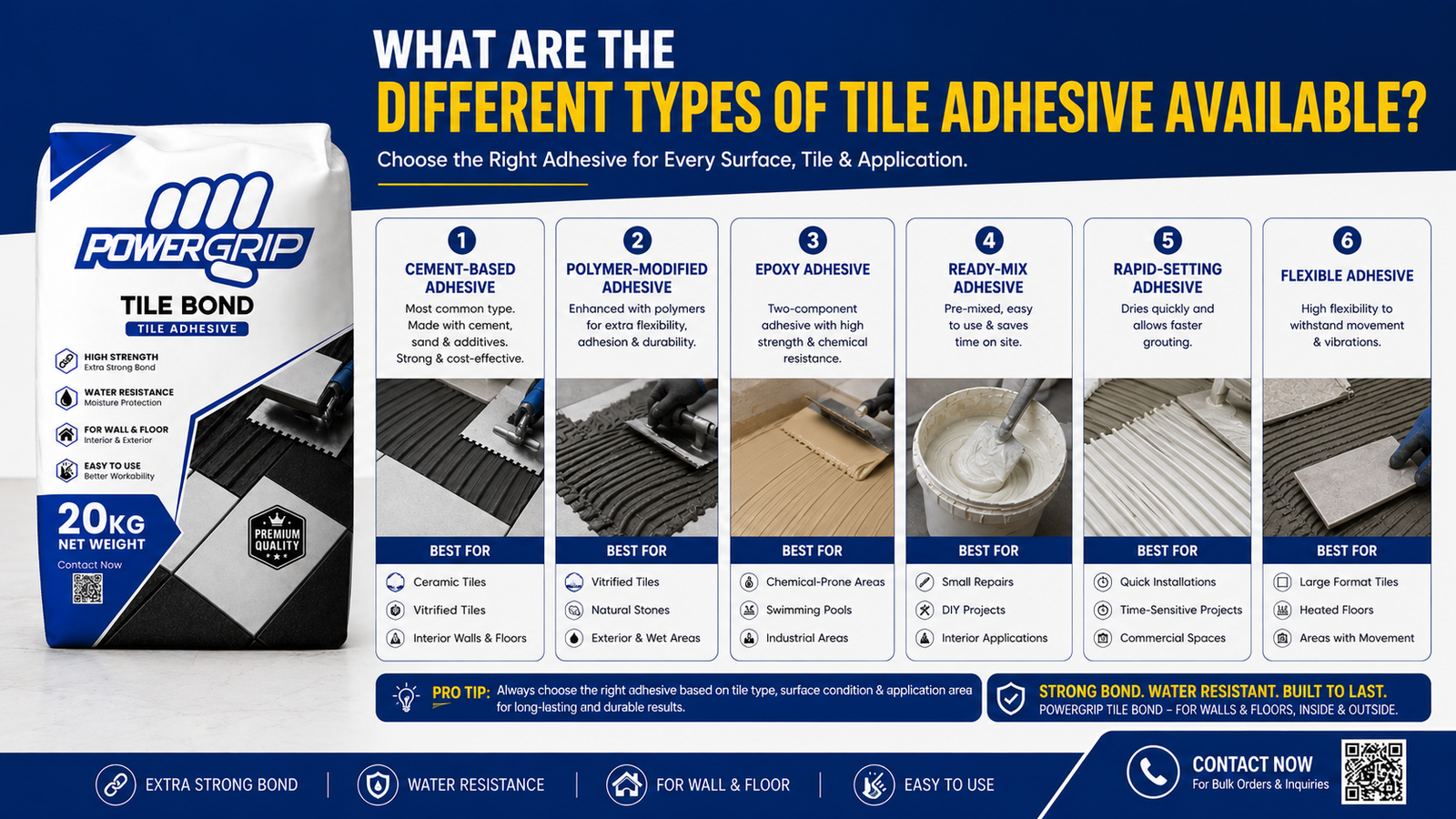
Different projects require different bonding solutions. Selecting the wrong type can reduce performance and shorten the lifespan of your tiles.
1. Cement-Based Tile Adhesive
This is one of the most commonly used options for residential and commercial construction.
It works well for:
- Ceramic tiles
- Porcelain tiles
- Floor tiles
- Wall tiles
Benefits include:
- Strong bonding capability
- Easy application
- Cost effectiveness
- Good durability
Many contractors choose cement-based products because they provide reliable performance for everyday projects.
2. Ready-Mixed Tile Adhesive
Ready-made options come prepared and require minimal effort before application.
They are suitable for:
- Small renovation projects
- Indoor wall applications
- Quick repairs
The advantage is convenience because users do not need to mix materials manually.
3. Flexible Tile Adhesive
Flexible formulas contain special additives that allow slight movement without breaking the bond.
They are recommended for:
- Heated floors
- Large format tiles
- Areas with temperature changes
Flexibility helps prevent cracks caused by natural expansion and contraction.
4. Epoxy Tile Adhesive
Epoxy-based products provide excellent resistance against chemicals, moisture, and heavy use.
They are commonly used in:
- Industrial areas
- Commercial kitchens
- High-moisture environments
Although they cost more, they offer superior performance in demanding conditions.
How Do You Choose the Right Tile Adhesive for Your Project?
The best choice depends on several factors, including tile type, location, surface condition, and environmental conditions.
Consider these important points before purchasing:
Project Area | Recommended Option | Reason |
Bathroom walls | Waterproof adhesive | Handles moisture exposure |
Kitchen backsplash | Strong wall bonding solution | Prevents tile slipping |
Outdoor flooring | Flexible adhesive | Handles weather changes |
Large porcelain tiles | High-strength adhesive | Supports heavier tiles |
Commercial spaces | Heavy-duty formula | Handles frequent traffic |
You should also check:
- Tile size
- Surface material
- Indoor or outdoor usage
- Water exposure
- Temperature conditions
For example, large porcelain tiles require stronger bonding performance because they have more weight compared to small ceramic tiles.
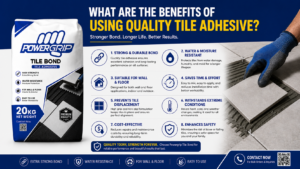
What Are the Benefits of Using Quality Tile Adhesive?
A professional-grade bonding solution provides several advantages compared with traditional installation methods.
Better Bond Strength
A quality product creates a stronger connection between the tile and surface, reducing future repair issues.
Improved Durability
Tiles installed with suitable materials can maintain their appearance and stability for many years.
Water Resistance
Many modern formulas help protect areas exposed to moisture, such as bathrooms and kitchens.
Better Appearance
Strong bonding prevents uneven tiles and creates a cleaner finished look.
Easier Installation
Professional products often provide smoother application and better workability.
A skilled installer can achieve more accurate alignment because good bonding materials allow proper adjustment during installation.
How Do You Apply Tile Adhesive Correctly?
Proper application is just as important as choosing the right product. Even the best material may fail if installation is incorrect.
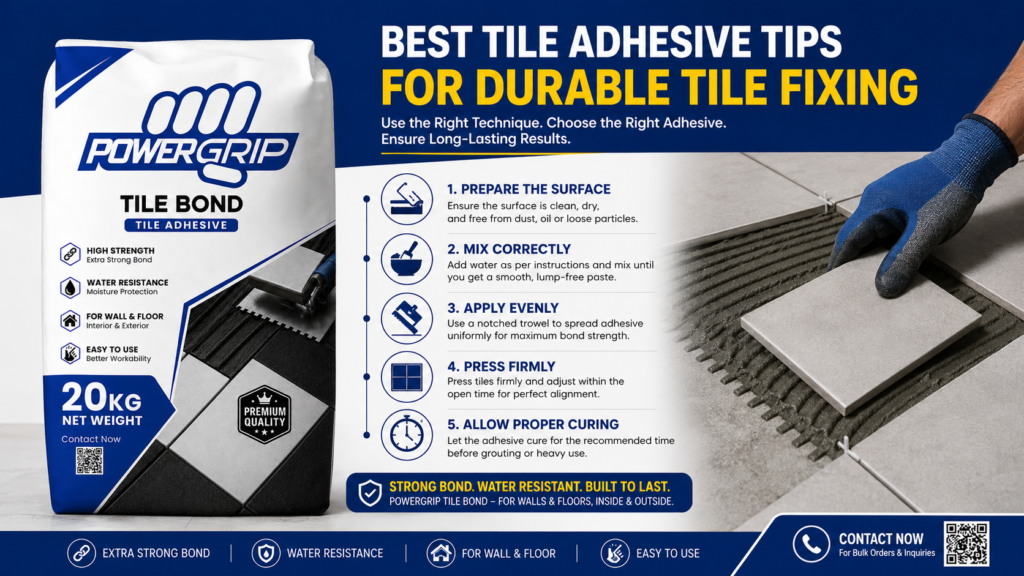
Follow these steps:
Step 1: Prepare the Surface
The surface should be:
- Clean
- Dry
- Free from dust
- Free from grease
- Level
A dirty or uneven surface can weaken the bond.
Step 2: Mix According to Instructions
If you are using powder-based material, mix it with the recommended amount of water.
Avoid adding extra water because it can reduce strength.
Step 3: Apply Using a Notched Trowel
A notched trowel helps spread the material evenly and creates proper coverage.
Step 4: Place the Tile Carefully
Press the tile firmly into position and adjust alignment before the material sets.
Step 5: Allow Proper Curing Time
Avoid heavy pressure or water exposure until the adhesive has fully cured.
Professional installers usually follow manufacturer recommendations because curing time varies depending on product type and environmental conditions.
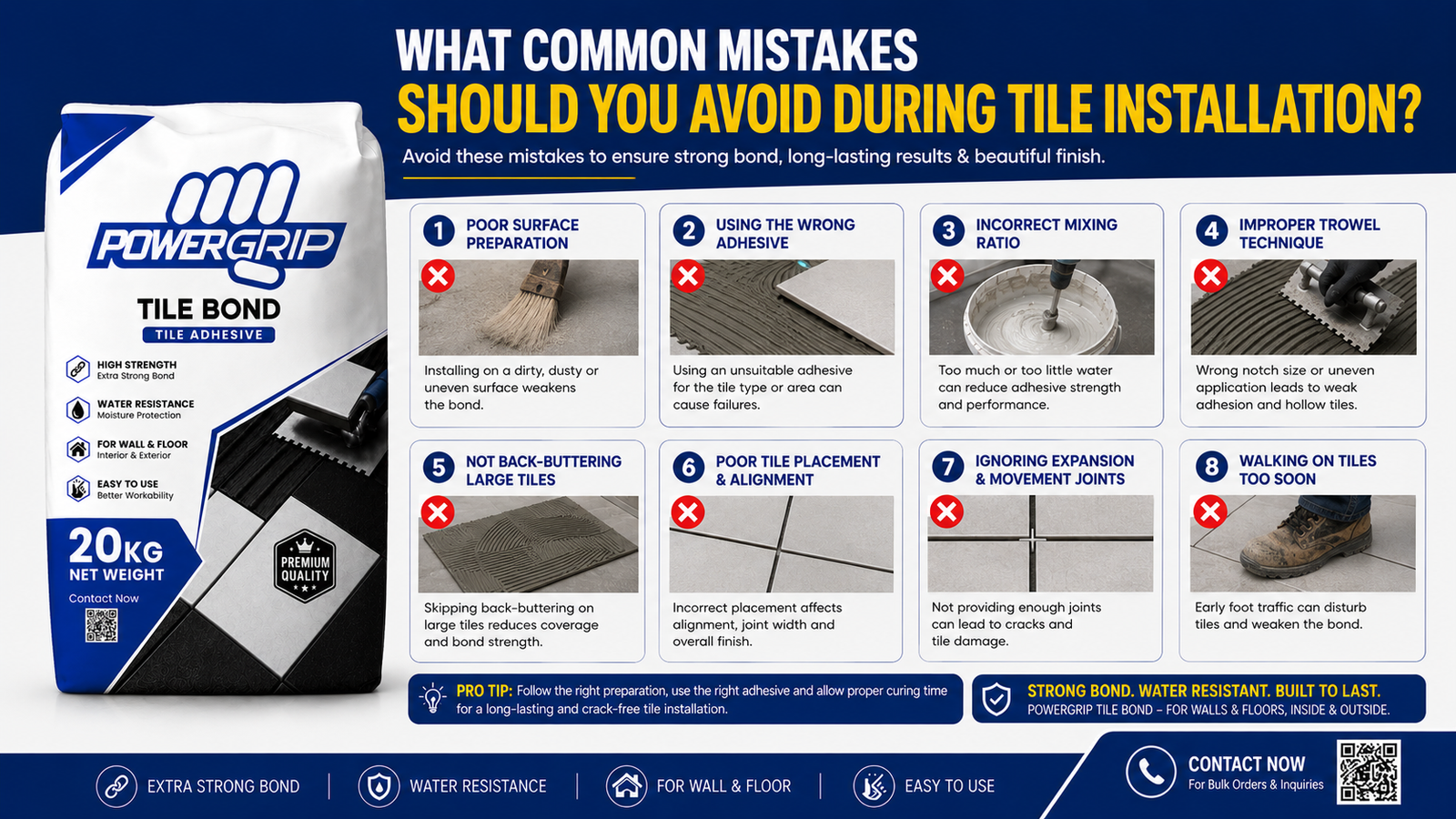
What Common Mistakes Should You Avoid During Tile Installation?
Many tile problems happen because of installation mistakes rather than product failure.
Common errors include:
- Applying material on dusty surfaces
- Using the wrong product for the tile type
- Mixing incorrectly
- Applying too much or too little material
- Ignoring drying time
- Installing tiles on uneven surfaces
For example, applying a standard adhesive for outdoor tiles may cause failure because outdoor surfaces experience temperature changes and moisture exposure.
Can Tile Adhesive Be Used on All Types of Tiles?
No, different tiles require different bonding performance.
Ceramic Tiles
Ceramic tiles are lightweight and usually work well with standard cement-based solutions.
Porcelain Tiles
Porcelain tiles are denser and less absorbent, so they often require stronger bonding materials.
Natural Stone Tiles
Materials such as marble and granite may require specialized formulas to prevent staining and improve adhesion.
Large Format Tiles
Large tiles need excellent coverage because their size increases stress on the bonding layer.
Always check product recommendations before installation.
Is Tile Adhesive Better Than Traditional Cement Mortar?
Both methods have been used in construction, but modern bonding products offer several advantages.
Feature | Tile Adhesive | Cement Mortar |
Bond strength | Higher | Moderate |
Application | Easier | More labor intensive |
Thickness control | Better | Less precise |
Tile adjustment | Easier | Limited |
Modern tile compatibility | Excellent | Limited |
Traditional methods may still be used in some situations, but professional builders increasingly prefer advanced solutions for better results.
How Can You Make Tile Installation Last Longer?
Experts recommend following these best practices:
- Choose the correct product for the application
- Buy from reliable manufacturers
- Prepare surfaces properly
- Use professional installation techniques
- Avoid rushing the curing process
- Maintain proper grout sealing
A small investment in quality materials can prevent expensive repairs later.
What Factors Affect Tile Adhesive Performance?
Several factors influence how well a bonding solution performs:
Surface Condition
Uneven or contaminated surfaces reduce bonding strength.
Environmental Conditions
Humidity, temperature, and moisture affect curing.
Product Quality
Low-quality materials may not provide reliable long-term performance.
Installation Skill
Even premium products require correct application methods.
Experienced contractors understand that installation quality is equally important as material selection.
Frequently Asked Questions
How long does tile adhesive take to dry?
Most products require around 24 to 48 hours for initial curing, but the complete curing time depends on the product type, temperature, and moisture conditions.
Can tile adhesive be used on old tiles?
Yes, some specialized products can bond to existing tiles if the surface is properly cleaned and prepared.
Which tile adhesive is best for bathrooms?
Water-resistant and flexible formulas are usually recommended because bathrooms experience frequent moisture exposure.
Why do tiles become loose after installation?
Loose tiles often result from poor surface preparation, incorrect material selection, improper mixing, or insufficient curing time.
Is expensive tile adhesive always better?
Not always. The best option depends on your project requirements. A suitable product for the right application provides better results than simply choosing the most expensive option.
Conclusion
Choosing the right tile adhesive is one of the most important steps in creating a durable and attractive tile installation. The correct product improves strength, reduces maintenance problems, and helps tiles remain secure for years.
Whether you are installing bathroom tiles, kitchen walls, outdoor flooring, or commercial surfaces, always consider tile type, location, moisture exposure, and surface conditions before making a decision.
A professional approach combined with quality materials ensures better results and long-lasting performance. Investing in the right tile adhesive today can save significant repair costs in the future.