

Wall tiles improve the appearance, durability, and value of homes and commercial spaces.
However, even the highest quality tiles can fail if the wrong adhesive is used.
Choosing the right tile adhesive for wall tiles is one of the most important steps for achieving a secure, level, and long-lasting installation.
Whether you are renovating a bathroom, upgrading a kitchen backsplash, or installing large porcelain panels, selecting the correct adhesive helps prevent loose tiles, cracks, and costly repairs.
Modern adhesives provide stronger bonding, better flexibility, and improved resistance to moisture compared to traditional cement mortar.
This comprehensive guide explains everything you need to know about wall tile adhesives, including their types, benefits, applications, and the factors that influence the best choice for different wall surfaces.
What Is Tile Adhesive for Wall Tiles?
Tile adhesive for wall tiles is a specially formulated bonding material designed to securely attach ceramic, porcelain, natural stone, or glass tiles to vertical surfaces.
Unlike traditional sand and cement mixtures, modern tile adhesives contain carefully balanced ingredients that improve bonding strength, flexibility, and ease of application.
Most professional installers now prefer adhesive over conventional mortar because it creates a more reliable bond while reducing installation time.
It also allows for consistent tile placement and minimizes the risk of hollow spots behind tiles.
Wall tile adhesives are available in several formulations, including cement-based products, polymer-modified blends, thin-set mortar, and ready-mix options.
Each type serves different installation requirements depending on tile material, wall condition, and environmental exposure.
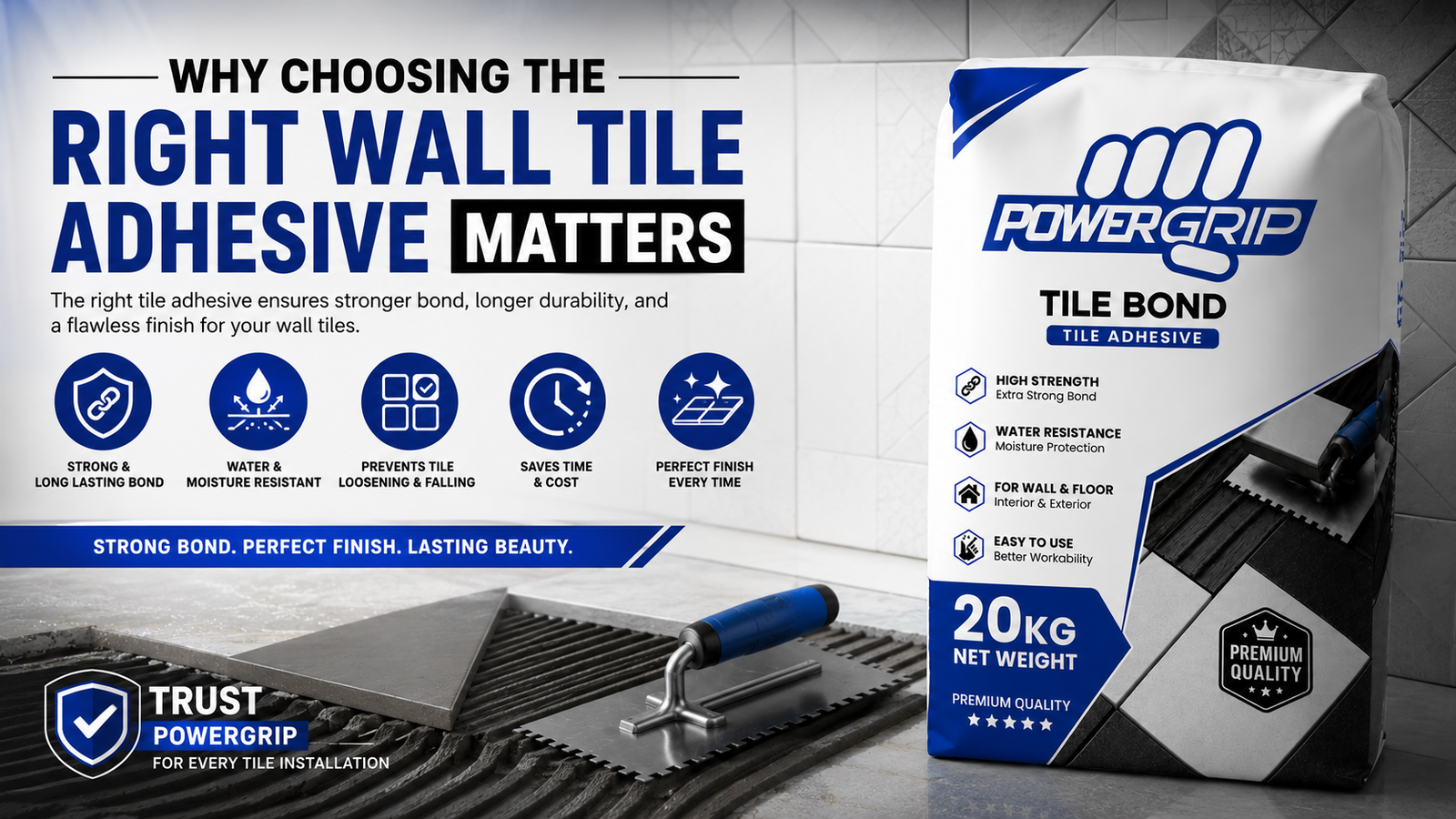
Why Choosing the Right Wall Tile Adhesive Matters
Many tile installation failures occur because the adhesive was not suitable for the tile size, weight, or installation area.
Walls experience continuous stress from gravity, temperature changes, humidity, and building movement.
A high-quality adhesive keeps tiles firmly attached despite these conditions.
For example, a lightweight ceramic tile in a dry living room may perform well with a standard cement-based adhesive.
In contrast, a heavy porcelain tile installed inside a shower requires a waterproof, high-strength, polymer-modified adhesive that can resist constant moisture while preventing tile slippage.
Selecting the correct adhesive also improves the overall appearance of the finished wall by keeping grout joints even and preventing tile movement during installation.
Types of Wall Tile Adhesives
Different wall projects require different adhesive formulations.
Choosing the correct product depends on tile material, wall substrate, moisture exposure, and tile size.
Cement-Based Tile Adhesive
A cement-based tile adhesive is one of the most widely used options for interior wall tile installation.
It is supplied as a dry powder that is mixed with water before use.
It provides reliable bonding for ceramic tiles and many porcelain wall tile applications.
Professional installers often choose cement-based products because they are durable, cost-effective, and suitable for a wide range of residential projects.
Polymer Modified Tile Adhesive
A polymer-modified tile adhesive contains additional bonding polymers that increase flexibility, adhesion, and water resistance.
This type is ideal for porcelain tiles, bathroom walls, kitchens, and locations where slight structural movement may occur.
The improved flexibility reduces the likelihood of cracked grout lines or detached tiles over time.
Thin Set Tile Adhesive
Thin-set tile adhesive creates a thin but exceptionally strong bonding layer between the wall and the tile.
It is commonly recommended for ceramic and porcelain wall tiles because it provides excellent coverage while maintaining a consistent tile level.
Professional installers frequently use thin set systems for both residential and commercial projects.
Ready Mix Wall Tile Adhesive
Ready mix products arrive pre blended and require no additional mixing.
They are convenient for smaller interior projects such as kitchen backsplashes, laundry rooms, and decorative feature walls.
Since they are ready to use directly from the container, they reduce preparation time and simplify installation for DIY users.
Waterproof Wall Tile Adhesive
Bathrooms, shower walls, laundry areas, and kitchens require adhesives that resist constant moisture exposure.
A waterproof wall tile adhesive helps maintain long term bond strength while reducing the risk of adhesive deterioration caused by humidity or water penetration.
Comparison of Common Wall Tile Adhesives
Adhesive Type | Best For | Strength | Moisture Resistance | Suitable for Large Tiles |
Cement-Based Tile Adhesive | Ceramic wall tiles, indoor projects | High | Good | Moderate |
Polymer Modified Tile Adhesive | Porcelain, bathrooms, kitchens | Very High | Excellent | Excellent |
Thin Set Tile Adhesive | Professional wall installations | High | Very Good | Very Good |
Ready Mix Wall Tile Adhesive | Small interior walls and backsplashes | Moderate | Moderate | Limited |
Waterproof Wall Tile Adhesive | Shower walls and wet areas | Very High | Excellent | Excellent |
Ceramic vs Porcelain Wall Tile Adhesive
Although ceramic and porcelain tiles appear similar, their physical properties differ significantly.
Ceramic tiles absorb more moisture and generally weigh less, making them easier to bond with standard wall tile adhesive.
Porcelain tiles are denser, less porous, and heavier. Because of these characteristics, they require stronger bonding materials such as high-strength wall tile adhesive or polymer-modified tile adhesive.
Using a standard adhesive for heavy porcelain panels may reduce long term performance, particularly on vertical installations where gravity constantly pulls the tiles downward.
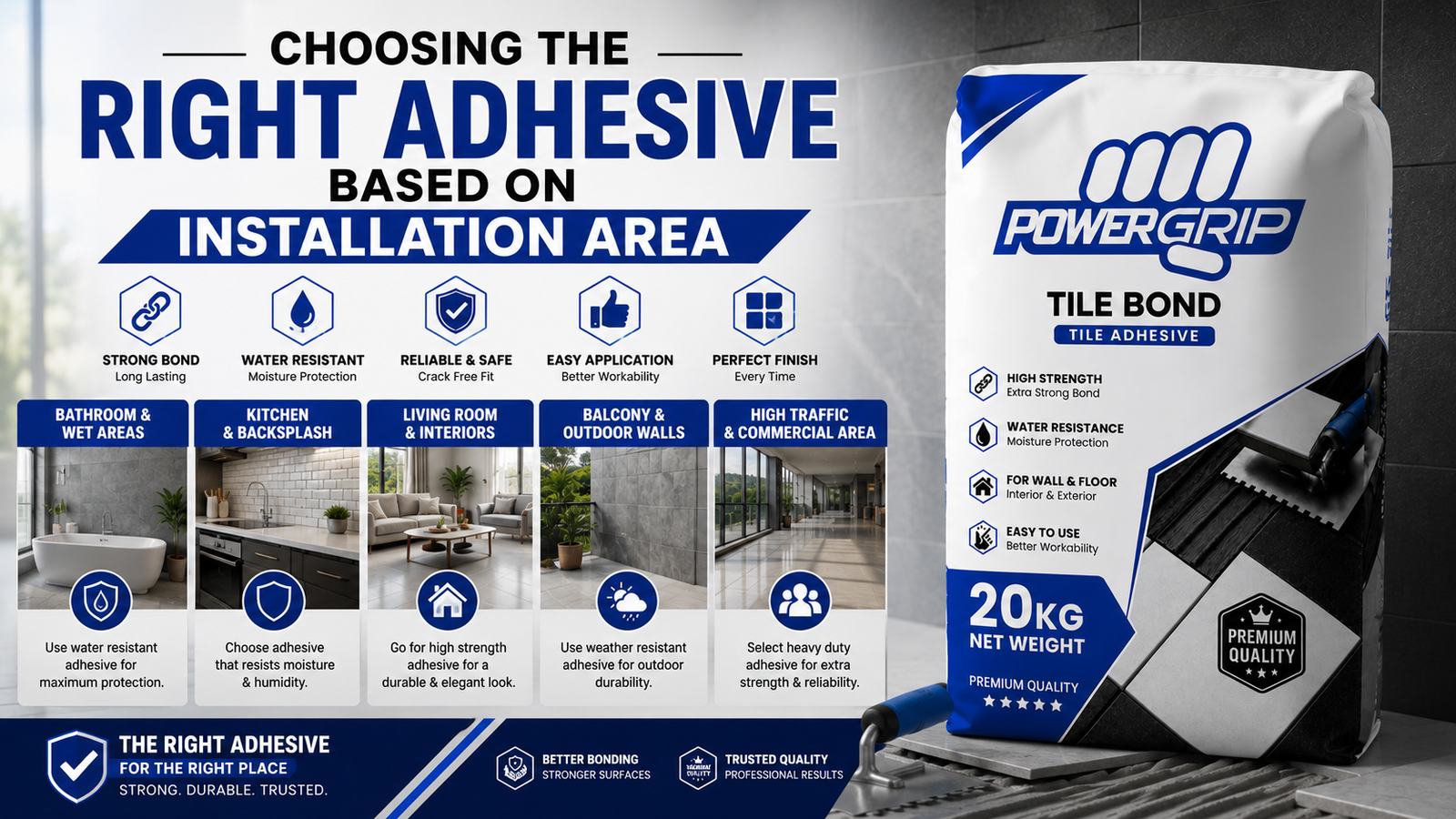
Choosing the Right Adhesive Based on Installation Area
Every room presents unique installation challenges. Moisture, temperature changes, and wall materials all influence adhesive performance.
Bathroom walls benefit from waterproof, flexible adhesives that resist humidity and frequent cleaning.
Kitchen walls often require products that tolerate occasional heat, grease, and moisture while maintaining strong adhesion.
Living rooms, hallways, and bedrooms generally allow for standard interior wall tile adhesive unless oversized porcelain tiles are installed.
Professional installers also evaluate the wall substrate before selecting an adhesive.
Concrete, cement plaster, drywall, gypsum boards, and cement boards each have different bonding requirements that affect adhesive selection and long term durability.
Benefits of Using Modern Wall Tile Adhesive
Modern tile adhesives have transformed wall tile installation by providing stronger bonding performance, improved workability, and greater durability than traditional sand and cement mortar.
Whether you are installing ceramic tiles in a living room or porcelain panels in a bathroom, choosing the correct adhesive improves both appearance and long-term performance.
One of the biggest advantages is superior bonding strength.
A quality wall tile bonding adhesive creates a secure connection between the wall and the tile, reducing the chance of loose or hollow tiles after installation.
Another important benefit is improved flexibility. Buildings naturally expand and contract due to temperature changes and minor structural movement.
A flexible tile adhesive can absorb small movements without weakening the bond, helping to prevent cracks in grout lines and tile edges.
Modern adhesives also provide excellent resistance to moisture. This makes them suitable for bathrooms, kitchens, laundry areas, and other locations where walls are regularly exposed to water or humidity.
Compared with traditional mortar, professional tile adhesive is easier to mix, spread, and level.
It creates an even bonding layer that helps installers achieve consistent tile alignment while reducing unnecessary material waste.
For projects involving heavy porcelain or large-format tiles, high-strength wall tile adhesive offers additional support by minimizing tile slippage during installation.
This allows installers to work more efficiently while maintaining accurate spacing and alignment.
Important Features to Look For
When comparing different products, several performance characteristics determine whether an adhesive is suitable for your project.
The best adhesive is not always the most expensive one. Instead, it should match the tile type, wall condition, and installation environment.
A premium wall tile installation adhesive should provide reliable initial grip, allowing tiles to stay in place after installation.
It should also maintain long-term bond strength under normal building movement and varying temperatures.
Water resistance is another essential feature for wet areas. Bathrooms, shower walls, and kitchen splashbacks require adhesives that remain stable even after years of moisture exposure.
Workability also plays an important role. An adhesive that spreads smoothly allows installers to achieve full tile coverage, reducing empty spaces behind the tiles that may later cause cracking.
Extended open time provides additional flexibility during installation.
This feature gives installers more time to position and adjust tiles before the adhesive begins curing.
For projects involving porcelain or natural stone, a non-slip tile adhesive helps prevent heavy tiles from sliding downward while maintaining straight grout lines.
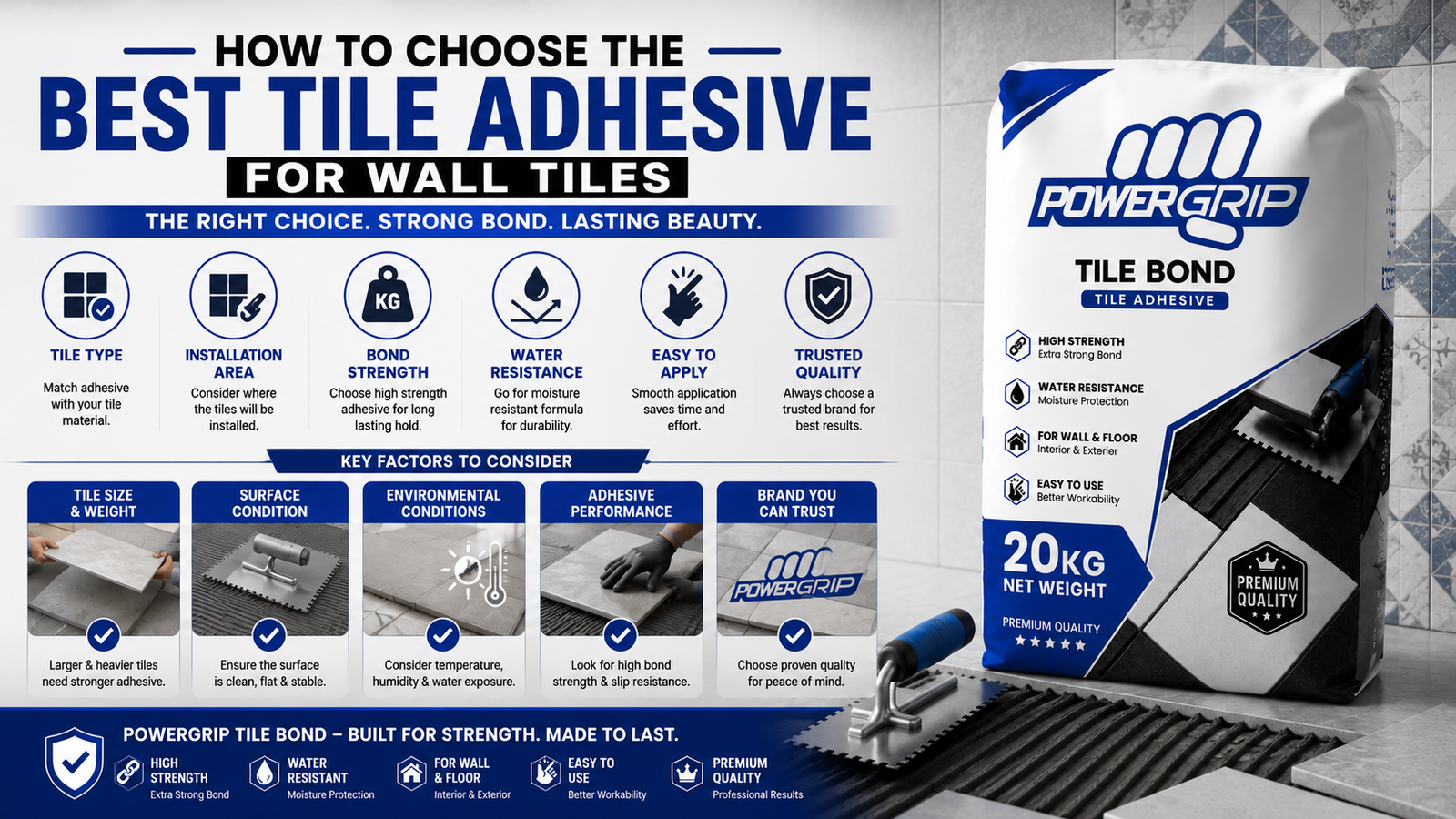
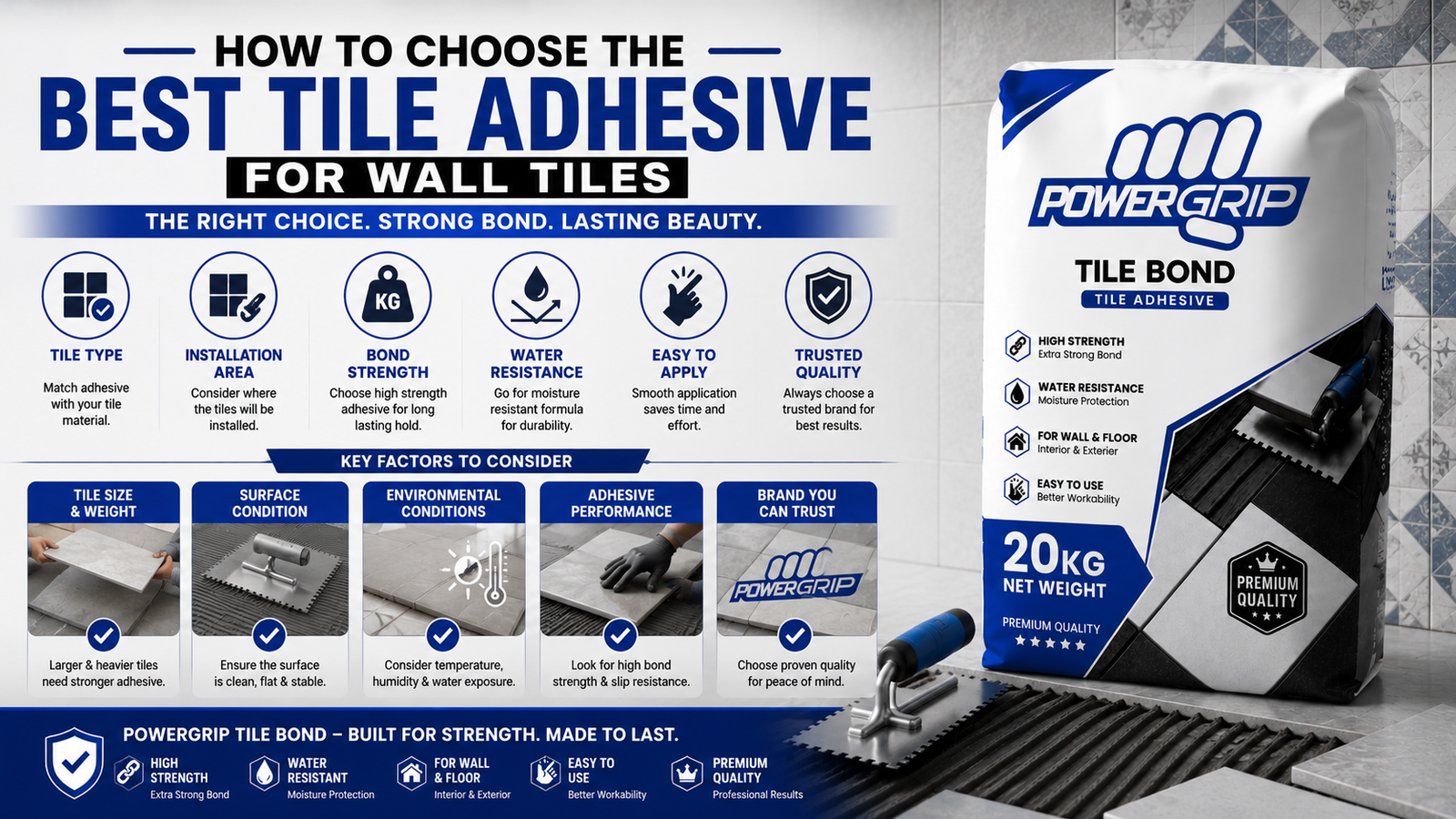
How to Choose the Best Tile Adhesive for Wall Tiles
Selecting the right adhesive depends on more than simply choosing a well-known brand.
Several practical factors should be evaluated before installation begins.
The first consideration is tile material. Ceramic wall tiles generally perform well with standard cement-based adhesives, while porcelain usually requires a stronger polymer-modified tile adhesive due to its higher density and lower water absorption.
Tile size is equally important. Larger tiles place greater stress on vertical surfaces because of their increased weight.
A premium adhesive designed for large-format tiles provides greater bonding strength and improved slip resistance.
Next, evaluate the installation location. Dry indoor walls typically allow more adhesive options, while bathrooms, kitchens, and laundry rooms require waterproof products capable of handling continuous humidity.
Wall condition should also be assessed carefully.
Smooth concrete, cement plaster, drywall, cement board, and existing tiled surfaces each have different preparation requirements.
Proper surface preparation often has as much influence on success as the adhesive itself.
Finally, consider the expected service life of the installation.
Investing in a professional-quality adhesive may cost slightly more initially, but it can significantly reduce future maintenance and repair expenses.
How to Install Wall Tiles Using Tile Adhesive
Successful tile installation depends on careful preparation as well as the quality of the adhesive.
Following a systematic process improves bond strength and produces a cleaner finished appearance.
Begin by preparing the wall surface.
Remove dust, grease, paint residue, and loose materials so the adhesive can bond directly to a clean, stable substrate.
Any uneven areas should be repaired before installation begins.
Mix the adhesive according to the manufacturer’s recommendations if using a cement-based or thin-set product.
Proper consistency ensures even spreading and maximum bonding performance.
Spread the adhesive evenly across a manageable section of the wall using a notched trowel.
The notches create consistent ridges that improve contact between the adhesive and the tile.
Press each tile firmly into place while applying slight twisting pressure to collapse the adhesive ridges.
This increases surface contact and reduces trapped air behind the tile.
Use tile spacers to maintain uniform grout joints throughout the installation.
Check alignment regularly with a spirit level to ensure straight rows.
Allow the adhesive to cure fully before grouting.
Curing times vary depending on the product, tile type, temperature, and humidity.
Rushing this stage may weaken the installation.
Common Mistakes to Avoid During Wall Tile Installation
Many wall tile problems develop because of installation errors rather than poor quality materials.
Avoiding a few common mistakes greatly improves long-term performance.
Using an adhesive designed for floor tiles instead of vertical applications can reduce bonding strength on walls.
Wall installations require products specifically formulated to resist downward movement.
Applying adhesive over dusty or unstable surfaces prevents proper bonding and may eventually lead to tile failure.
Mixing cement-based adhesive with excessive water weakens its strength and changes curing characteristics, making the finished installation less reliable.
Installing heavy porcelain tiles with standard adhesive instead of a high-performance product may cause gradual tile movement over time.
Skipping full adhesive coverage behind large tiles creates hollow areas that increase the risk of cracking when pressure is applied.
Grouting before the adhesive has fully cured may disturb tile alignment and reduce bond strength.
Expert Recommendations for Better Results
- Choose an adhesive that matches both the tile material and the installation environment rather than selecting solely by price.
- Prepare the wall carefully by removing dust, repairing uneven surfaces, and ensuring the substrate is clean and stable.
- Use a notched trowel recommended for the tile size to achieve consistent adhesive coverage across the entire surface.
- For bathrooms, kitchens, and shower walls, select waterproof and flexible adhesives that can handle continuous moisture.
- Allow the adhesive to cure completely before grouting or exposing the wall to water to maximize long-term durability.
Real World Example: Choosing the Right Adhesive for Different Projects
Imagine two homeowners starting separate renovation projects.
The first homeowner plans to install small ceramic tiles on a kitchen backsplash.
Since the area experiences occasional moisture but not constant water exposure, a quality cement-based tile adhesive or ready-mix wall tile adhesive provides reliable performance while keeping installation simple.
The second homeowner is renovating a bathroom with large porcelain wall tiles.
These tiles are heavier, and the walls will face daily humidity and water exposure.
In this case, a polymer-modified tile adhesive with waterproof properties is the better choice.
It offers stronger bonding, excellent flexibility, and improved slip resistance, helping the installation remain secure for many years.
This example highlights why choosing adhesive based on the project requirements leads to better durability and fewer maintenance issues.
Key Factors Before Buying Wall Tile Adhesive
- Check whether the adhesive is suitable for ceramic, porcelain, or natural stone wall tiles.
- Confirm that it matches the installation area, especially for bathrooms, kitchens, or other moisture-prone spaces.
- Select a product with high bond strength for large-format or heavy wall tiles.
- Review the curing time and application instructions before installation.
- Purchase enough adhesive to complete the project without mixing different products midway.
Frequently Asked Questions
What is the best tile adhesive for bathroom wall tiles?
A waterproof polymer-modified adhesive is usually the best choice for bathroom walls because it offers excellent moisture resistance, strong bonding, and flexibility for long term performance.
Can I use floor tile adhesive on wall tiles?
Some products are suitable for both floors and walls, but many floor adhesives are not formulated for vertical installations.
Always check the manufacturer’s recommendations before use.
Which adhesive is best for ceramic wall tiles?
For most indoor applications, a quality ceramic wall tile adhesive based on cement provides reliable bonding.
For wet areas, a polymer-modified version offers additional protection.
How long should tile adhesive cure before grouting?
The curing time varies depending on the product and environmental conditions.
Most wall tile adhesives require approximately 24 hours before grouting, although some premium products may have different recommendations.
Is ready-mix wall tile adhesive suitable for large porcelain tiles?
Ready-mix adhesives are generally intended for smaller interior wall projects.
Large porcelain tiles typically require a stronger high-performance wall tile adhesive or thin-set tile adhesive with polymer modification.
Conclusion
Choosing the right tile adhesive for wall tiles is one of the most important decisions in any tiling project.
The correct adhesive improves bond strength, supports heavy tiles, resists moisture, and increases the overall lifespan of the installation.
Whether you are working with ceramic tiles in a living room, porcelain panels in a bathroom, or decorative wall tiles in a kitchen, matching the adhesive to the tile type and installation environment delivers the best results.
Proper surface preparation, correct application techniques, and adequate curing time are equally important for achieving a durable and professional finish.
By following the guidance in this article, homeowners, contractors, and DIY enthusiasts can confidently select the most suitable wall tile adhesive and complete installations that remain secure and attractive for years.