

A beautiful tile installation is only as strong as the adhesive beneath it. Many homeowners spend thousands on premium ceramic, porcelain, or marble tiles, but overlook one of the most important materials in the entire project—the popular tile bond they use.
Even the most expensive tiles can crack, become hollow, or loosen if the wrong adhesive is applied.
Whether you are renovating your home, building a new property, or managing a commercial project, choosing the right tile bond can save you from costly repairs in the future.
Modern tile adhesives offer far better strength, flexibility, and moisture resistance than traditional cement and sand mixtures. However, with dozens of products on the market, selecting the right one can feel confusing.
This guide explains everything you need to know, from different types of tile bonds and their applications to expert buying tips, installation practices, and common mistakes.
By the end, you will know exactly which option suits your project and why professionals rely on high-quality tile adhesives for long-lasting results.
Why Is Popular Tile Bond Better Than Traditional Cement Mortar?
Modern tile adhesives are specially engineered to provide stronger bonding than conventional cement mortar.
Instead of relying only on cement and sand, they contain carefully selected polymers and additives that improve grip, flexibility, and durability.
Featured Snippet Answer
Tile bond is a ready-mixed or powder adhesive designed specifically for fixing ceramic, porcelain, marble, granite, and other tiles securely to walls and floors.
Compared with traditional mortar, it offers stronger adhesion, easier application, reduced tile movement, and better water resistance.
Key Benefits
- Superior bonding strength
- Better resistance against moisture
- Faster installation
- Reduced tile slippage
- Longer service life
- Suitable for large-format tiles
- Lower maintenance costs
- Improved crack resistance
For example, a bathroom installed with polymer-modified tile adhesive is much less likely to experience loose tiles than one installed using ordinary cement mortar.
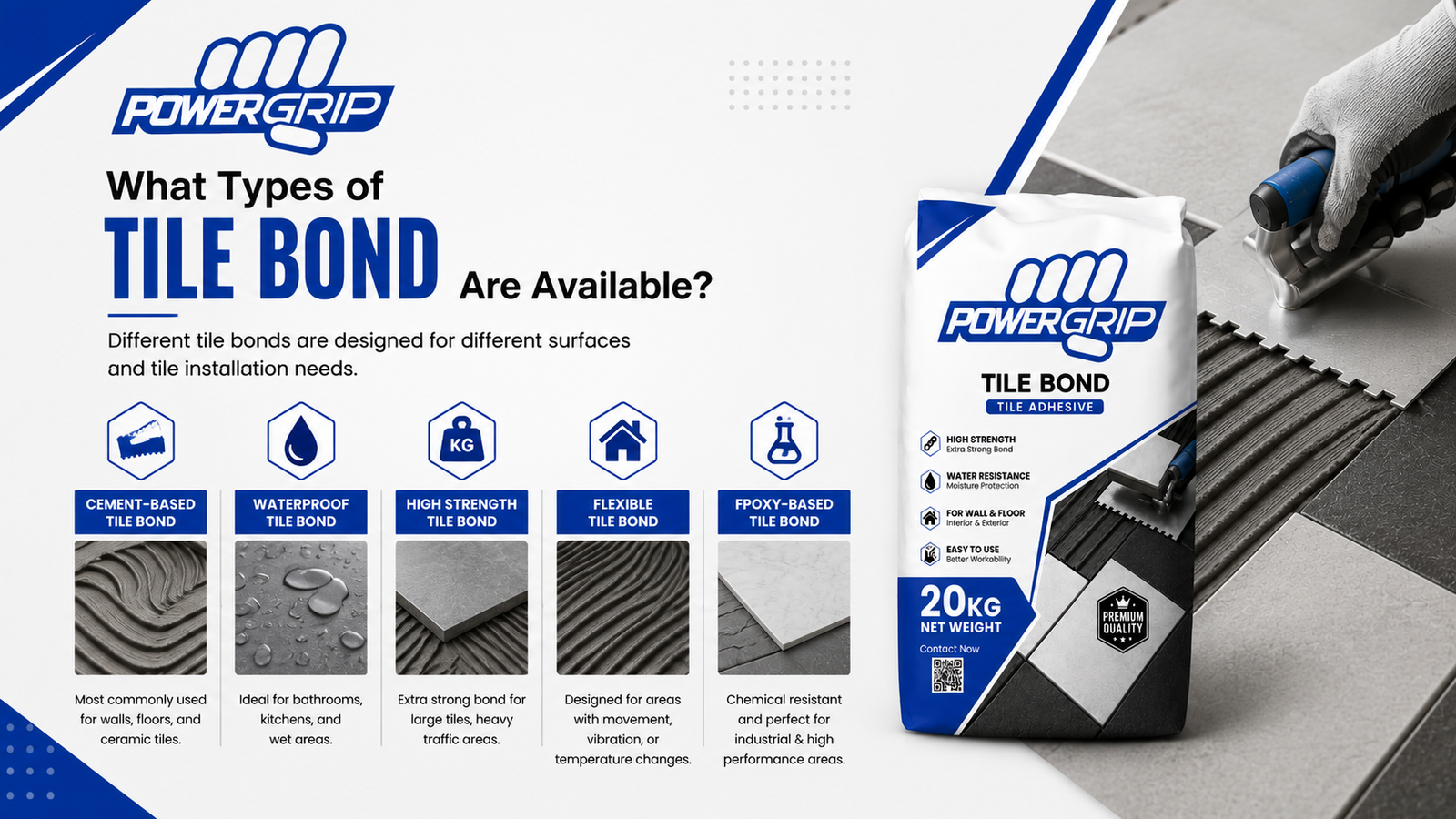
What Types of Tile Bond Are Available?
Not every adhesive is made for every project. Professional installers choose different products depending on the tile material, installation surface, and environmental conditions.
Tile Bond Type | Best For | Main Advantage |
Cement-Based Adhesive | Ceramic and porcelain tiles | Affordable and reliable |
Polymer Modified Adhesive | Bathrooms and kitchens | Excellent flexibility |
Epoxy Tile Adhesive | Hospitals, laboratories | Chemical resistance |
Ready Mixed Adhesive | Interior wall tiles | Easy application |
Heavy Duty Tile Adhesive | Large format porcelain | High load capacity |
Each type has its own strengths, making proper selection essential for long-term performance.
How Do You Choose the Right Tile Bond for Your Project?
The best adhesive depends on much more than the size of the tile.
Professionals evaluate several factors before making a recommendation.
Consider the Tile Material
Different tiles have different absorption rates.
Examples include:
- Ceramic tiles
- Porcelain tiles
- Marble
- Granite
- Glass mosaic
- Natural stone
Porcelain, for instance, absorbs very little water and requires stronger adhesives than standard ceramic tiles.
Consider the Installation Area
Indoor and outdoor environments place different demands on tile adhesive.
Indoor Areas
- Bedrooms
- Living rooms
- Hallways
Wet Areas
- Bathrooms
- Kitchens
- Laundry rooms
Outdoor Areas
- Balconies
- Terraces
- Parking spaces
- Walkways
Outdoor installations require adhesives that tolerate temperature changes, rain, and expansion.
Consider the Surface
Professional installers also examine the substrate.
Common surfaces include:
- Concrete
- Cement screed
- Plaster
- Existing tiles
- Cement boards
- Gypsum boards
Using the wrong adhesive for the substrate often leads to bond failure.
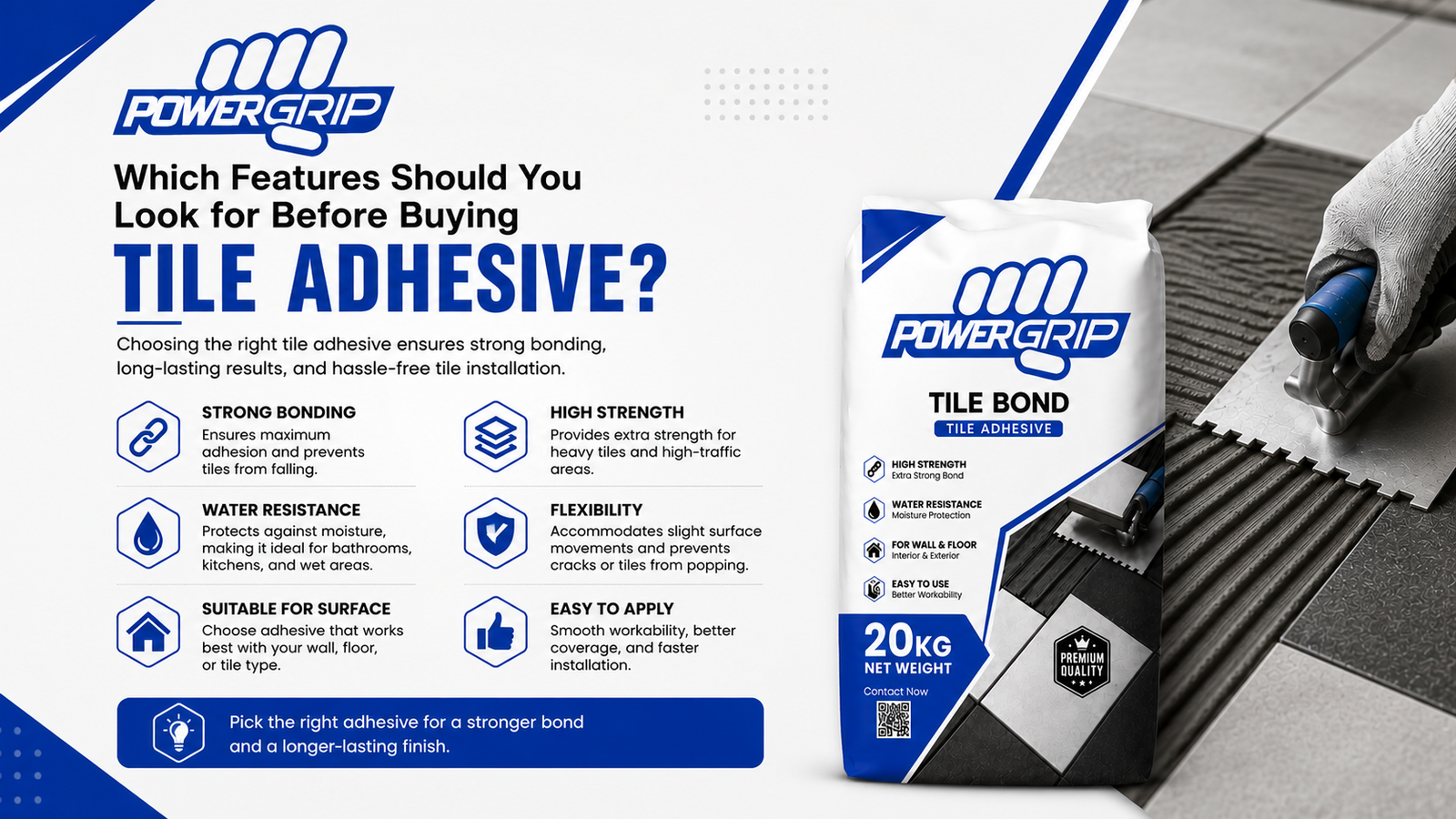
Which Features Should You Look for Before Buying Tile Adhesive?
Many buyers focus only on price. Experienced contractors pay much more attention to performance.
Look for products that offer:
- High tensile bond strength
- Slip resistance
- Water resistance
- Flexible formulation
- Crack resistance
- Long working time
- Easy mixing
- Low shrinkage
- Strong initial grab
- Compatibility with large-format tiles
Although premium products cost slightly more, they usually reduce repair costs over the life of the installation.
Which Tile Bond Works Best for Different Tile Sizes?
Tile size directly affects adhesive selection.
Tile Size | Recommended Adhesive |
Small ceramic tiles | Standard cement-based adhesive |
Medium porcelain tiles | Polymer-modified adhesive |
Large format tiles | Heavy-duty flexible adhesive |
Marble and granite | Premium stone adhesive |
Glass mosaic | White polymer adhesive |
Large tiles create greater stress on the adhesive layer.
Choosing the proper formulation prevents hollow spots and tile movement over time.
How Do Professionals Apply Tile Bond for the Best Results?
Even the highest quality adhesive can fail if it is not applied correctly.
Professional tile installers follow a systematic process to achieve maximum bond strength and a long-lasting finish.
Step 1: Prepare the Surface
The substrate should be:
- Clean and dust-free
- Dry or at the recommended moisture level
- Structurally sound
- Free from grease, paint, or loose particles
- Level without major cracks or holes
Pro Tip: A weak or dirty surface is one of the leading causes of tile failure.
Step 2: Mix the Adhesive Properly
If you are using a cement-based tile adhesive:
- Add clean water according to the manufacturer’s instructions.
- Mix with a mechanical mixer until smooth.
- Let the mixture rest for 5 to 10 minutes.
- Remix before application.
Avoid adding extra water to make the adhesive easier to spread. Doing so weakens its bonding strength.
Step 3: Use the Correct Trowel
The notch size depends on the tile dimensions.
Tile Size | Suggested Notched Trowel |
Up to 150 × 150 mm | 6 mm |
300 × 300 mm | 8 mm |
600 × 600 mm | 10 mm |
Large format tiles | 12 mm or larger |
A proper trowel creates even adhesive ridges, helping achieve full coverage beneath the tile.
Step 4: Apply the Adhesive Evenly
Spread only enough adhesive that can be covered within the product’s open time.
For larger porcelain or natural stone tiles, professionals often use the back buttering technique by applying a thin layer of adhesive to the back of each tile.
This improves contact and reduces hollow spots.
Step 5: Place and Align the Tiles
After positioning the tile:
- Press it firmly into the adhesive.
- Slide it slightly to collapse the ridges.
- Check alignment with tile spacers.
- Remove excess adhesive before it hardens.
Step 6: Allow Proper Curing
Avoid walking on newly installed floor tiles until the adhesive has fully cured.
Premature traffic can weaken the bond and create uneven surfaces.
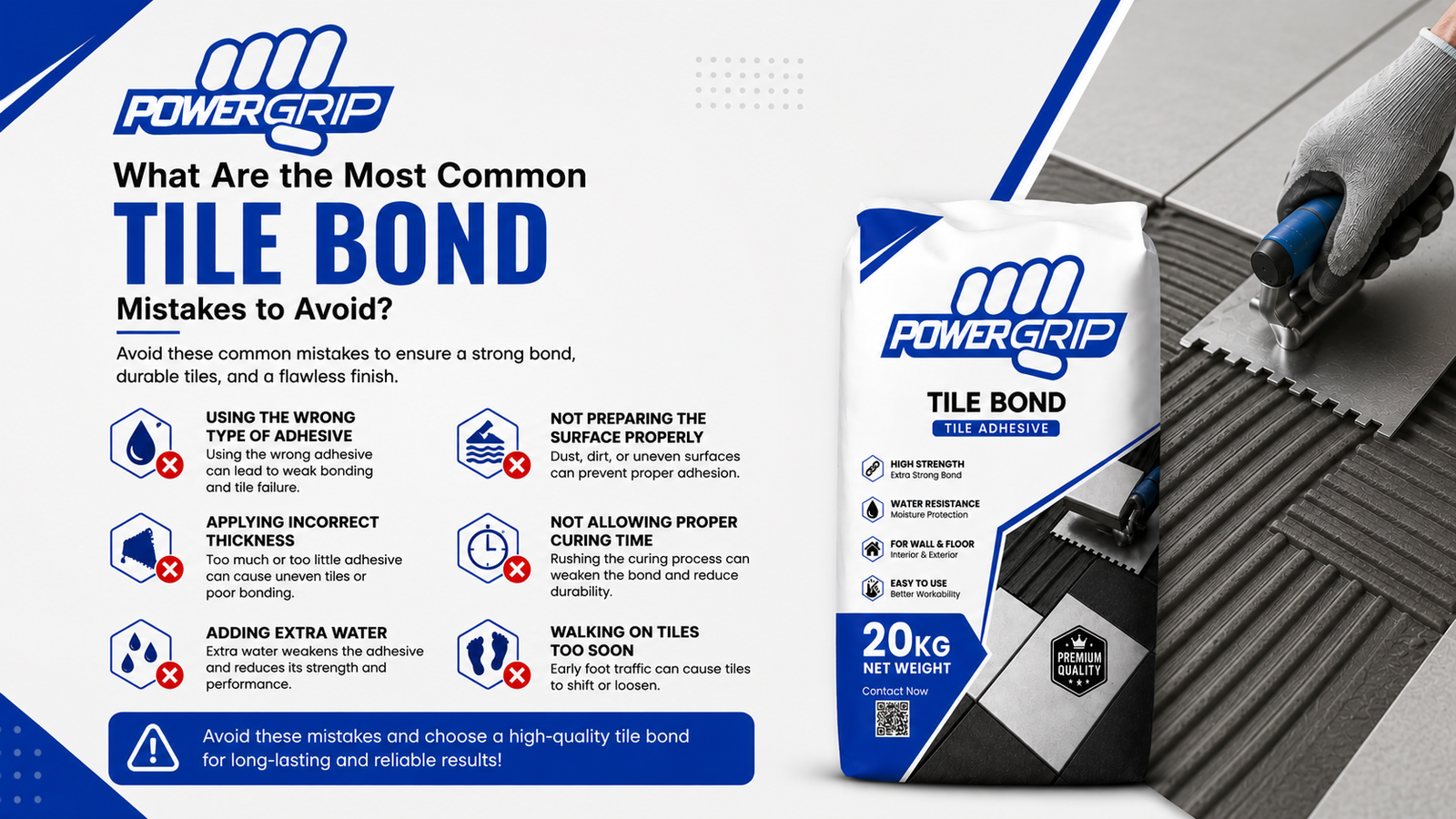
What Are the Most Common Tile Bond Mistakes to Avoid?
Many tile failures occur because of simple installation errors rather than poor product quality.
Using the Wrong Adhesive
Different tiles require different adhesive formulations. For example, porcelain tiles need stronger bonding than many ceramic tiles.
Applying Adhesive on a Dirty Surface
Dust, oil, and debris reduce adhesion significantly.
Mixing Incorrectly
Too much water creates a weak mixture that can shrink and crack during curing.
Ignoring Expansion Joints
Large tiled areas naturally expand and contract with temperature changes. Without movement joints, tiles may lift or crack.
Poor Adhesive Coverage
Incomplete coverage creates hollow areas beneath tiles, increasing the risk of breakage.
Walking Too Soon
Allow the adhesive enough time to develop its full strength before exposing the floor to traffic.
Can One Tile Bond Be Used for Every Project?
The simple answer is no.
Every project has different performance requirements.
For example:
- A kitchen floor experiences heavy foot traffic.
- A bathroom requires moisture resistance.
- A balcony faces rain, sunlight, and temperature fluctuations.
- A swimming pool demands waterproof performance.
- A commercial building handles much heavier loads than a residential room.
Using the same adhesive everywhere may seem convenient, but it often leads to premature failure.
Selecting the right product for the environment ensures better durability and fewer maintenance issues.
What Makes a High Quality Tile Adhesive Worth the Investment?
Although premium adhesives cost more initially, they often deliver greater value over the life of the installation.
Advantages of Premium Adhesives
- Stronger bonding performance
- Better flexibility
- Improved water resistance
- Reduced cracking
- Excellent performance with porcelain tiles
- Longer service life
- Better compatibility with underfloor heating systems
- Lower maintenance costs
For homeowners, spending slightly more on quality adhesive is usually far less expensive than replacing loose or damaged tiles later.
How Can You Tell If a Tile Bond Is High Quality?
Before purchasing, evaluate the product carefully.
Look for these indicators:
- Compliance with recognized quality standards
- Suitable for your tile type
- Suitable for indoor or outdoor use
- Moisture-resistant formulation
- Clear manufacturer instructions
- Good working time
- Positive reputation among professional installers
- Reliable technical support
Reading the product’s technical data sheet can also help you compare important performance characteristics.
What Maintenance Tips Help Tiles Last Longer?
Proper installation is only the beginning. Good maintenance extends the life of both the tiles and the adhesive.
Best Practices
- Clean spills promptly.
- Avoid harsh acidic cleaners on natural stone.
- Repair damaged grout quickly.
- Inspect outdoor tiled areas annually.
- Replace cracked tiles before moisture reaches the adhesive layer.
- Use appropriate cleaning products for the tile material.
These simple habits help preserve both appearance and structural integrity for many years.
Frequently Asked Questions
Which tile bond is best for porcelain tiles?
Polymer modified tile adhesive is generally the best choice for porcelain tiles because porcelain has very low water absorption.
This type of adhesive provides stronger bonding, better flexibility, and improved long term performance.
Can tile bond be used on existing tiles?
Yes. Many premium tile adhesives are designed for tile over tile installation. However, the existing tiles must be clean, firmly attached, and free from grease, polish, or loose material before applying the new adhesive.
How long does tile bond take to dry?
Drying and curing times vary depending on the product, temperature, and humidity.
Most adhesives allow light foot traffic after 24 hours, while full curing may take 48 to 72 hours. Always follow the manufacturer’s recommendations.
Is tile bond waterproof?
Most standard tile adhesives are water-resistant, making them suitable for kitchens and bathrooms. For areas with constant water exposure, such as swimming pools or water tanks, use a waterproof system that includes the appropriate adhesive and waterproofing membrane.
How much tile bond do I need for my project?
The amount depends on:
- Tile size
- Surface condition
- Trowel notch size
- Adhesive thickness
On average, a 20 kg bag of tile adhesive covers approximately 4 to 6 square meters, though actual coverage may vary based on the installation method.
Conclusion
Choosing the popular tile bond for your project is about much more than picking the cheapest adhesive on the shelf.
The right product depends on your tile material, installation area, substrate, and environmental conditions.
When combined with proper surface preparation and professional installation techniques, a quality tile adhesive creates a durable, safe, and attractive finish that can last for decades.
Whether you are installing ceramic tiles in a living room, porcelain tiles in a bathroom, or natural stone in an outdoor space, selecting the correct adhesive is a smart investment that helps prevent costly repairs in the future.
Before making your purchase, compare product specifications, verify compatibility with your project, and follow the manufacturer’s installation guidelines.
Taking these extra steps will give you stronger bonding, improved durability, and greater peace of mind.