


Choosing the right granite tile adhesive Pakistan is an important part of a successful granite installation. Granite is dense, heavy, and generally less absorbent than many common ceramic tiles.
Because of these characteristics, the bonding material needs to provide suitable contact between the granite and the prepared surface.
A poor adhesive choice or weak installation method can contribute to loose tiles, hollow areas, movement, cracks, or debonding.
The adhesive itself is only one part of the installation system. Surface preparation, granite size, substrate condition, application method, and curing time also affect the final result.
For projects in Karachi, local conditions can make these factors even more important. Heat, humidity, construction dust, moisture, and different substrate types may affect how an adhesive performs during installation.
This guide explains how granite tile adhesive works, how to select it, how it compares with traditional cement and sand methods, and which installation mistakes should be avoided.
What Is Granite Tile Adhesive?
Granite tile adhesive is a bonding material designed to fix granite tiles or other suitable stone surfaces to a prepared building substrate.
Since granite is dense and has relatively low water absorption, the adhesive needs to be appropriate for both the stone and the surface underneath it.
Traditional cement and sand methods have been widely used for granite and tile installation in Pakistan.
Tile adhesives provide a more controlled bonding approach and are available in formulations designed for different tile types, substrates, and installation conditions.
However, there is no single adhesive that automatically works for every granite project.
The correct choice depends on factors such as granite dimensions, weight, surface finish, substrate type, location, moisture exposure, and the manufacturer’s technical recommendations.
For this reason, selecting granite tile adhesive Pakistan should be based on the complete installation requirement rather than the product name or price alone.
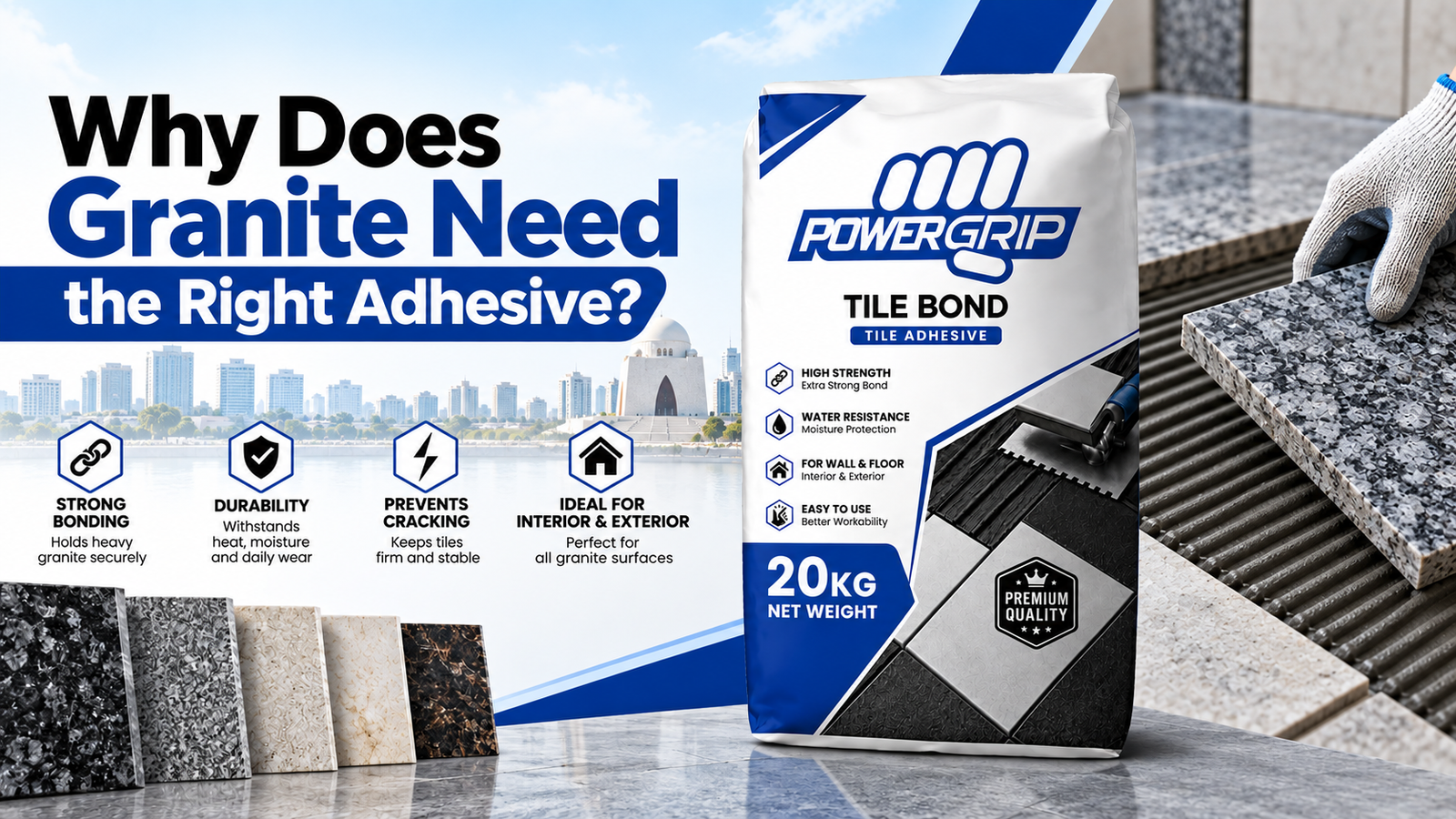
Why Does Granite Need the Right Adhesive?
Granite can be considerably heavier and less porous than ordinary ceramic tiles.
This places different demands on the bonding system, especially when large granite pieces are being installed.
A weak or unsuitable adhesive may not develop the required bond if the surface underneath is dusty, unstable, uneven, damp, oily, or contaminated.
Even a technically suitable product can perform poorly when the substrate has not been prepared correctly.
Application technique also matters. Too little adhesive, poor coverage, an unsuitable trowel, incorrect mixing, or placing the granite after the adhesive has started to lose its working properties can all reduce contact.
For heavy granite, adequate adhesive coverage is particularly important because empty spaces beneath the tile can increase the possibility of movement or localized stress.
Where Can Granite Tile Adhesive Be Used?
Granite adhesive can be suitable for several applications when the selected product is specifically approved for the intended use.
The application should always be checked against the manufacturer’s technical information.
Common uses include:
- Granite flooring in residential, commercial, and office spaces
- Granite wall installations on suitable substrates
- Interior renovation and construction projects
- Selected exterior granite installations
- Large or dense stone tile applications where an appropriate bonding system is required
The installation environment should always be considered. An adhesive intended for an interior wall should not automatically be used for an exposed outdoor floor.
Outdoor projects may involve rain, sunlight, temperature changes, and moisture that can create additional demands on the bonding system.
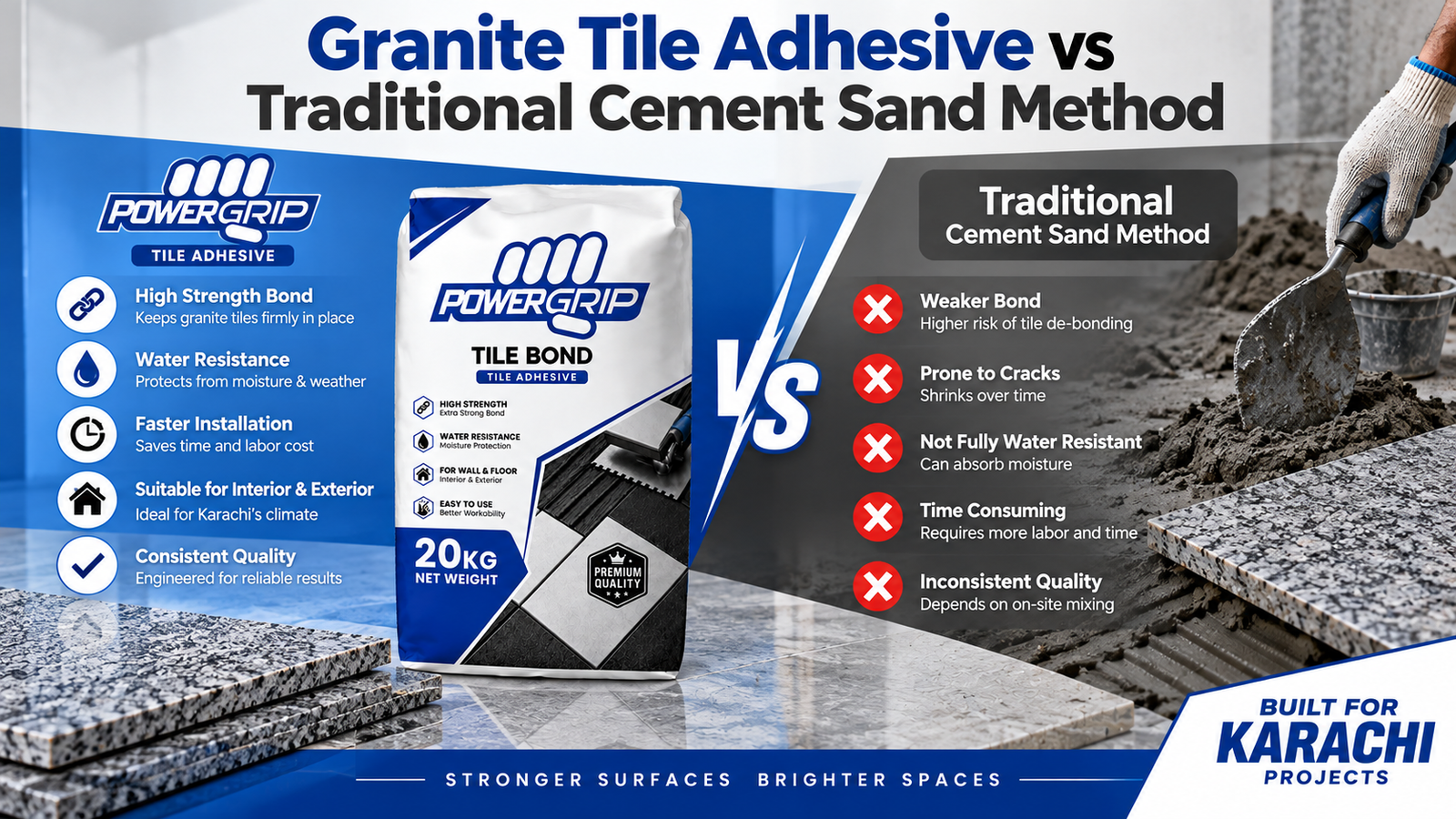
Granite Tile Adhesive vs Traditional Cement Sand Method
Cement and sand installation has been used for many years in Pakistan for tile and stone work.
Modern tile adhesives offer a different installation system that can provide more controlled application and positioning when the product is correctly selected and applied.
Factor | Tile Adhesive | Cement and Sand Method |
Application | Applied as a prepared bonding layer | Usually installed as a mortar bed |
Thickness | Generally controlled according to product instructions | May vary depending on the installation |
Tile positioning | Allows controlled adjustment during working time | Depends strongly on the mortar method |
Substrate | Requires suitable surface preparation | Can accommodate some leveling approaches depending on the system |
Material selection | Should match the tile and substrate | Mix proportions and workmanship affect performance |
Large granite | May be suitable when specifically rated | Requires careful mortar preparation |
Consistency | Depends on correct product preparation | Can vary with site mixing |
Neither system should be selected simply because it is newer, cheaper, or more common.
The right method depends on the granite, substrate, project conditions, installation location, and skill of the installer.
What Type of Adhesive Is Suitable for Granite?
There is no universal adhesive that is best for every granite installation. Instead, the product should be selected according to the granite and the surface where it will be installed.
A suitable product may need appropriate adhesion, working time, load capacity, moisture resistance, and application characteristics.
Larger and heavier granite pieces require particular attention to the manufacturer’s stated limitations and recommended applications.
Before purchasing, check the technical documentation and confirm that the product is intended for natural stone or granite where required.
Granite Floor Adhesive
Granite flooring is exposed to regular foot traffic and may also carry furniture, equipment, or other loads.
The adhesive should therefore be selected according to the granite dimensions, substrate, expected traffic, and installation environment.
Large granite floor tiles need careful attention to coverage.
Gaps beneath a heavy tile can create unsupported areas and may contribute to movement or damage over time.
The floor should also be sufficiently stable and prepared before adhesive application. An adhesive should not be used as a substitute for correcting major substrate problems.
Granite Wall Adhesive
Wall installations have different requirements because gravity continuously acts on the granite.
The bonding system must be appropriate for the weight, size, substrate, and vertical installation.
For large or heavy granite pieces, follow the manufacturer’s application recommendations carefully. A general purpose tile adhesive should not automatically be assumed to be appropriate for heavy natural stone on a wall.
Outdoor Granite Adhesive
Outdoor granite installations can face more demanding conditions than indoor applications.
In Karachi, strong sunlight, high temperatures, humidity, rain, and temperature changes may affect an exterior installation.
When installing granite outdoors, select a product that is specifically identified as suitable for the intended exterior application.
An adhesive designed for an indoor environment should not be treated as an outdoor product without confirmation from its technical documentation.
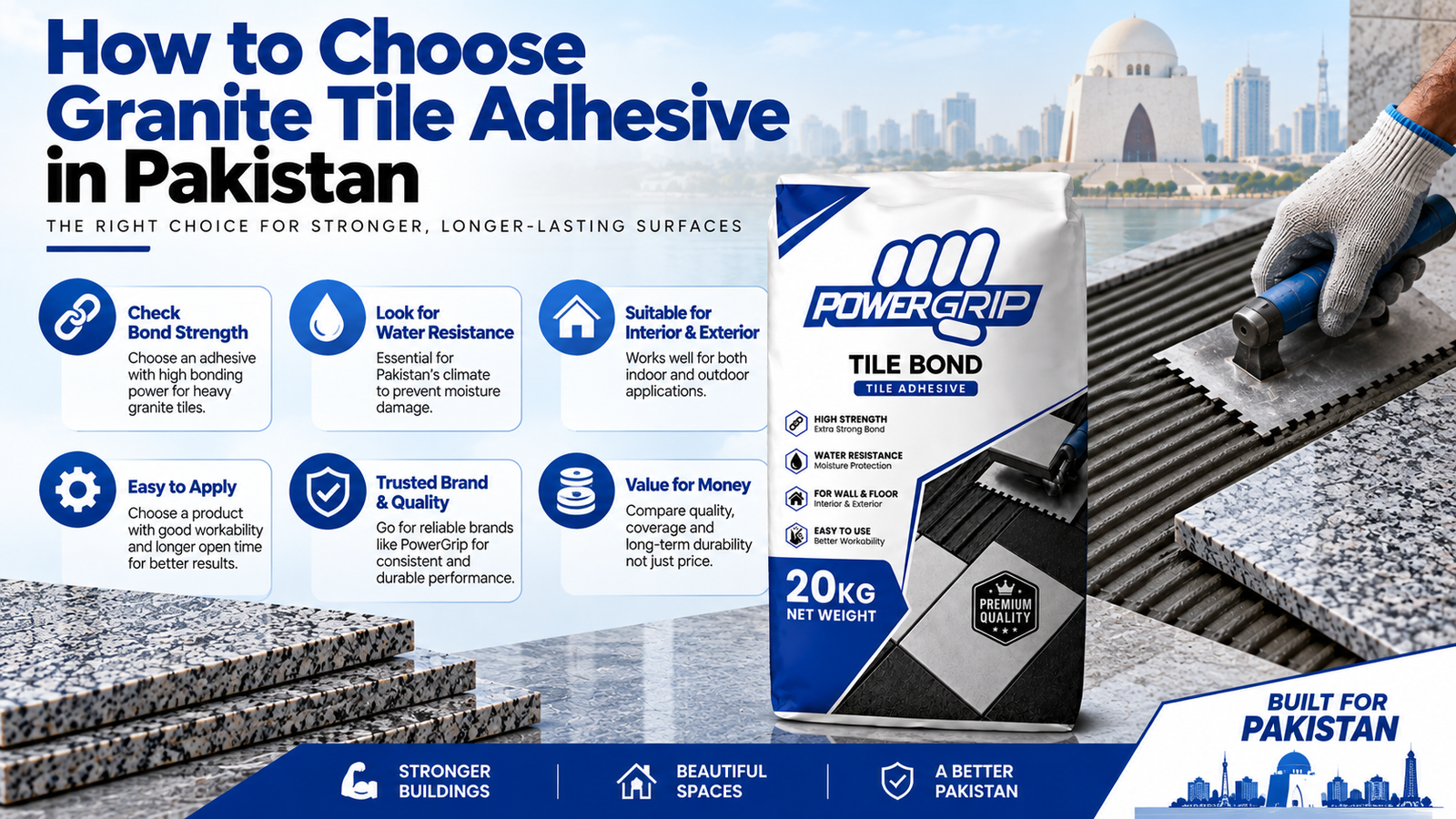
How to Choose Granite Tile Adhesive in Pakistan
The right adhesive should be selected by considering the complete installation rather than focusing only on the label or price.
1. Check Granite Type and Size
Granite is available in different thicknesses, dimensions, finishes, and weights. A small granite tile installed on an interior floor does not necessarily have the same requirements as a large-format stone piece.
Before purchasing adhesive, identify the granite dimensions and approximate weight. This information can help determine whether the product is suitable for the application.
2. Identify the Substrate
The substrate is the surface onto which the granite will be installed. It may include concrete, cement render, screed, an existing tiled surface, or another suitable construction material.
The adhesive needs to be compatible with that substrate. The surface should also be stable, clean, and properly prepared before installation.
3. Consider Indoor or Outdoor Use
Indoor and outdoor installations experience different environmental conditions. Exterior granite may be exposed to rain, moisture, sunlight, and temperature changes.
If the project is outdoors, choose an adhesive specifically approved for the intended exterior conditions.
4. Consider Granite Weight
Granite can place a substantial load on the bonding system, especially when large-format pieces are involved.
Do not choose an adhesive simply because the packaging says it can be used with tiles. Check whether the manufacturer’s information covers the intended granite or natural stone application and tile size.
5. Follow the Application Instructions
Different adhesives have different mixing ratios, working times, application methods, and curing requirements.
Adding extra water may make an adhesive easier to spread, but changing the recommended mix can affect its performance. Always follow the manufacturer’s instructions instead of adjusting the mixture based only on convenience.
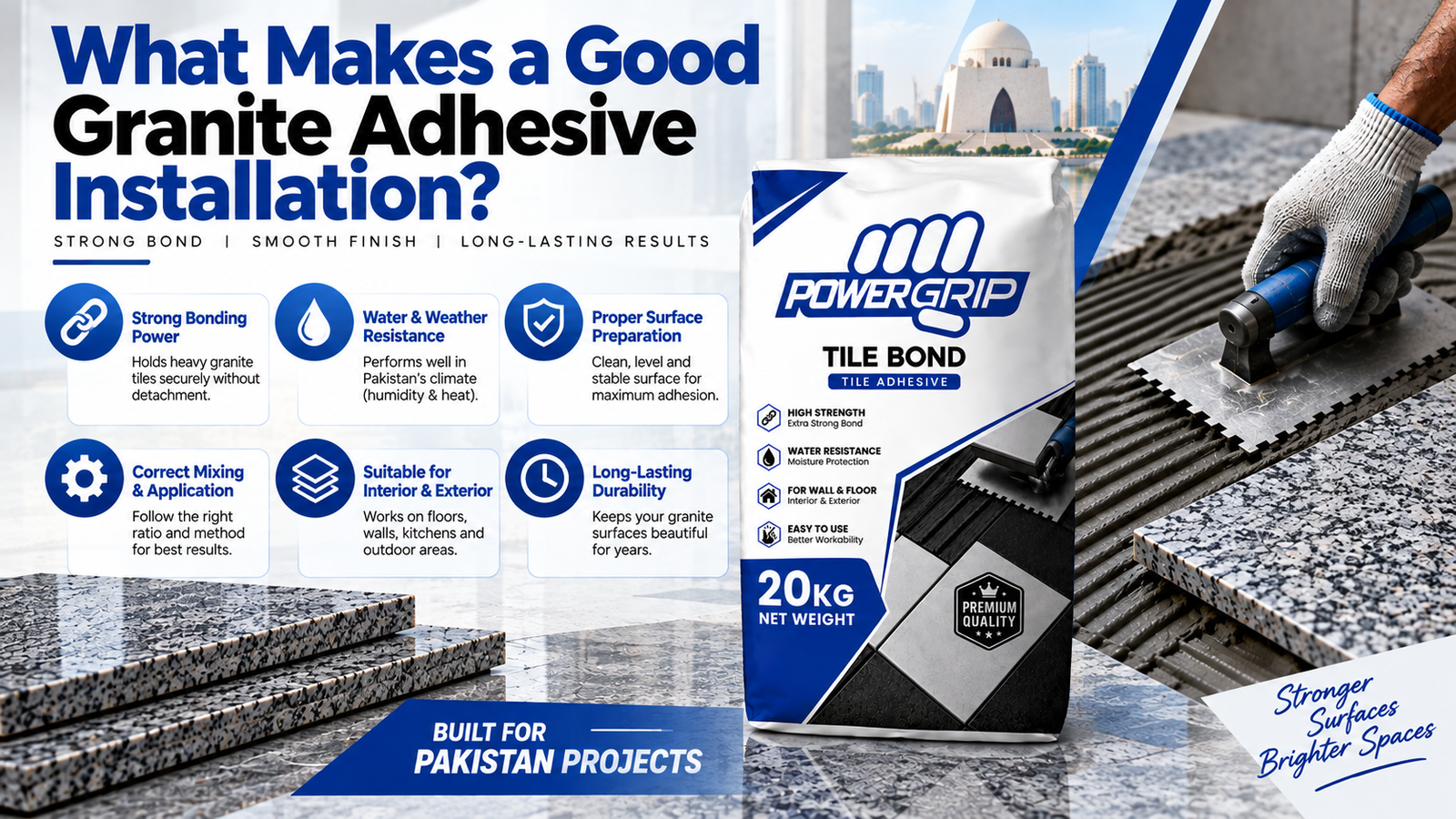
What Makes a Good Granite Adhesive Installation?
A successful granite installation depends on several factors working together. Adhesive selection, substrate preparation, mixing, application, coverage, tile placement, and curing all contribute to the finished result.
The substrate should be structurally sound and free from loose dust, grease, paint, and other contaminants that could interfere with bonding. Significant unevenness should be corrected before the adhesive is applied.
The adhesive should be mixed according to the manufacturer’s instructions. Preparing manageable quantities can help prevent material from remaining unused after its recommended working period.
During application, use the recommended trowel or application method. Spread the adhesive evenly and place the granite within the specified working time.
For larger granite tiles, achieving suitable contact between the adhesive and the tile becomes particularly important. Depending on the product and installation conditions, a combined application method or back buttering may be recommended.
The exact technique should always follow the adhesive manufacturer’s instructions.
Can Granite Tile Adhesive Be Used in Karachi?
Yes, granite tile adhesive can be suitable for appropriate granite installations in Karachi when the product matches the granite, substrate, and installation conditions.
Karachi construction sites may involve high temperatures, humidity, dust, active building work, and different substrate conditions. These factors make surface preparation, storage, mixing, and application especially important.
The adhesive should also be stored according to the manufacturer’s recommendations. Exposure to unsuitable moisture or environmental conditions before use can affect the material.
For local product research, Power Grip can be considered as one source when reviewing tile bonding products available in Pakistan. The specific product should still be checked against its current technical information before being selected for granite.
Common Problems When Installing Granite
Granite installation problems are not always caused by the adhesive.
A poor substrate, insufficient coverage, movement, improper mixing, or incorrect installation technique can produce similar symptoms.
Hollow Sound Under Granite
A hollow sound may indicate incomplete contact between the granite and substrate, although sound alone cannot confirm the exact cause.
Large or heavy granite pieces require careful attention to adhesive coverage. Areas without sufficient support can create problems over time.
Granite Movement
Granite movement can result from an unsuitable bonding system, an unstable substrate, inadequate adhesive coverage, or loading the installation before it has properly set.
Finding the actual cause is important before attempting a repair.
Cracked Granite
Granite can crack for several reasons. Structural movement, inadequate support, impact, handling damage, or unsuitable installation conditions may contribute to cracking.
Changing the adhesive alone may not solve a structural or substrate related problem.
Debonding
Debonding occurs when the granite separates partially or completely from the substrate.
Possible causes include dust or contamination, a weak substrate, incorrect adhesive preparation, insufficient coverage, unsuitable product selection, or incompatibility between the adhesive and the installation system.
Common Mistakes to Avoid
A suitable adhesive can still fail when basic installation practices are ignored. These mistakes can also increase material waste and create expensive repair work later.
- Installing over a dusty or contaminated substrate.
- Choosing an adhesive without checking granite or natural stone compatibility.
- Adding excess water during mixing.
- Mixing more material than can be used within its working time.
- Using an unsuitable trowel or application technique.
- Ignoring the granite’s size and weight.
- Assuming an interior adhesive is suitable for exterior use.
- Loading newly installed flooring before the recommended setting period.
- Ignoring required movement joints or substrate movement.
- Trying to correct major substrate unevenness by applying excessive adhesive.
Avoiding these issues can improve installation consistency and reduce the risk of unnecessary repairs.
How to Prepare the Surface Before Applying Granite Adhesive
Surface preparation is one of the most important parts of granite installation.
The substrate should be stable, adequately cured where required, and free from loose material. Dust, oil, grease, old coatings, and other contaminants should be removed or treated according to the installation system.
Major unevenness should also be corrected before applying the adhesive. Using excessive adhesive to compensate for a seriously uneven surface can result in inconsistent thickness and poor contact.
Moisture conditions should also be checked. Some installations may require a particular moisture condition or primer, while others may have different requirements.
The adhesive manufacturer’s technical documentation should be used as the primary guide for substrate preparation.
How Much Granite Tile Adhesive Do You Need?
Adhesive consumption depends on several factors, including granite dimensions, substrate flatness, trowel size, application technique, adhesive thickness, and required coverage.
For this reason, calculating adhesive requirements from floor area alone may not produce an accurate estimate.
The manufacturer’s stated coverage information provides a better starting point. Actual site conditions should then be considered when planning the required quantity.
For larger projects, applying the product to a small test area can help confirm coverage and application behavior before beginning the complete installation.
Practical Buying Checklist for Granite Tile Adhesive
Before buying granite tile adhesive in Pakistan, compare the product information with the actual requirements of your project rather than choosing only by price.
Check the following before purchase:
- Granite or natural stone compatibility
- Floor or wall suitability
- Interior or exterior application
- Substrate compatibility
- Suitability for large or heavy tiles
- Mixing instructions
- Working and setting information
- Recommended application thickness
- Storage requirements
- Manufacturer’s technical guidance
If important information is unclear, contact the supplier or manufacturer before beginning the installation.
How Power Grip Can Fit Into Your Research
When researching granite tile adhesive Pakistan, local availability can be useful for project planning.
Product access, transportation, supplier support, and technical information may all affect purchasing decisions.
Power Grip can be included in the research process when comparing tile bonding products available through a Pakistan-based brand or supplier.
However, the final product choice should depend on the current technical information and the specific requirements of the granite installation.
If you are comparing products, review the stated applications, substrate compatibility, granite suitability, coverage information, and installation instructions before making a decision.
Frequently Asked Questions
Is granite tile adhesive better than cement?
Tile adhesive and cement based mortar are different installation systems. A suitable adhesive can provide a controlled bonding layer and may be appropriate for certain granite applications. The better option depends on the granite, substrate, project conditions, and installation method.
Can ordinary tile adhesive be used for granite?
Not necessarily. Granite is dense and can be heavy, so the adhesive should be suitable for the intended natural stone or granite application. Always check the manufacturer’s technical information before using a general tile adhesive.
Which adhesive is best for granite in Pakistan?
There is no single adhesive that is best for every granite project. The suitable product depends on granite size and weight, substrate, installation location, moisture exposure, and the manufacturer’s approved applications.
Can granite adhesive be used outdoors in Karachi?
It can be suitable when the product is specifically designed and rated for the intended exterior conditions. Outdoor installations should account for weather, temperature changes, moisture, substrate movement, and correct application procedures.
Does granite require back buttering?
Large or heavy granite installations may benefit from a combined application method, including adhesive on the substrate and, where recommended, the back of the granite. The correct technique depends on the adhesive, granite dimensions, and installation requirements.
Why does granite become loose after installation?
Loose granite may result from poor surface preparation, insufficient adhesive coverage, incorrect mixing, unsuitable adhesive, substrate movement, or premature loading. The exact cause should be assessed at the installation site.
How can I reduce granite adhesive problems?
Start by selecting a suitable product and preparing the substrate correctly. Follow the manufacturer’s mixing and application instructions, achieve appropriate coverage, and allow the installation to set for the recommended period before loading it.
Should I choose granite adhesive based only on price?
No. A lower purchase price does not necessarily mean a lower total project cost. Product suitability, coverage, wastage, installation requirements, and the possibility of future repairs should also be considered.
Conclusion
Choosing granite tile adhesive in Pakistan involves more than selecting a product labeled for tiles.
Granite is dense and can be heavy, so the bonding system should match the stone, substrate, installation location, and expected environmental conditions.
For Karachi projects, surface preparation deserves particular attention because heat, humidity, dust, and changing construction conditions can affect installation quality.
The adhesive should be mixed and applied according to the manufacturer’s instructions, and the product should never be used outside its stated purpose.
When researching locally available options, Power Grip can be one product source to review.
The final selection should always be based on verified product information and the specific requirements of the granite installation.
Before purchasing, identify the granite size, substrate type, and whether the project is indoors or outdoors.
These three factors provide a useful starting point for comparing suitable adhesive options.