

Selecting the right bond for tile is one of the most important steps in any tile installation project.
Whether you are renovating a bathroom, upgrading a kitchen, or installing flooring in a commercial building, the adhesive you choose directly affects the strength, durability, and lifespan of the finished surface.
Modern construction no longer relies only on traditional cement mortar for fixing tiles.
Today, high-quality tile adhesive products provide better bonding strength, improved flexibility, and greater resistance to moisture and temperature changes.
They also reduce installation time while helping create a smooth, professional finish.
In recent years, the demand for tile adhesive in Pakistan has grown as homeowners and contractors increasingly prefer ready-mixed or cement-based adhesives for ceramic, porcelain, and natural stone tiles.
Choosing the correct adhesive ensures tiles remain firmly attached even under heavy foot traffic or changing weather conditions.
This guide explains everything you need to know, from adhesive types and applications to expert recommendations and practical installation advice.
What Is Bond for Tile?
A bond for tile is a specially formulated adhesive designed to securely attach tiles to a prepared surface.
Unlike ordinary cement mortar, tile adhesives contain polymers and additives that improve adhesion, flexibility, and durability.
These adhesives work by creating a strong mechanical and chemical connection between the tile and the substrate.
Once cured, they hold tiles firmly in place while resisting moisture, movement, and daily wear.
Modern tile installation adhesive products are suitable for many surfaces, including:
- Concrete floors
- Cement plaster walls
- Gypsum boards
- Existing tiled surfaces
- Cement backer boards
- Outdoor concrete slabs
The correct adhesive depends on several factors, including tile size, tile material, installation location, and environmental conditions.
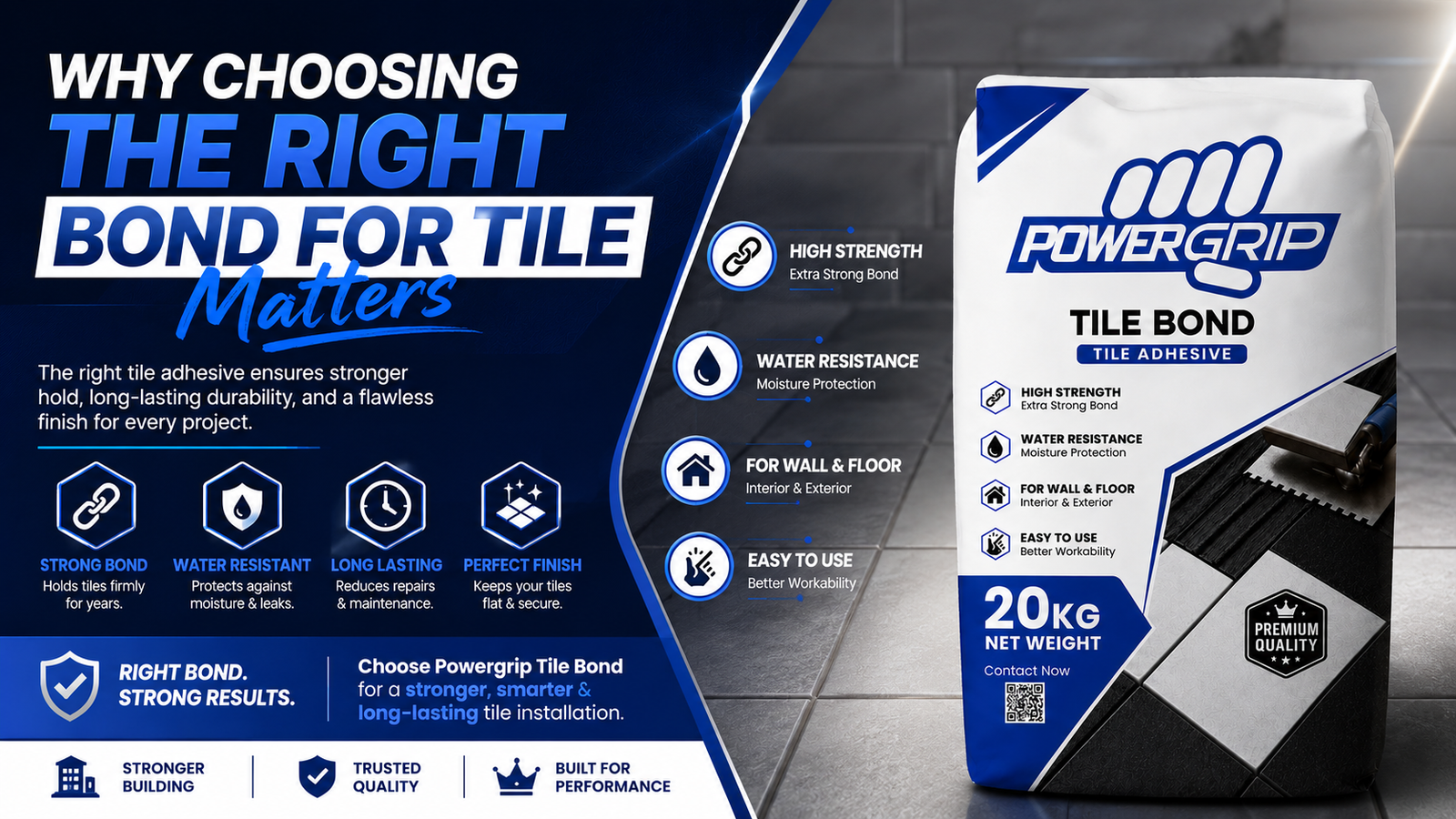
Why Choosing the Right Bond for Tile Matters
Many tile failures occur because installers use the wrong adhesive instead of selecting a product suitable for the project.
A properly selected adhesive provides several advantages:
It creates a durable bond that supports heavy loads without cracking or loosening.
This is especially important for large format porcelain tiles, which require greater adhesion than standard ceramic tiles.
The right adhesive also improves resistance to moisture. Bathrooms, kitchens, balconies, and swimming pool areas experience constant exposure to water.
Using an appropriate adhesive prevents water from weakening the bond over time.
Temperature changes can also affect tile installations. High-quality adhesives accommodate slight movement caused by expansion and contraction, reducing the likelihood of cracked grout joints or detached tiles.
Professional installers often recommend selecting adhesive based on performance rather than price alone.
Spending slightly more on a quality product usually reduces future repair costs.
Types of Tile Adhesives
Different projects require different adhesive formulations. Each type offers unique performance characteristics.
Cement Based Tile Adhesive
Cement-based adhesive is the most common option for residential and commercial construction.
It is supplied as a dry powder that is mixed with water before application. Once mixed, it forms a strong and durable bond suitable for most indoor and outdoor installations.
This adhesive works well for ceramic and porcelain tiles installed on concrete or cement plaster surfaces.
Ready Mixed Adhesive
Ready-mixed adhesive comes pre-prepared and requires no additional mixing.
It is commonly used for smaller wall tiles in dry interior spaces. Since it is easy to apply, many homeowners prefer it for light renovation work.
However, it is generally not recommended for heavy floor tiles or permanently wet environments.
Epoxy Tile Adhesive
Epoxy adhesive consists of resin and hardener components that create an extremely strong chemical bond.
This adhesive is commonly used in hospitals, laboratories, food processing facilities, and industrial buildings where chemical resistance is important.
Although epoxy adhesives are highly durable, they require experienced application due to their shorter working time.
Flexible Polymer Modified Adhesive
Polymer modified adhesive includes special additives that increase flexibility and bonding strength.
It performs exceptionally well when installing large porcelain tiles, natural stone, heated flooring systems, and exterior wall cladding.
This type is widely considered a strong tile bonding solution for demanding installations.
Bond for Tile Comparison
Adhesive Type | Best Application | Water Resistance | Flexibility | Recommended Tile Type |
Cement-Based Adhesive | Floors and walls | High | Medium | Ceramic and porcelain |
Ready Mixed Adhesive | Indoor walls | Moderate | Medium | Small ceramic tiles |
Epoxy Adhesive | Industrial and wet areas | Excellent | High | Ceramic, porcelain, stone |
Polymer Modified Adhesive | Large format and exterior tiles | Excellent | Excellent | Porcelain and natural stone |
Ceramic Tile Adhesive vs Porcelain Tile Adhesive
Many homeowners believe all tiles require the same adhesive, but ceramic and porcelain tiles have different characteristics.
Ceramic tiles absorb more water, making them easier to bond with standard cement-based adhesives.
Porcelain tiles are much denser and absorb very little water. Because of this, they require higher-performance porcelain tile adhesive with stronger bonding capabilities.
Professional installers often recommend polymer-modified adhesives when installing porcelain flooring or large wall tiles because they provide superior grip and flexibility.
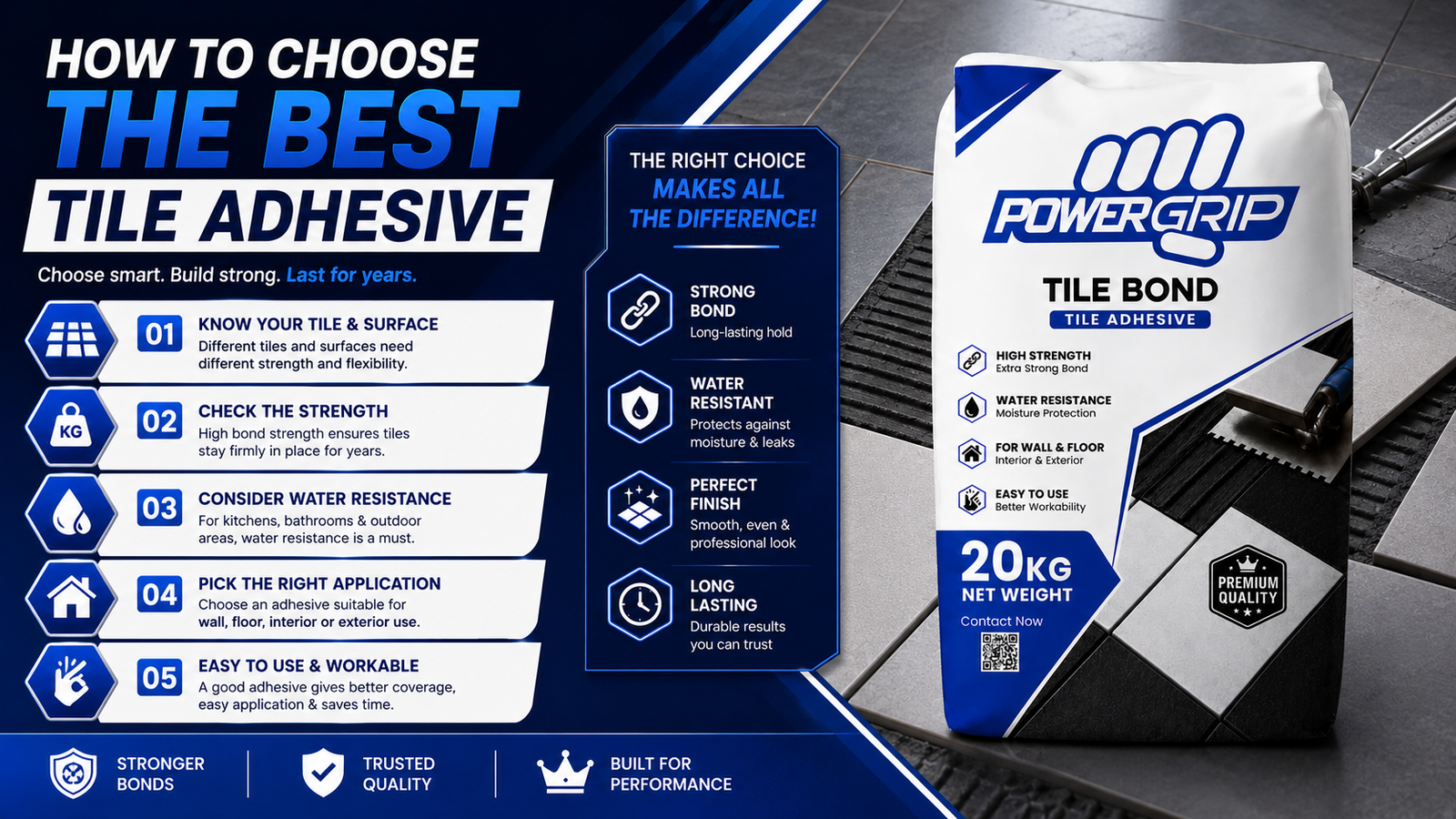
How to Choose the Best Tile Adhesive
Selecting the correct adhesive depends on several project-specific factors.
The first consideration is tile material. Ceramic, porcelain, glass mosaic, marble, and granite each have different bonding requirements.
Installation location also matters. A kitchen backsplash has different performance needs than an outdoor patio or commercial shopping area.
Surface condition plays an equally important role. Concrete, cement plaster, gypsum board, and existing tiled surfaces all require compatible adhesive systems.
Climate conditions should never be overlooked. Areas exposed to extreme heat, cold, or moisture benefit from high-performance polymer-modified adhesives that maintain their bond over time.
For homeowners searching for the best tile adhesive in Pakistan, choosing a product that meets recognized quality standards and matches the intended application often delivers better long term performance than selecting the least expensive option.
Floor Tile Adhesive and Wall Tile Adhesive
Although many modern adhesives work for both applications, some products are specifically designed for either floors or walls.
Floor tile adhesive is formulated to support heavy loads, continuous foot traffic, furniture weight, and occasional impact.
It provides high compressive strength while resisting movement caused by daily use.
Wall tile adhesive, on the other hand, focuses on excellent initial grip.
This prevents tiles from slipping during installation, making it easier to achieve straight and even tile alignment.
Using the correct adhesive for each application improves installation quality and helps extend the life of the tiled surface.
Benefits of Using Modern Tile Adhesive
Modern tile adhesives have transformed the way professionals install tiles.
Compared to traditional cement and sand mixtures, they offer higher performance, greater consistency, and improved durability.
Whether you are working on a residential renovation or a commercial construction project, selecting the right adhesive helps create a finish that lasts for many years.
Key Benefits of High Quality Tile Adhesive
- Provides stronger bonding between the tile and substrate.
- Reduces the risk of hollow-sounding or loose tiles.
- Improves resistance to water, moisture, and humidity.
- Supports ceramic, porcelain, and large-format tiles.
- Offers better flexibility to handle minor structural movement.
- Creates an even layer for professional tile installation.
- Helps reduce material waste during application.
- Suitable for both indoor and outdoor environments.
These advantages explain why professional contractors now prefer specialized adhesives instead of relying only on conventional mortar for most modern projects.
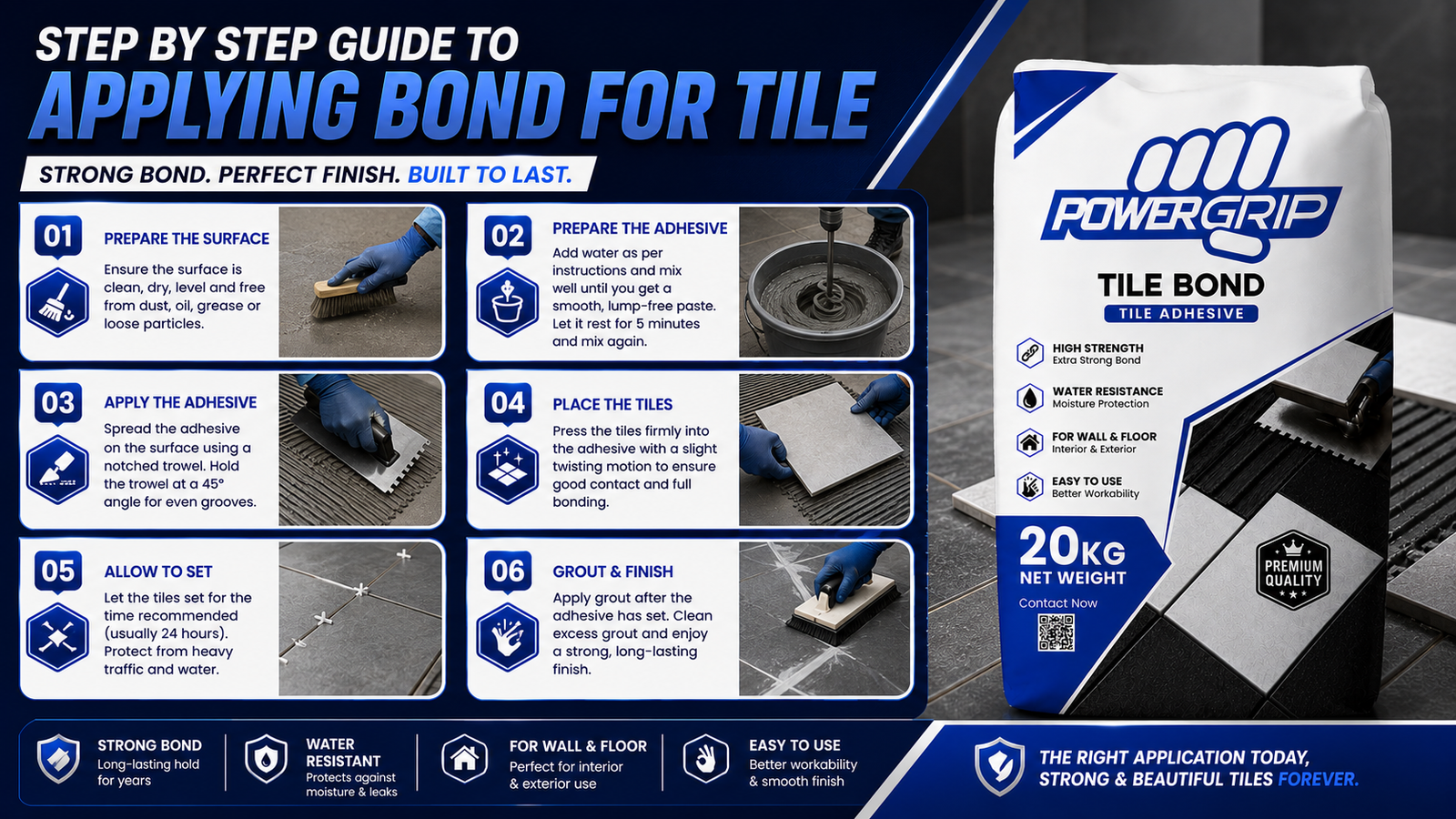
Step by Step Guide to Applying Bond for Tile
Proper installation is just as important as selecting the correct adhesive.
Even the highest quality product may fail if it is applied incorrectly.
Following the correct process helps achieve maximum bonding strength and a longer-lasting finish.
Start by preparing the installation surface.
It should be clean, dry, level, and free from dust, grease, loose particles, paint, or old adhesive residue. A properly prepared surface allows the adhesive to grip more effectively.
Next, prepare the adhesive according to the manufacturer’s instructions.
Cement-based products require accurate water measurements and thorough mixing to achieve the correct consistency.
Allow the mixture to rest briefly, if recommended, before using it.
Spread the adhesive evenly with a notched trowel.
The notch size should match the tile dimensions so that the adhesive provides full coverage beneath each tile.
Place each tile firmly into the adhesive while applying gentle pressure.
Slight twisting helps eliminate trapped air and improves contact between the tile and the adhesive layer.
Maintain consistent spacing using tile spacers.
This creates straight grout joints and produces a clean, professional appearance.
After installation, allow the adhesive to cure completely before grouting or exposing the tiled surface to traffic.
Curing time varies depending on product type, temperature, humidity, and tile size.
Careful installation significantly improves the long term performance of any tile fixing adhesive.
Common Mistakes That Can Cause Tile Failure
Many tile problems develop because of simple installation mistakes rather than poor quality materials.
Avoiding these errors can save significant repair costs and extend the life of the installation.
Applying adhesive over dirty or dusty surfaces reduces bonding strength because contaminants prevent proper contact with the substrate.
Using too little adhesive creates empty spaces beneath the tile.
These hollow areas increase the likelihood of cracks, especially in high-traffic locations.
Selecting a standard adhesive for heavy porcelain tile adhesive applications is another common mistake.
Dense porcelain requires stronger bonding products designed for low water absorption.
Some installers mix excessive water into cement-based adhesives.
This weakens the adhesive and reduces its overall strength after curing.
Ignoring curing times can also cause failure.
Walking on newly installed tiles before the adhesive fully hardens may break the bond before it reaches its designed strength.
Large-format tiles often require adhesive coverage on both the substrate and the back of the tile.
Skipping this practice may leave air pockets that reduce long-term durability.
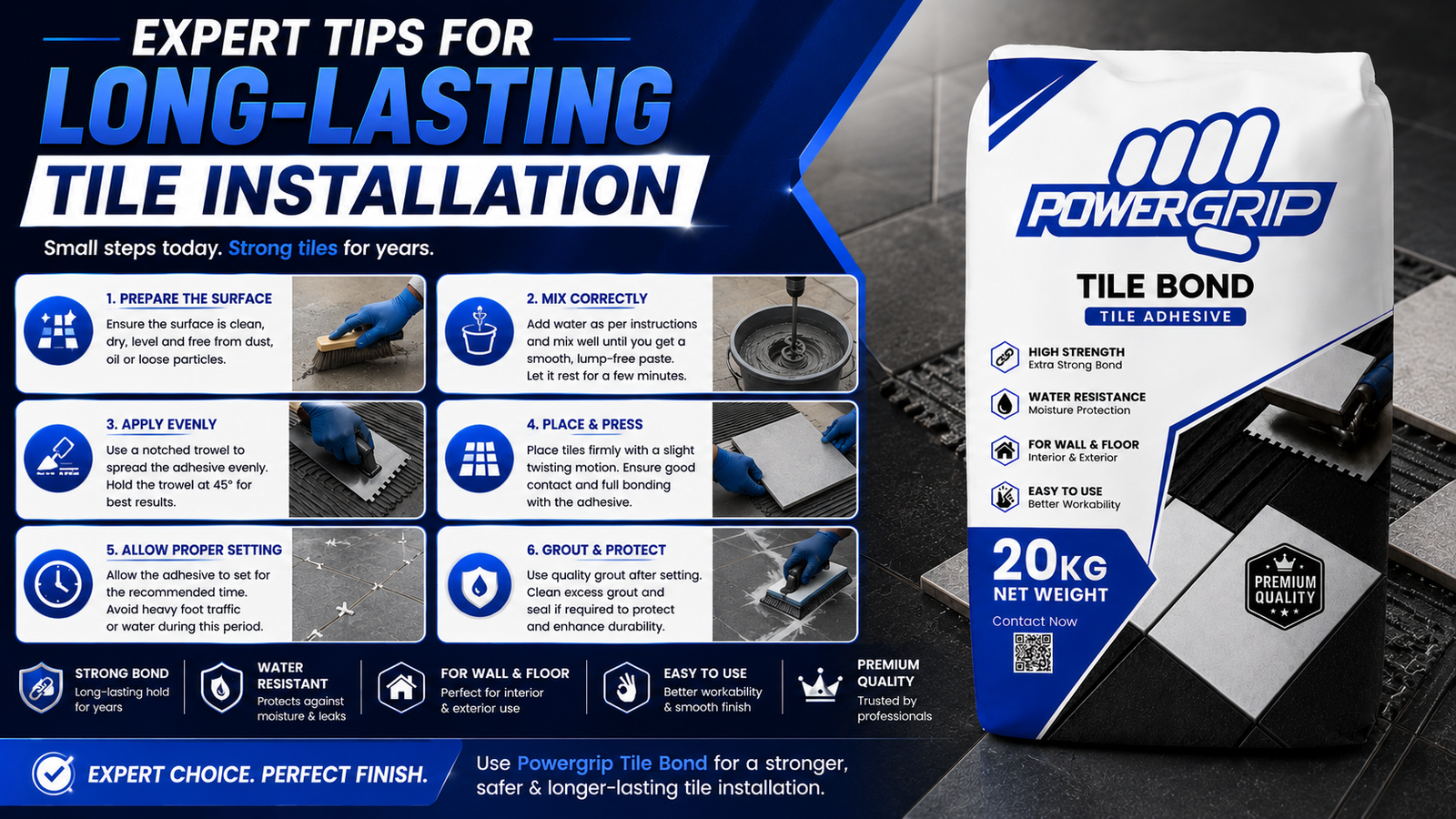
Expert Tips for Long-Lasting Tile Installation
Experienced tile installers follow proven practices that improve both appearance and durability.
These recommendations help achieve professional results regardless of project size.
Choose an adhesive designed specifically for your tile type instead of assuming one product fits every application.
Ceramic, porcelain, natural stone, and glass tiles all have different performance requirements.
Always check that the installation surface is flat before applying adhesive.
Uneven surfaces increase adhesive consumption and may create weak bonding areas.
Work in manageable sections instead of covering a large area with adhesive at once.
This prevents the adhesive from drying before tiles are installed.
Maintain the recommended adhesive thickness. Applying excessive material does not improve bonding and may actually reduce installation quality.
Environmental conditions also matter. Extremely hot, cold, or windy weather affects curing performance.
Following manufacturer recommendations helps achieve the expected bonding strength.
Professional installers also inspect every tile during installation to confirm full adhesive coverage.
Early corrections are much easier than repairing loose tiles after the project is complete.
Where Different Tile Adhesives Work Best
Choosing the right adhesive depends on the installation environment as much as the tile material itself.
Kitchen floors experience frequent foot traffic and occasional spills, making polymer-modified cement-based adhesives a reliable choice.
Bathrooms require excellent moisture resistance. A quality ceramic tile adhesive performs well for ceramic wall tiles, while dense porcelain flooring benefits from stronger polymer-enhanced products.
Outdoor patios and balconies face changing weather conditions.
Flexible adhesives designed for exterior use help absorb expansion and contraction caused by temperature changes.
Commercial buildings such as shopping centers, offices, and hospitals often install large porcelain tiles.
High-performance adhesives with excellent bonding strength provide better long-term reliability under constant use.
Swimming pools, industrial kitchens, and laboratories may require epoxy-based systems because of their superior resistance to water and chemicals.
Selecting the appropriate adhesive for each environment helps prevent future maintenance problems and extends the life of the installation.
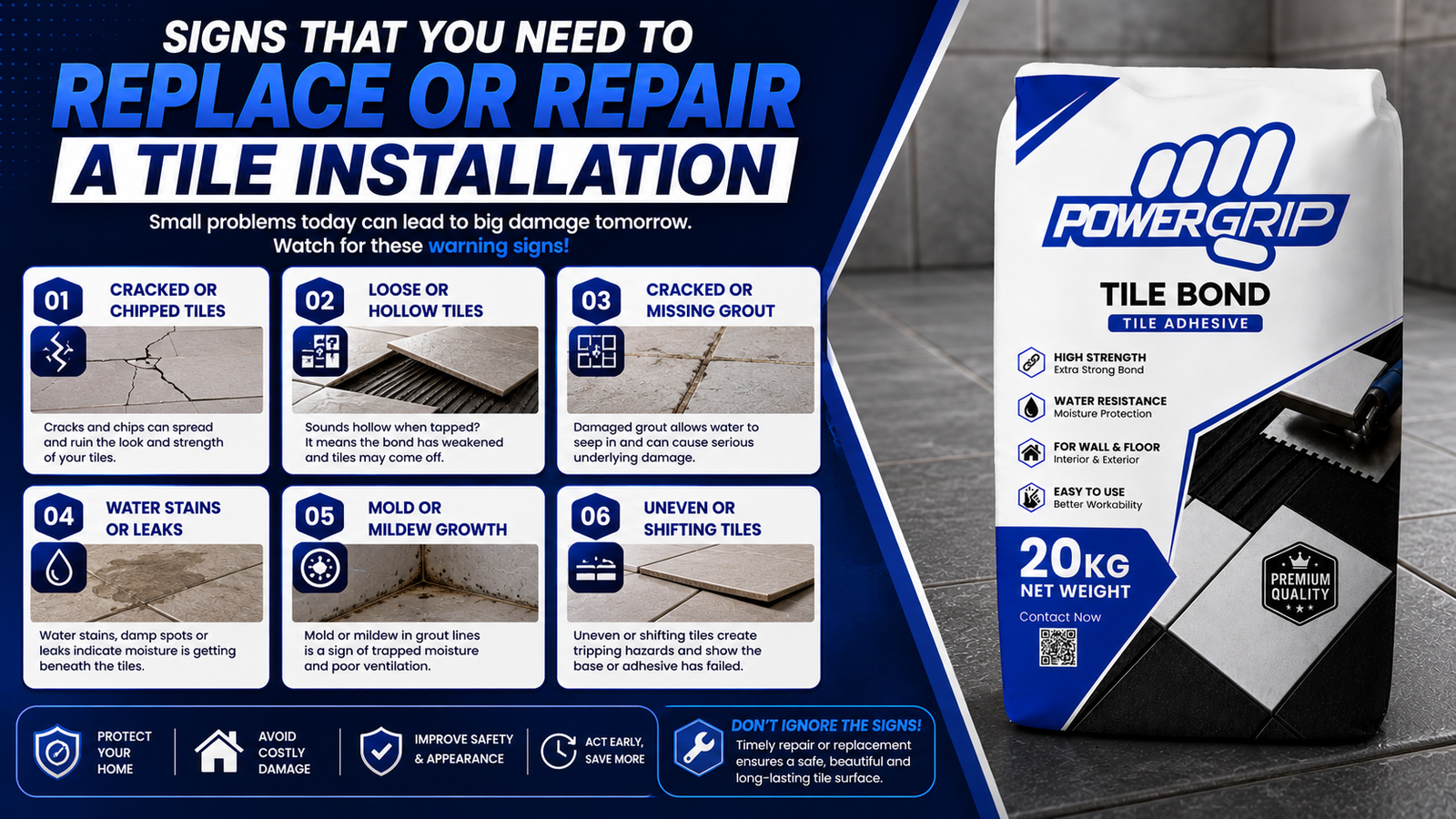
Signs That You Need to Replace or Repair a Tile Installation
- Multiple tiles sound hollow when tapped.
- Tiles begin to loosen or move under light pressure.
- Cracks appear across several tiles without impact.
- Grout lines continue to crack after repeated repairs.
- Water starts seeping beneath bathroom or kitchen tiles.
- Edges of tiles lift or become uneven over time.
- Mold or mildew develops because moisture is trapped below the tiles.
- Large sections of flooring lose their original level.
Addressing these issues early can prevent more extensive damage and reduce future repair costs.
In many cases, replacing damaged tiles with the correct bond for tile and following proper installation practices restores both appearance and structural reliability.
Frequently Asked Questions
What is the best bond for tile?
The best bond for tile depends on the project. Polymer-modified cement adhesives are widely recommended because they provide strong adhesion, flexibility, and moisture resistance for both residential and commercial applications.
Can the same tile adhesive be used for walls and floors?
Some modern adhesives are suitable for both applications, but wall tile adhesive and floor tile adhesive are often formulated with different performance characteristics. Always check the manufacturer’s recommendations before installation.
Which adhesive is best for porcelain tiles?
A high-performance porcelain tile adhesive is the preferred choice because porcelain absorbs very little water and requires greater bonding strength than standard ceramic tiles.
Is tile adhesive better than traditional cement mortar?
In most modern construction projects, yes. Tile adhesives provide more consistent bonding, better flexibility, improved water resistance, and easier application than conventional cement and sand mortar.
How long should tile adhesive cure before grouting?
Curing time varies by product and site conditions. Most cement-based adhesives require approximately 24 hours before grouting, while some premium products may have different curing schedules.
Always follow the manufacturer’s instructions.
Conclusion
Choosing the right bond for tile is essential for creating a durable, attractive, and long-lasting tiled surface.
The correct adhesive provides excellent bonding strength, resists moisture, supports different tile materials, and performs well under daily wear.
Whether you are installing ceramic wall tiles, porcelain flooring, or exterior paving, selecting an appropriate tile installation adhesive based on the project requirements delivers better results than relying on traditional mortar alone.
Proper surface preparation, correct application techniques, and allowing sufficient curing time are equally important for achieving a professional finish.
By selecting the right adhesive and following proven installation methods, homeowners, contractors, and builders can reduce maintenance issues, improve safety, and enjoy tile installations that remain strong and visually appealing for many years.