



Choosing the right tile adhesive for a kitchen in Karachi helps create a firm, even, and durable tiled surface.
Kitchen walls and floors face regular cleaning, food splashes, moisture, and daily use. The adhesive must suit the tile material, surface condition, and installation area.
Selecting a suitable product before tiling can help reduce loose tiles, hollow spots, and costly repairs.
Whether you are renovating a home in DHA, updating a kitchen in Gulshan-e-Iqbal, or completing a new residential project elsewhere in Karachi, the right adhesive matters.
However, the product alone does not determine the result. Surface preparation, correct mixing, proper application, and sufficient curing time also affect the quality of the installation.
This guide explains how kitchen tile adhesive works, which factors to consider before buying, how to apply it correctly, and what homeowners and contractors should check before starting a project.
What Is Tile Adhesive for a Kitchen?
Tile adhesive is a bonding material applied between a tile and a prepared surface. It holds ceramic, porcelain, and other suitable tiles in place on walls or floors.
Depending on its formulation, it may offer specific properties such as improved adhesion, workability, or resistance to moisture.
In a kitchen, adhesive is commonly used for wall tiles behind countertops, tiled areas around sinks, backsplashes, and suitable floor surfaces.
The correct product depends on the tile type, substrate, tile size, and expected exposure to water.
Unlike a traditional cement and sand mixture, formulated tile adhesives are designed specifically for tile installation.
However, not every adhesive is suitable for every surface or tile. Checking the manufacturer’s product instructions is essential before choosing one.
Why Does the Right Kitchen Tile Adhesive Matter in Karachi?
Kitchen tiles face different conditions depending on where they are installed.
A backsplash behind a cooking area may experience grease, heat, and frequent cleaning, while the wall behind a sink may receive repeated water splashes. Kitchen floors must also withstand foot traffic and routine washing.
Karachi’s warm weather and seasonal humidity can add to the practical challenges of construction. During installation, the temperature of the surface and surrounding air can affect how quickly some adhesives lose moisture or become difficult to work with.
Installers should follow the product’s specified working conditions rather than assuming that every adhesive behaves the same way.
The right adhesive, combined with proper installation, can help maintain tile alignment and reduce the risk of bonding problems. It also helps the finished surface remain functional and easier to maintain.
However, adhesive cannot correct every construction problem. A weak wall, unstable floor, active water leak, or unsuitable substrate should be addressed before tiling begins.
Which Type of Tile Adhesive Is Suitable for a Kitchen?
The best choice depends on the tile material and where you plan to install it. Ceramic backsplash tiles, dense porcelain floor tiles, and decorative mosaics can have different bonding requirements.
An adhesive suitable for one application may not be appropriate for another.
The following table is a general selection guide. Always confirm the specific product’s approved uses before installation.
Tile or application | What to look for | Important consideration |
Ceramic kitchen wall tiles | Adhesive approved for ceramic tiles and wall use | Check the wall’s strength and condition |
Porcelain floor tiles | Adhesive specifically suitable for porcelain | Dense porcelain may require a higher-performance bonding product |
Kitchen backsplash | Adhesive suitable for the tile and wall substrate | Clean off grease and loose paint before application |
Mosaic tiles | Adhesive compatible with the mosaic material | Glass mosaics may require a specific adhesive and color |
Large-format tiles | Product approved for the tile size, weight, and surface | Coverage and substrate flatness are especially important |
Areas exposed to frequent water | Adhesive rated for the intended moisture exposure | Separate waterproofing may also be necessary |
1. Adhesive for Ceramic Kitchen Tiles
Ceramic tiles are commonly used on kitchen walls because they come in many sizes, colors, and finishes.
For these tiles, choose an adhesive that clearly lists ceramic tiles and the intended wall or floor application.
Before installation, inspect the surface. Dust, grease, flaking paint, and loose plaster can weaken the bond. Even a suitable adhesive may fail if it is applied over a dirty or unstable wall.
2. Adhesive for Porcelain Kitchen Tiles
Porcelain tiles are dense and absorb relatively little water. This means the adhesive must be compatible with the tile and supporting surface rather than relying on the absorption properties of ordinary ceramic tiles.
If you are installing porcelain flooring or a large porcelain backsplash, check the product documentation carefully.
Tile size, weight, substrate, and installation location all influence which adhesive is appropriate.
3. Adhesive for Kitchen Backsplashes
A backsplash protects the wall behind a countertop from splashes and everyday kitchen mess.
The adhesive should be suitable for the backsplash tile and the wall material.
The area behind a sink may receive more water than a wall in a dry corner. Choose a product approved for the expected conditions, and make sure the joints and edges receive suitable finishing.
Water-resistant adhesive does not automatically make the entire wall waterproof.
4. Adhesive for Kitchen Floors
Kitchen floors need an adhesive designed for floor installation and compatible with the selected tiles.
The surface should be stable, properly prepared, and sufficiently level for the planned tile format.
Large or heavy tiles may need a product with specific performance characteristics.
Avoid selecting a wall-only adhesive for a floor simply because it is available or inexpensive.
How to Choose Tile Adhesive for Kitchen in Karachi
Before purchasing, assess the installation rather than choosing solely by price or brand name.
The following factors can help homeowners, contractors, and tile installers make a more suitable choice.
Tile material and size: Identify whether the project uses ceramic, porcelain, mosaic, or natural stone. Large and heavy tiles may need a different adhesive specification from small ceramic tiles.
Surface condition: Determine whether the tiles will be fixed to concrete, cement plaster, a suitable board, or an existing tiled surface.
Each substrate has different preparation and compatibility requirements.
Moisture exposure: Consider whether the installation is near a sink, dishwasher, or another source of frequent splashes. Choose an adhesive rated for the actual conditions.
Application area: Confirm that the product is approved for walls, floors, or both, as required by your project.
Working conditions: Heat, airflow, and surface temperature can affect application. Follow the manufacturer’s guidance for mixing, working time, and curing.
Product documentation: Check the packaging or technical data sheet for approved tile types, substrates, mixing instructions, application thickness, and setting time.
For projects in Karachi, local availability and access to product guidance can also be useful. Ask the supplier or manufacturer to confirm that the selected product is appropriate for your exact installation.
How to Apply Kitchen Tile Adhesive Correctly
Correct application is just as important as choosing a suitable product. Poor preparation or uneven adhesive coverage can cause tiles to loosen even when the adhesive itself is appropriate.
Step 1: Prepare the Surface
Start with a sound, stable surface. Remove dust, grease, loose plaster, flaking paint, and other contaminants that could interfere with bonding. Repair unsuitable areas before tiling, and check that the substrate meets the product’s requirements.
If the surface has active dampness or water damage, identify and resolve the cause first. Covering the problem with tiles may lead to further damage.
Step 2: Mix the Adhesive
Follow the exact mixing instructions on the product packaging. Add the specified amount of clean water and mix as directed until the material reaches the recommended consistency.
Do not add extra water simply to make the adhesive easier to spread. Incorrect mixing can affect its performance. Also, prepare only the amount that can be applied within the stated working time.
Step 3: Spread the Adhesive
Use a suitable notched trowel to spread the adhesive evenly. The correct trowel depends on the tile size, surface, and product instructions.
Avoid spreading more adhesive than you can cover before it forms a surface skin. If the adhesive is no longer within its workable condition, follow the manufacturer’s guidance instead of placing tiles over it.
Step 4: Position the Tiles
Place each tile into the fresh adhesive and press it firmly into position using the recommended method. Check alignment and spacing as you work.
For large-format tiles, the installer may need to use a specific technique to achieve adequate adhesive contact. Follow the requirements for the selected tile and adhesive rather than assuming the same method suits every installation.
Step 5: Allow Sufficient Setting Time
Do not rush grouting, washing, or placing loads on a newly tiled floor. The time required depends on the adhesive, substrate, tile, and environmental conditions.
Follow the current product instructions for grouting and use. A surface that feels firm may not have reached its full specified strength.
For a detailed overview of PowerGrip’s stated application process, see its official tile bond application guide.
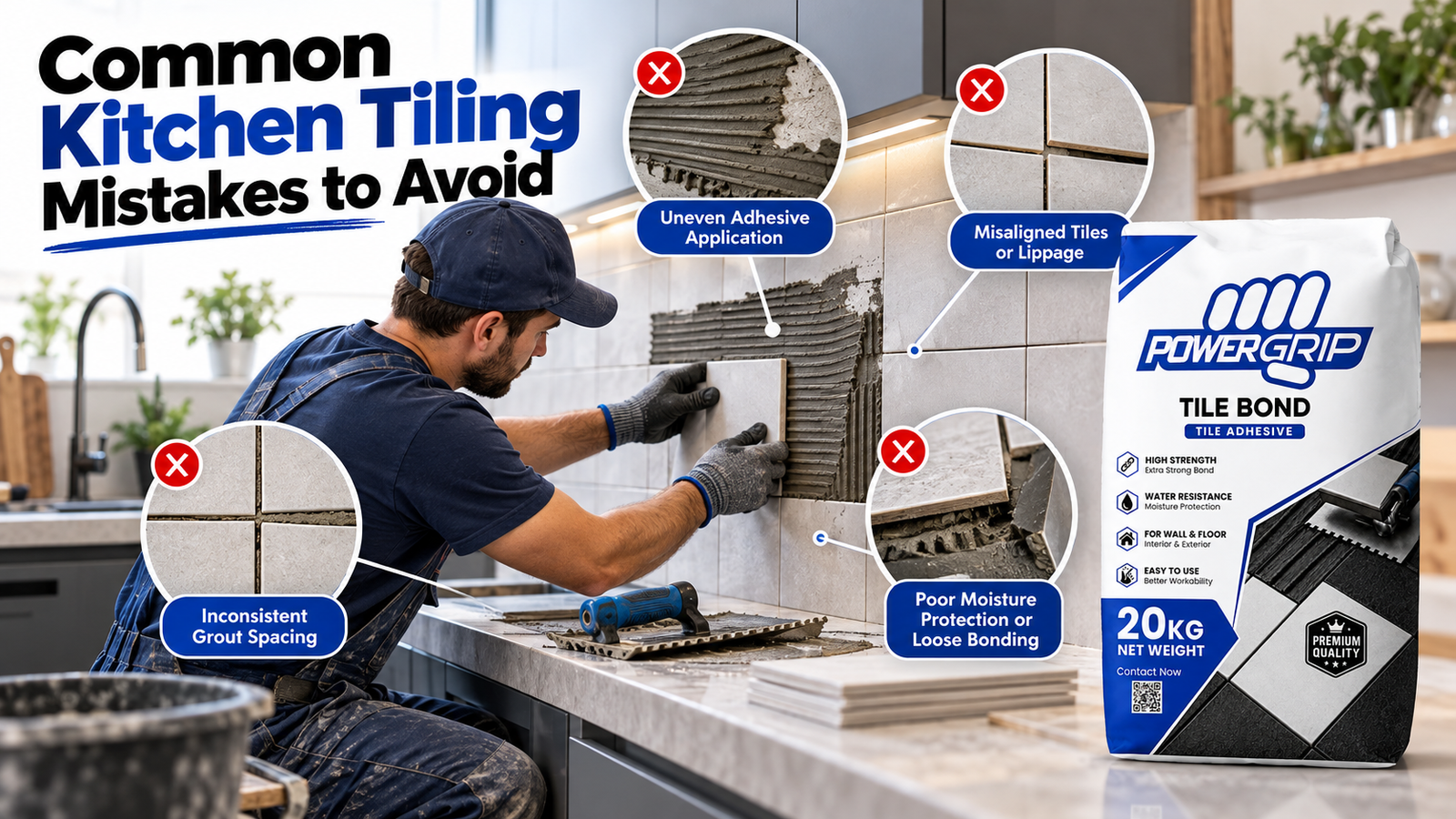
Common Kitchen Tiling Mistakes to Avoid
Many tile installation problems begin before the first tile is placed. Avoiding these mistakes can help reduce repairs and material waste.
- Applying adhesive over grease or dust: Kitchen walls may contain cooking residue that interferes with bonding. Clean and prepare the surface properly.
- Using an unsuitable adhesive: Confirm compatibility with the tile, substrate, and intended application before buying.
- Adding too much water: Incorrect mixing can affect workability and bond performance.
- Leaving gaps in adhesive coverage: Poor contact between the tile and adhesive can create hollow areas and weak spots.
- Ignoring the curing instructions: Grouting or loading the surface too early may affect the installation.
- Treating adhesive as waterproofing: Water-resistant adhesive is not a replacement for a suitable waterproofing system where one is required.
A qualified tile installer can help assess unusual surfaces, large-format tiles, and areas with significant moisture exposure before work begins.
Is Water Resistant Tile Adhesive Enough for a Kitchen?
Water resistance is useful in kitchen installations, but it does not mean that the entire tiled surface is waterproof.
Tile adhesive bonds the tile to the substrate, while a suitable waterproofing system helps prevent water from reaching the underlying structure.
For a typical backsplash with occasional splashes, the installation requirements may differ from those of an area exposed to continuous moisture or an existing water leak.
The correct solution depends on the location, substrate, joints, and level of exposure.
Before tiling around a sink or another frequently wet area, check whether additional waterproofing is required.
Properly finished joints and edges are also important because water can enter through gaps even when the adhesive is suitable.
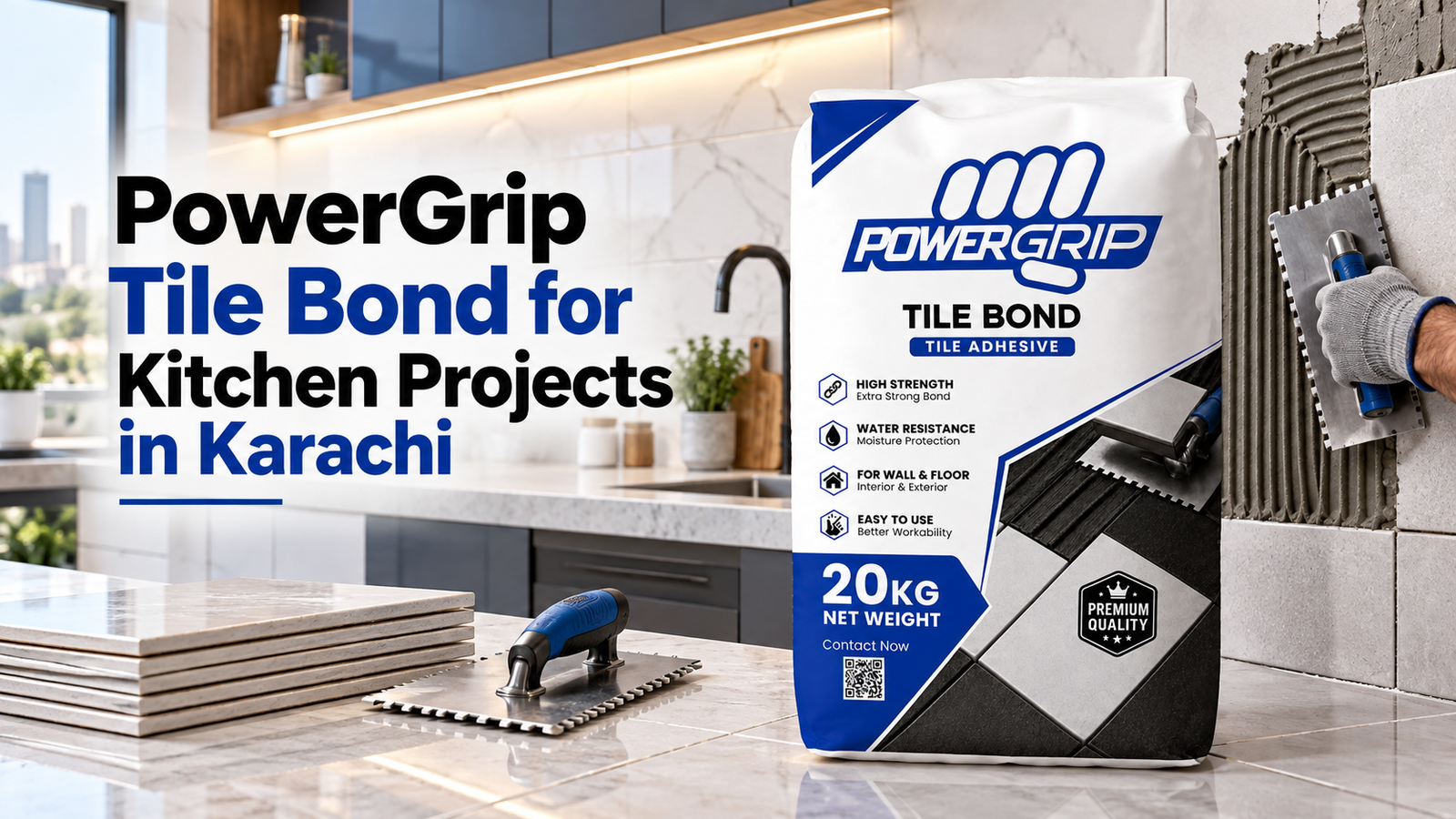
PowerGrip Tile Bond for Kitchen Projects in Karachi
PowerGrip offers cement-based tile bond for tile installation on walls and floors.
Its official website describes applications involving ceramic, porcelain, mosaic, and natural stone tiles, along with water resistance and use in kitchens and other areas.
For homeowners and contractors considering PowerGrip for a kitchen project, the next step is to check whether the specific product matches the selected tile, substrate, and moisture conditions.
This is particularly relevant for large-format porcelain tiles, unusual wall surfaces, and installations that require additional waterproofing.
You can visit PowerGrip’s official website to review its product information. For project-specific questions, the company lists a Karachi contact number, 0300 9881231, and an address in DHA Phase II Extension.
Contacting the supplier before purchasing can help you confirm product suitability, availability, application instructions, and the quantity needed for your project.
How Much Kitchen Tile Adhesive Do You Need?
The amount of adhesive required depends on the total tiled area, tile dimensions, surface flatness, trowel size, and application method. As a result, the number of bags cannot be calculated accurately from room size alone.
Start by measuring the wall or floor area in square metres or square feet. Subtract openings that will not be tiled, such as windows, where appropriate.
Then consult the coverage information for the specific product and allow for reasonable material waste.
For example, a kitchen with a small backsplash may need much less adhesive than a kitchen where both the walls and floor are tiled. A rough surface or large tile format may also change material consumption.
Do not assume that every 20 kg bag provides the same coverage. Use the current product guidance or ask the supplier to estimate the quantity from your measurements.
Frequently Asked Questions
Which tile adhesive is suitable for a kitchen in Karachi?
Choose an adhesive approved for your tile material, substrate, and intended application. Ceramic wall tiles, porcelain floors, and large-format tiles may have different requirements. For a kitchen in Karachi, also consider moisture exposure and the conditions during installation.
Can I use tile adhesive behind a kitchen sink?
Yes, if the adhesive is approved for the selected tiles, substrate, and moisture conditions. However, the adhesive alone may not provide complete waterproofing. Check whether the area needs a separate waterproofing layer and ensure that joints and edges are properly finished.
Is tile adhesive better than cement and sand for kitchen tiles?
A formulated tile adhesive can provide application and bonding advantages for suitable tile installations. Traditional mortar may be appropriate for certain applications, but the correct method depends on the tile, substrate, and project requirements. Compare the intended uses of both materials before deciding.
Can PowerGrip Tile Bond be used for kitchen wall tiles?
PowerGrip’s official website lists kitchen applications and describes its tile bond as suitable for walls and floors. Confirm the specific product’s compatibility with your tiles and surface before use.
How long should kitchen tile adhesive dry before grouting?
The required waiting time varies by product and site conditions. Follow the manufacturer’s instructions for grouting, curing, and use rather than relying on a universal time estimate.
Why do kitchen tiles become loose after installation?
Common causes include poor surface preparation, inadequate adhesive coverage, incorrect mixing, an unsuitable product, movement in the substrate, and moisture problems. The underlying cause should be identified before loose tiles are replaced.
How can I calculate the quantity of kitchen tile adhesive?
Measure the total tiled area and check the coverage stated for the selected adhesive. Tile size, surface condition, application thickness, and installation technique affect the amount needed. Ask the supplier for guidance if you are unsure.
Where can I get information about kitchen tile adhesive in Karachi?
You can review product details on the PowerGrip website or contact the company at 0300 9881231 to ask about product suitability, technical guidance, and availability
Conclusion
Choosing the right tile adhesive for a kitchen in Karachi starts with understanding the tile material, surface condition, and exposure to moisture.
Ceramic wall tiles, porcelain floors, and decorative backsplashes may require different bonding solutions, so product compatibility should come before price alone.
Good surface preparation, accurate mixing, even application, and sufficient curing time are equally important.
If the kitchen area is exposed to frequent water or has an underlying dampness problem, assess whether additional waterproofing or repairs are needed before installation.
PowerGrip Tile Bond is one option to consider for kitchen tiling projects. Review its product information and confirm that it suits your specific installation before purchasing.
A suitable adhesive, paired with correct installation practices, helps support a neat and durable kitchen finish.