


The right kitchen wall tile adhesive will hold up the tiles, keep them looking neat, and withstand moisture and temperature fluctuations typical of kitchens.
The main difference between a normal cement mix and a tile adhesive is that the latter is formulated to ensure that the tile is firmly attached to the surface being tiled.
The selection may be based on the material of the tiles, the condition of the wall, exposure to moisture, size of the tile, and the method of installation for the walls of the kitchen in Karachi.
This Kitchen Wall Tile Adhesive Guide describes the actions of kitchen wall tile adhesive, what to consider when selecting adhesive, typical installation errors, and tips for achieving better results.
What Is Kitchen Wall Tile Adhesive?
Kitchen wall tile adhesive is an adhesive used to bond ceramic, porcelain, mosaic, and other appropriate tiles to a prepared kitchen wall.
It is used between the wall and tile to make a good and even joint. The type of adhesive used depends on the type of tile, surface, tile size, and conditions under which the tile will be installed.
Frequent exposure to splashes from sinks, moisture from cooking, cleaning, and temperature changes are all kitchen wall problems.
Therefore, the proper adhesive for the installation conditions should be chosen and not just the cheapest adhesive available.
Adhesive is just one aspect of a successful tile installation. The wall itself should also be clean, steady, reasonably flat, and appropriate for tiling.
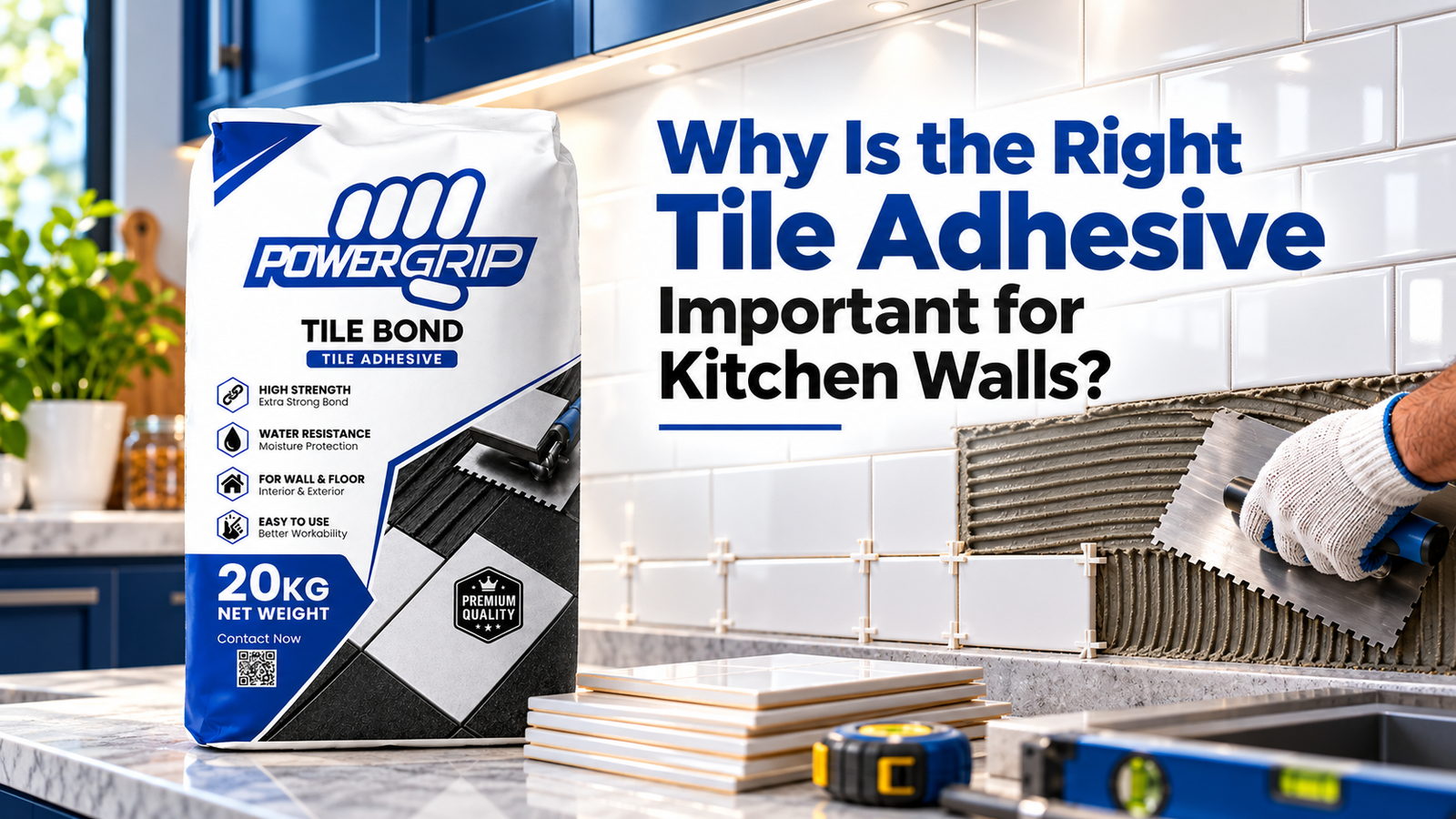
Why Is the Right Tile Adhesive Important for Kitchen Walls?
A kitchen wall might appear to be a straightforward tiling surface, yet it is most likely to be hit with more moisture and cleaning than a great deal of different locations in a home.
The bond works as a medium to transfer the load from the tile to the wall surface. Tiles can have hollows, move, crack, and even lose adhesion if the wrong material is installed or the adhesive is not applied properly.
The right adhesive will also help ensure uniform adhesive application behind the tile. It’s important because it can cause misalignment and create spots where the adhesive hasn’t been applied, making it ineffective.
Another factor to be taken into account is the environment for a Karachi kitchen. Installation can be impacted by humidity, heat, exposure to water, and aging walls.
Which Tiles Can Be Installed With Kitchen Wall Tile Adhesive?
The type of tile being placed has some influence on the selection of adhesive. Some wall tiles, such as ceramic wall tiles, are usually common in the kitchen area, and porcelain, mosaic, glass, and other decorative tiles may require different things.
Ceramic Tiles
Kitchen walls are often tiled with ceramic tiles in various sizes, colors, patterns, and finishes. If the wall is properly prepared, a good tile adhesive will give a uniform bond.
Porcelain Tiles
Porcelain is heavier and typically less waterproof than many ceramic tiles. Due to this, it is necessary to adhere to the recommendations of the manufacturer regarding the adhesive to be used for porcelain and the specific installation surface.
Mosaic Tiles
Mosaic sheets are made up of numerous small pieces clamped together. The adhesive must be adequate in coverage, not leave an uneven surface, or show through in transparent or lighter colored work.
Decorative and Special Tiles
Large format tiles, natural stone tiles or glass tiles may require special installation instructions. Such tiles are not to be used as standard ceramic wall tiles.
Do not follow only general instructions for adhesive application, as the manufacturer may have recommended a specific adhesive type.
Kitchen Wall Tile Adhesive vs Traditional Cement and Sand
Traditional cement-based methods have been used for tile installation for many years. Modern tile adhesives offer a more controlled method because they are manufactured for specific bonding applications.
Factor | Tile Adhesive | Traditional Cement and Sand |
Application | Designed specifically for tile bonding | Requires preparation and correct mixing |
Thickness | Usually applied in a controlled layer | Can vary depending on installation method |
Coverage | Can be spread with a notched trowel | Coverage may be less consistent |
Tile alignment | Supports controlled placement | Depends heavily on installation technique |
Product selection | Available for different tile and surface requirements | More dependent on site-mixed materials |
Main consideration | Must match tile and substrate | Correct mix and installation technique are important |
Neither method should be judged only by the material name. The quality of the wall preparation, mixing, application, tile placement, and curing process also affects the finished result.
How Does Kitchen Wall Tile Adhesive Work?
The purpose of tile adhesive is to form a bond between the surface to be adhered to and the back of the tile. The installer applies adhesive to the desired area, sometimes applying ridges to the adhesive with a notched trowel.
The tile is then pressed into the adhesive to cause the ridges to collapse and form contact between the tile and the bond.
It depends on the product how it is applied. Some adhesives may need certain mixing proportions, open times, working temperatures, or curing times.
That’s why it’s always important to follow the manufacturer’s directions before installing. The bond may be affected by increasing or decreasing the amount of water or changing the recommended mixing procedure.
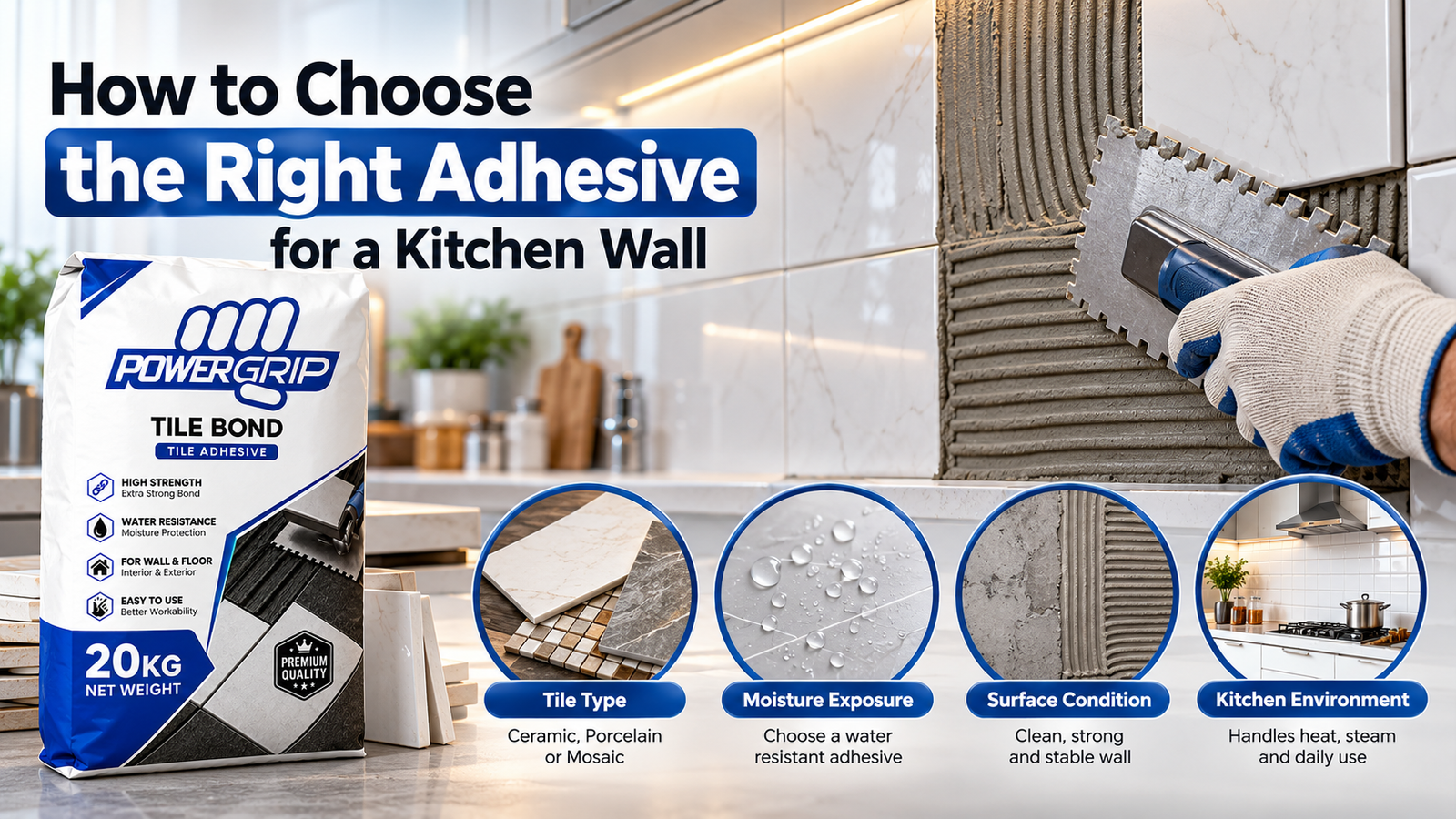
How to Choose the Right Adhesive for a Kitchen Wall
The first step in the selection of the adhesive should be the installation condition — not the name of the adhesive.
Check the Tile Material
Determine the type of tiles (ceramic, porcelain, mosaic, glass, natural stone, etc.). Different surfaces can have different bonding requirements.
Take into account Tile Size and Weight
There is no need to use a single method for installing all ceramic wall tiles and all large, heavy tiles.
The preparation of substrates and coverage of the adhesive may be more critical for large format tiles. The bonding system can also be subjected to higher demands in case of heavy tiles.
Thirdly, check the surface of the wall.
The wall must be strong enough and appropriate for tiling. Loose paint, dust, grease, weak plaster, and other materials can disrupt bonding.
If the wall is very uneven, it may require a degree of preparation before applying adhesive.
Consider Moisture Exposure
The back of a kitchen sink, or near frequent moisture spills, can have more moisture than a dry wall.
Use an adhesive, as recommended by the manufacturer, for the environment indicated. Keep in mind that not all walls are totally waterproof when the adhesive is used.
Comply with the instructions of the Product.
Remember to read the packaging or technical documentation before use. Be mindful of mixing, thickness of application, working time, appropriate substrates, and curing.
How to Apply Tile Adhesive to a Kitchen Wall
Successful preparation can often be as crucial as the adhesive chosen.
First, ensure the wall is clean, solid, and does not contain any materials that can interfere with bonding. Remove loose dust, grease, flaking paint, and other surface contamination.
The adhesive should then be mixed as per the manufacturer’s instructions. Do not alter the ratio of water to powder just to make the mixture easier to spread or softer.
Use the recommended trowel to apply adhesive. To obtain even ridges, hold the trowel at the same angle throughout the operation.
Insert the tile into the adhesive and press it down. Depending on the product and the tile manufacturer’s recommendations, the installation method might need special attention for larger tiles, as regards coverage and back coating.
Check alignment of tiles throughout the workable adhesive set. Clean up excess glue as soon as possible after gluing, before it is difficult to remove.
Grouting may be done only when the adhesive has reached the specified stage in the production process, as stated in the product instructions.
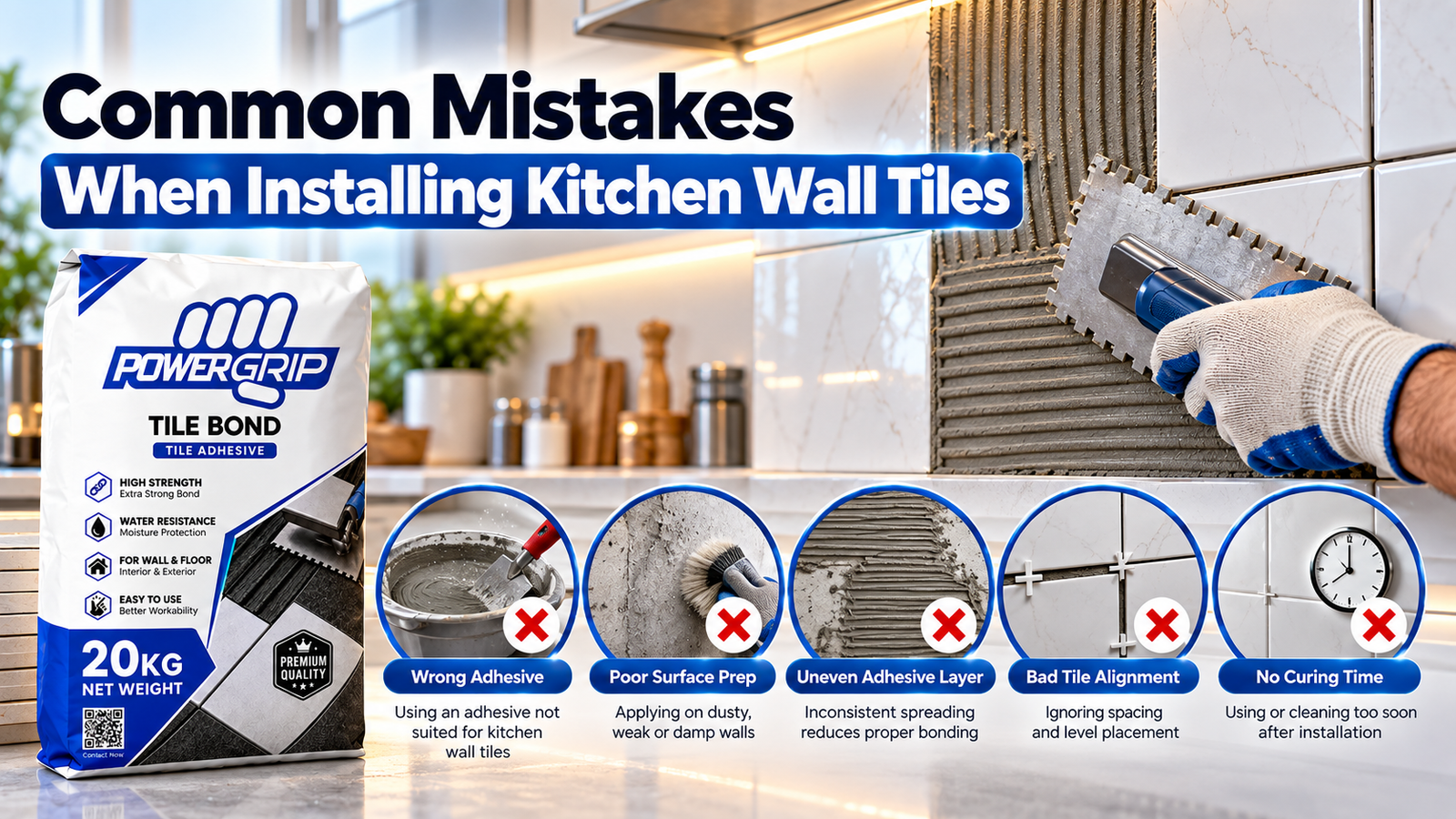
Common Mistakes When Installing Kitchen Wall Tiles
Problems with tiles are not necessarily caused by adhesive; they are most often caused by installation errors.
It is important to apply Adhesive over a Dirty Wall.
Proper contact may not be achieved due to grease, dust, loose paint, or weak surface material. Cooking residue may be present on kitchen walls; therefore, special attention should be given to cleaning and preparation.
Mixing Too Much Material
Making a lot at a time can mean that a lot of adhesive may be wasted if it expires before it can be used.
Plan to create a quantity that is a feasible allotment for the product with its stated working time.
Adding Too Much Water
To ensure that the recommended mixing ratio is followed, a softer mixture may look easier to spread, but may change the performance of the material.
It is important to apply Adhesive Over an Unstable Surface.
The tile adhesive itself can’t make up for a poor base when it is loose, such as plaster, paint, or other substrate.
The tile must be set on a surface that is not weakened.
The use of the same adhesive for all tiles.Same adhesive for all tiles.
Products that are acceptable for regular ceramic wall tiles may not necessarily be acceptable for porcelain, glass, natural stone or large format tiles.
Always check compatibility.
Soil that is too large for the area!
It will begin to form a surface film if adhesive is left in the open for too long. Placing tiles after the recommended open time may prevent proper bonding.Draw in a manageable section.
Practical Checklist Before Buying Tile Adhesive
When buying a product for a kitchen wall project, keep these things in mind:
- The material and size of the tile.Type and size of the tile.
- The grommet application type.Type of grommet – wall or substrate.
- Can be used indoors or outdoors.
- Expected moisture exposure
- Recommended application thickness
- Mixing instructions
- The working time and open time.
- Manufacturer’s Coverage Information Provided
- Ability to be compatible with the chosen grout and tile system.
- Details about storage and expiration.
- Manufacturer’s technical instructions
It’s also helpful to verify that the product has been stored correctly and the packaging is unopened.
How Much Tile Adhesive Do You Need?
There is no single figure that can be stated for the quantity required; the amount will vary according to the many factors involved.
Consumption can vary with tile size, wall flatness, trowel size, thickness of application, tile backs, and installation method.
A wall that is flat with small ceramic tile pieces, for instance, might need a different amount of adhesive than a wall with larger ceramic tiles or an uneven substrate.
The most desirable solution is to rely on the coverage data that is included for the particular product and to allow for a reasonable amount of installation loss. If the wall requires substantial leveling, this should be taken care of independently and not by the amount of adhesive applied to the wall.
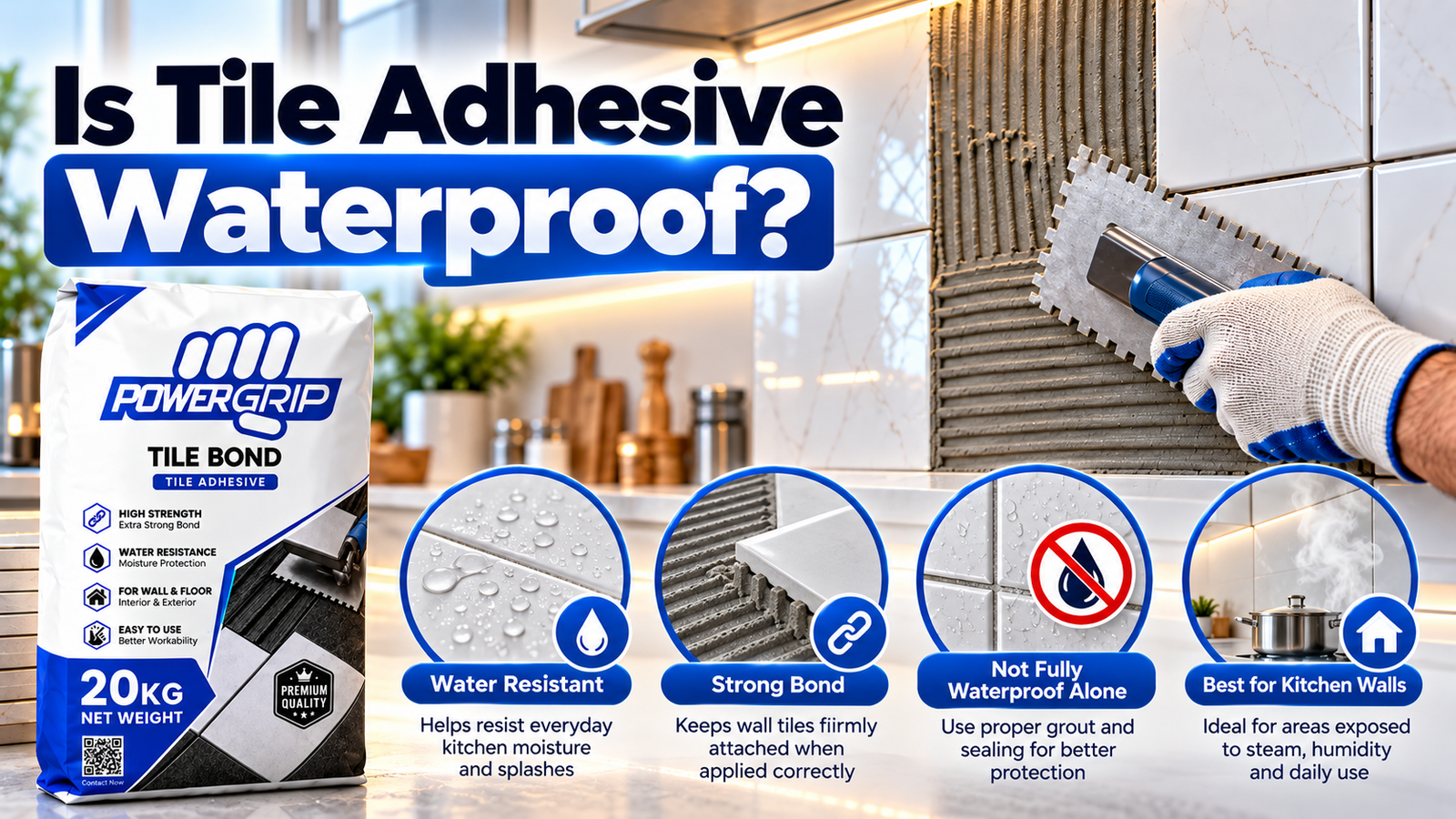
Is Tile Adhesive Waterproof?
Don’t assume that tile adhesive is an all-in-one waterproofing solution.
Certain adhesives can be used in moisture-exposed areas, the performance of which will vary depending on the product and the entire installation system. Water may also enter through unsealed joints, corners, cracks, or gaps around fixtures.
The waterproofing system should be installed in the required area as per the project requirements, before tiling in the areas where waterproofing is required, like some wet areas.
This difference can be particularly helpful in a kitchen, as it is not the same as splash resistance or complete waterproofing.
What Makes Power Grip Relevant to Tile Installation?
If you are looking for tile bonding materials from Power Grip, you will know to consider Power Grip. The recommended use of any Power Grip product should be verified from the product packaging or technical information prior to use.
Different tile projects can have different requirements. Do not assume that products designed to work for one type of tile or substrate will all work for any kitchen wall.
Checking the product instructions is more beneficial for a homeowner, contractor, or tile installer in Karachi than selecting a product based on the general category.
Kitchen Wall Tile Adhesive for Karachi Homes
Kitchens in Karachi can come in all shapes and sizes. Some have plaster walls, and others may have different substrates and finishes.
Humidity and heat can also affect working conditions when installing. Therefore, surface preparation, product handling, and proper curing are of special relevance.
If a kitchen wall is painted, has cracks, dampness, or old plaster, then these should be inspected prior to tiling. Replacement of damaged tiles may only cover up the issue, and not address the underlying cause.
If you are considering renovating, it’s worthwhile to inspect the wall prior to adhesive purchase. Doing a bit of work now can save a lot of work later.
When Should You Get Professional Help?
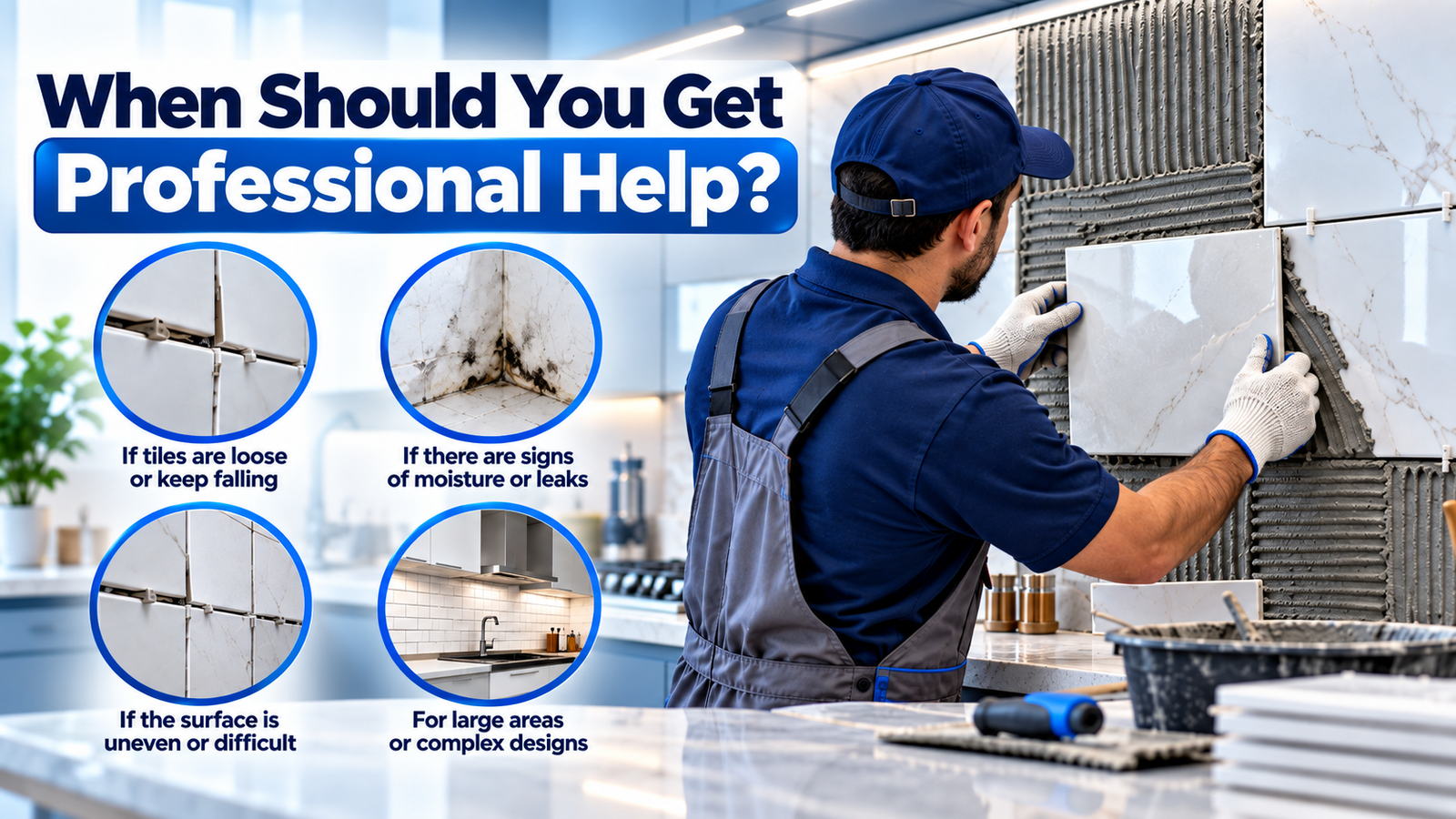
While simple kitchen wall tiling will probably be fine for an experienced tiler, professional tiling services might come in handy if the installation requires large format tiles, irregular walls, odd substrates, heavy tiles, extensive repairs, or moisture problems.
When the wall condition is unclear, it is also very beneficial to get professional advice. The installer will be able to determine if the substrate is acceptable and if it requires any further treatment.
The aim is not to just glue the tiles onto the wall. The whole installation system should be integrated.
Frequently Asked Questions
What is the best adhesive for kitchen wall tiles?
There is no single adhesive that is correct for every kitchen wall. The appropriate product depends on the tile material, tile size, substrate, moisture exposure, and manufacturer’s recommendations.
Can I use tile adhesive over painted walls?
It depends on the condition and type of paint and the adhesive manufacturer’s instructions. Loose, flaking, greasy, or weak paint can interfere with bonding and may need to be removed or properly prepared.
Can tile adhesive be used for porcelain tiles?
Some tile adhesives are suitable for porcelain, but compatibility should always be confirmed on the product information. Porcelain has low water absorption, so the adhesive system needs to be appropriate for the tile and substrate.
How long does kitchen tile adhesive take to dry?
Drying or curing time varies by product, temperature, humidity, tile type, substrate, and application conditions. Follow the manufacturer’s stated curing time rather than relying on a general estimate.
Can tile adhesive fix an uneven kitchen wall?
Tile adhesive is not normally a substitute for proper wall leveling. Excessive adhesive thickness can create installation problems. Significant unevenness should be corrected using an appropriate substrate preparation method.
Is kitchen tile adhesive better than cement?
Tile adhesive is specifically manufactured for tile bonding and can provide more controlled application. However, the correct choice depends on the project, substrate, tile type, and installation method.
Can I use the same adhesive for wall and floor tiles?
Not necessarily. Wall and floor applications can have different requirements, particularly when tiles are large or heavy. Always check whether the product is suitable for the intended application.
Does tile adhesive prevent water from reaching the wall?
Not by itself. Tile adhesive and waterproofing serve different purposes. Where waterproofing is required, an appropriate waterproofing system should be considered separately.
Conclusion
When it comes to kitchen wall tile adhesive, it’s not just about picking a product and applying it behind the tile.
A variety of factors such as the type of tile, condition of the wall, tile size, exposure to water, installation process, and the instructions provided by the manufacturer can affect the final quality of the finished tile work.
In kitchen projects in Karachi, the first step is to look at the wall and determine the type of tile.
After that, select the appropriate glue that is suitable for the specific environment, and use it as directed on the product label.
If you’re thinking of doing tile work with Power Grip, do the research and verify product specs by consulting the product information at powergrip.pk and ensuring it matches your tile and substrate needs.
The key to any successful installation is in the preparation and application of the adhesive.