


Waterproof tile adhesive in Pakistan is used to fix tiles on walls and floors where water or moisture is common. It can be useful in bathrooms, kitchens, balconies, wash areas, and some outdoor spaces.
Choosing the right adhesive is important. The tile, surface, tile size, and place of use all matter. You should also check how much water the area gets.
A good tile adhesive can help create a strong bond between the tile and the surface. But tile adhesive is not the same as a waterproofing system. Some areas need a separate waterproof layer under the tiles.
This guide explains what waterproof tile adhesive is, where it can be used, how to choose it, and how to apply it correctly. It also covers common mistakes and answers common questions about tile adhesive in Pakistan.
What Is Waterproof Tile Adhesive?
Waterproof tile adhesive is a material used to fix tiles to a prepared surface. It is made to give a strong bond and handle moisture in suitable areas.
Many cement based tile adhesives contain cement, sand or other graded materials, polymers, and special additives. These materials help the adhesive spread, bond, and set properly.
Tile adhesive can be used with many common tile types. These may include ceramic, porcelain, mosaic, and natural stone. However, not every adhesive is made for every tile.
The product instructions are important. They tell you where the adhesive can be used and which tiles it can support.
One point is very important. Water resistant tile adhesive does not always mean complete waterproofing.
Tile adhesive holds the tile in place. A waterproofing membrane protects the structure from water passing through it. In areas with heavy water exposure, both systems may be needed.
This is especially important in showers, bathrooms, balconies, and terraces.
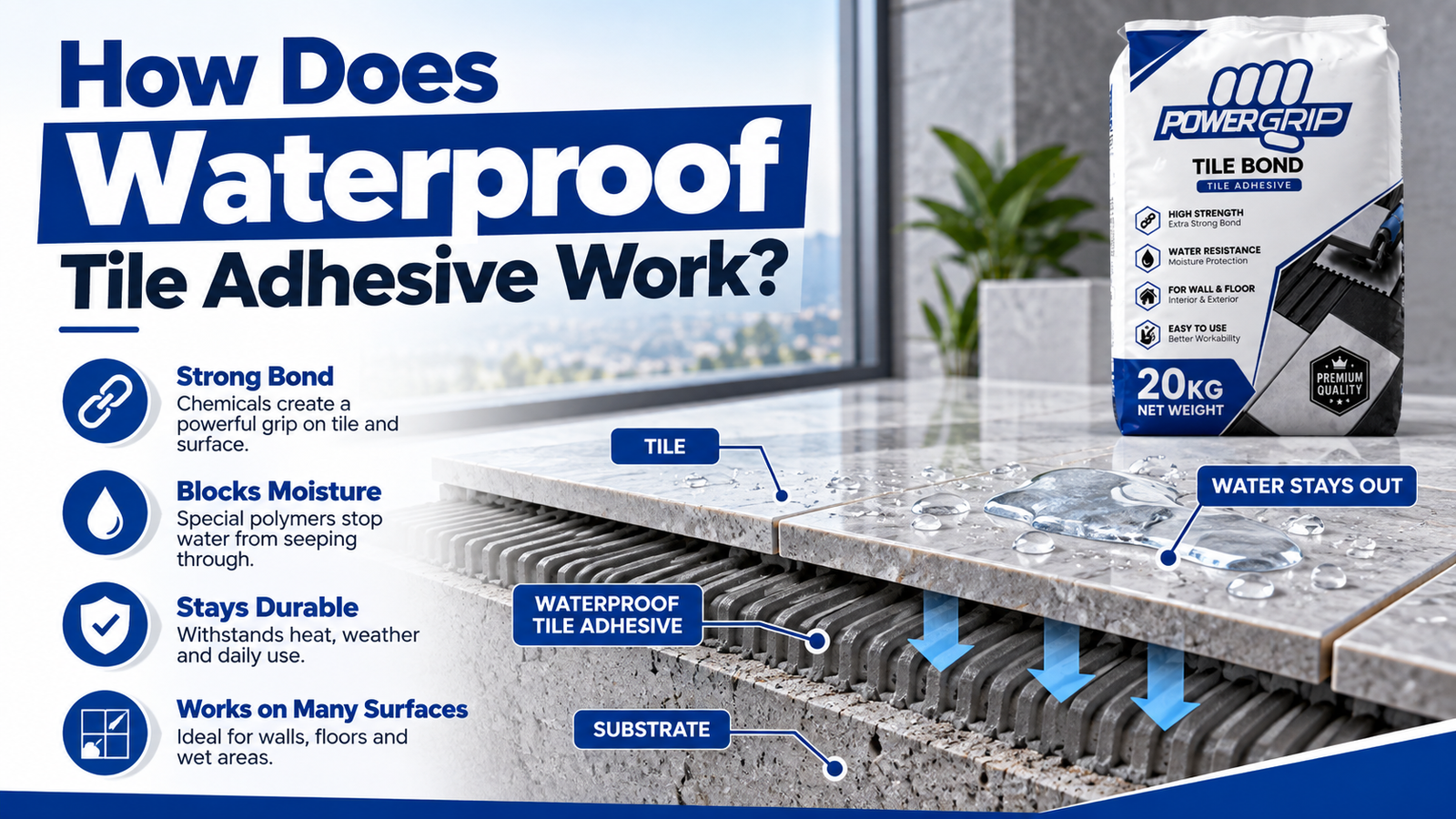
How Does Waterproof Tile Adhesive Work?
Tile adhesive creates a layer between the tile and the surface. The tile is placed on this layer and pressed into position.
The adhesive then starts to set and gain strength. A good bond depends on the adhesive and the way it is installed.
The surface must be clean and stable. Dust, oil, loose material, and dirt can reduce the bond. Too much water during mixing can also affect the result.
The right trowel and enough adhesive are also important. If there are large empty spaces behind the tile, the tile may become loose later.
PowerGrip recommends preparing a clean and dry surface before applying its Tile Bond. Its guidance also includes mixing the powder with water, spreading it with a trowel, fixing the tiles firmly, and allowing the adhesive to set.
Always follow the current instructions given with the product.
Where Can Waterproof Tile Adhesive Be Used?
Water resistant tile adhesive can be useful in many parts of a building. The right product depends on the tile, surface, and level of water exposure.
Bathrooms and Shower Areas
Bathrooms are one of the most common places where moisture resistant tile adhesive is used. Bathroom walls and floors often come into contact with water, steam, and humidity.
A suitable adhesive can help keep the tiles firmly attached. But the adhesive should not be treated as the only waterproofing layer.
A shower area may need a separate waterproofing system under the tiles. This helps protect the structure from water damage.
Kitchens
Kitchen walls and floors can also face moisture. Water may splash around sinks and work areas. Cleaning can also expose the tiles to water.
A suitable tile adhesive can help fix tiles securely when the surface is prepared correctly.
The adhesive should match the type of tile and surface. The manufacturer’s instructions should also be checked before installation.
Balconies and Outdoor Areas
Outdoor areas need extra care. Rain and water are not the only concerns. Outdoor tiles may also face heat, sunlight, dust, and changes in temperature.
These conditions can cause movement in the surface. They can also affect the tile installation over time.
For outdoor work, choose an adhesive that is clearly made for exterior use. Do not assume that every water resistant adhesive is suitable for outdoor areas.
Walls and Floors
Tile adhesive can be used on both walls and floors when the product is designed for these applications.
PowerGrip states that its Tile Bond can be used on walls and floors. It also lists ceramic, porcelain, mosaic, and natural stone tiles among its applications.
The exact use should still be checked before starting the work.
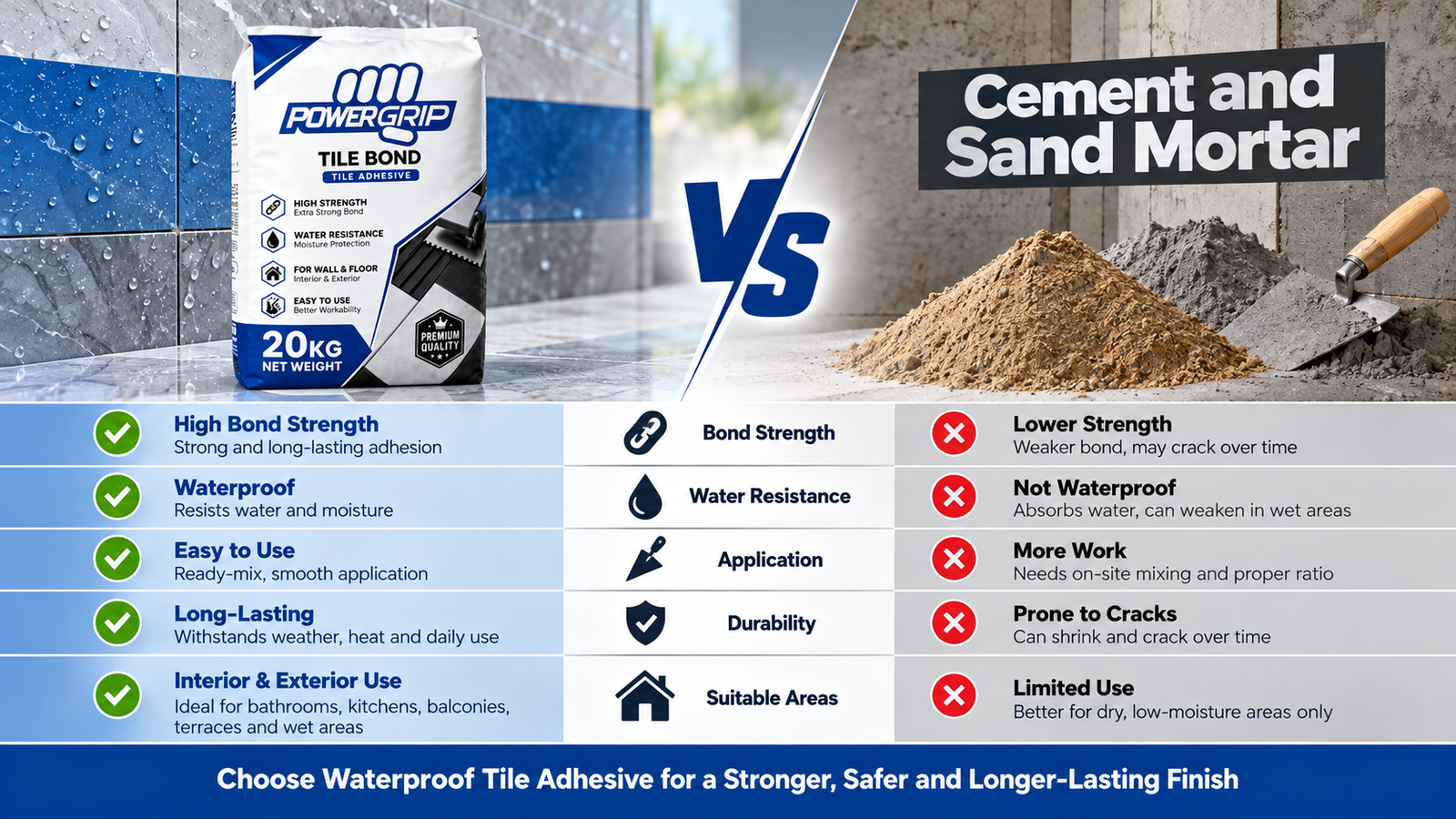
Waterproof Tile Adhesive vs Cement and Sand Mortar
Cement and sand mortar has been used for tile fixing for many years. It is still used in some traditional construction methods.
Tile adhesive is made specifically for fixing tiles. It is usually applied as a controlled layer between the tile and the surface.
These two materials are not exactly the same. Their performance can change based on the tile, surface, layer thickness, and installation method.
Factor | Tile Adhesive | Cement and Sand Mortar |
Main use | Made for fixing tiles | Used as a general bedding material |
Application | Usually applied in a controlled layer | Often used as a thicker layer |
Tile use | Depends on the product | Depends on the fixing method |
Water exposure | Some products offer water resistance | Depends on the full construction |
Workability | Made for tile installation | Needs correct mixing and handling |
There is no single material that is right for every project. The installer should look at the tile, surface, location, and project needs before choosing a fixing method.
What Makes a Good Waterproof Tile Adhesive?
A good tile adhesive should match the needs of the project. The word “waterproof” on a package should not be the only reason for choosing a product.
The tile type is important. Ceramic, porcelain, mosaic, and stone tiles can have different needs.
Tile size also matters. Large and heavy tiles may need an adhesive with the right performance for that type of installation.
The surface is another key factor. Concrete, cement based surfaces, existing tiles, and other surfaces may need different preparation.
Water exposure should also be considered. A dry room does not have the same needs as a shower or outdoor balcony.
Strong Bond
The adhesive should provide a suitable bond between the tile and the surface.
The tile material, weight, size, and surface condition can all affect the bond. Low absorption tiles may need a suitable adhesive for better fixing.
Moisture Resistance
Moisture resistance is useful in bathrooms, kitchens, wash areas, and other damp locations.
However, moisture resistance does not mean that the whole surface is waterproof. If water must be stopped from reaching the structure, a separate waterproofing system may be needed.
Easy Application
The adhesive should be easy to mix and spread when used according to the product instructions.
Good workability can help the installer spread the material evenly. It can also make the installation easier.
PowerGrip lists easy mixing and application and water resistance among the features of its Tile Bond.
Tile and Surface Compatibility
Always check whether the adhesive is suitable for the tile and surface.
An adhesive that works well with standard ceramic tiles may not be the right choice for every large porcelain tile or natural stone installation.
Checking the product information before starting can help avoid problems later.
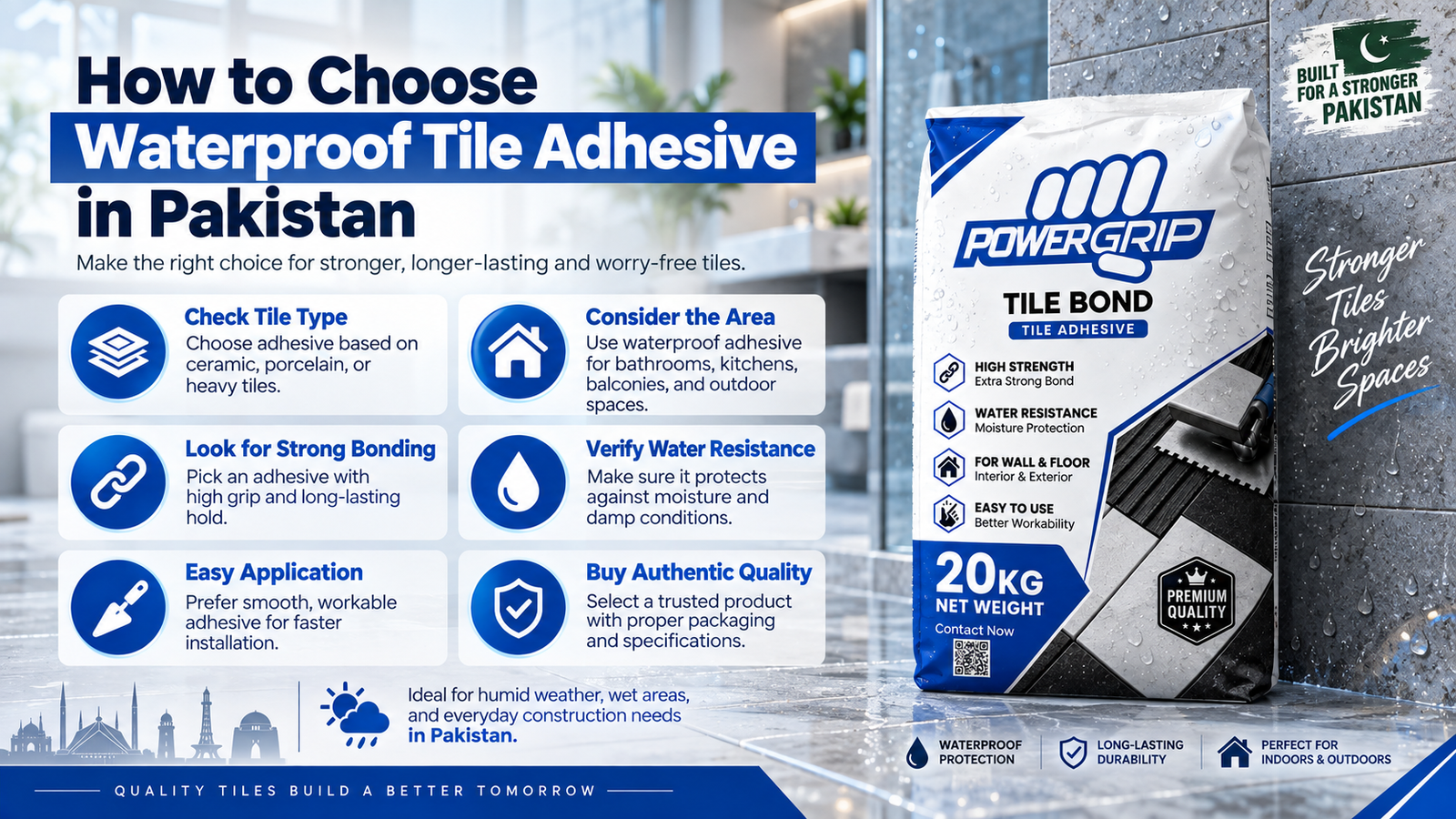
How to Choose Waterproof Tile Adhesive in Pakistan
Choosing an adhesive becomes easier when you first look at the project.
Here are the main things to check:
- Tile type: Check if you are using ceramic, porcelain, mosaic, stone, or another tile.
- Tile size: Large or heavy tiles may need a suitable adhesive with the right performance.
- Location: Check if the tiles are going on a wall, floor, bathroom, balcony, or outdoor surface.
- Surface: Look at whether the surface is concrete, cement based, an old tiled surface, or another material.
- Water exposure: Decide if the area is dry, sometimes wet, or often exposed to water.
- Product instructions: Read the mixing, application, setting, and use instructions.
- Installation method: Use the right surface preparation, trowel, adhesive amount, and tile placement method.
For projects in Karachi, local site conditions should also be considered. Heat, humidity, outdoor exposure, and the condition of an older building can affect the work.
Is PowerGrip Tile Bond Suitable for Wet Areas?
PowerGrip’s published product information describes Tile Bond as a cement based tile adhesive with water resistance.
The company lists bathrooms, kitchens, walls, and floors among its applications. It also states that the product can be used with ceramic, porcelain, mosaic, and natural stone tiles.
This makes PowerGrip Tile Bond an option to consider when looking for tile adhesive in Pakistan.
Still, every project is different. A small bathroom wall is not the same as a large outdoor floor or a technically demanding installation.
Before buying, check the latest product information. Make sure the product is suitable for your tile, surface, and planned location.
For special projects, it is also useful to ask the manufacturer or a qualified installer for technical advice.
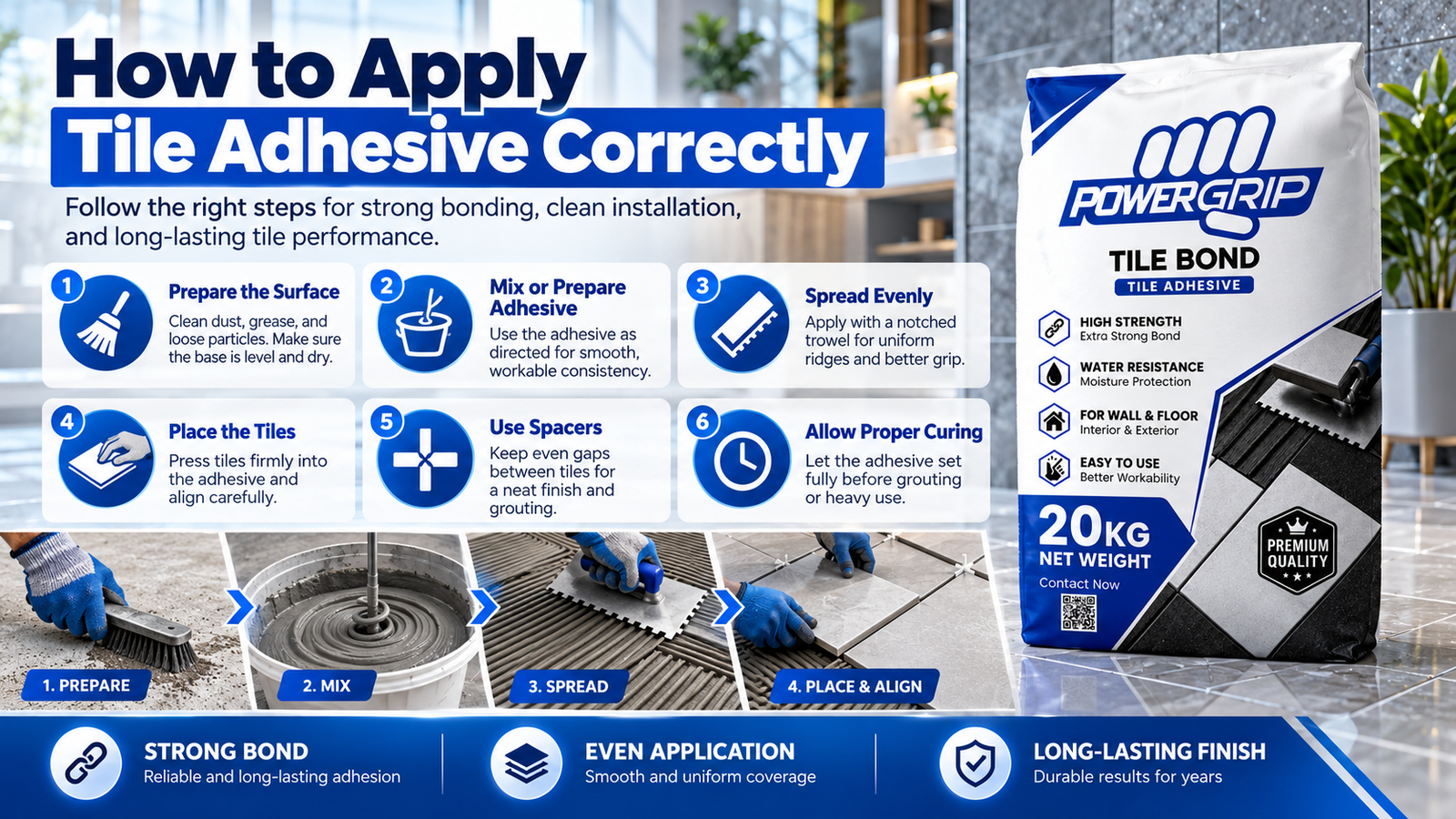
How to Apply Tile Adhesive Correctly
Even a good adhesive can fail if it is not installed correctly. Good surface preparation is one of the most important parts of tile fixing.
1. Prepare the Surface
The surface should be stable, clean, and free from dust and loose material.
Oil, dirt, weak plaster, and other unwanted material can reduce the bond.
If the surface is damaged or very uneven, it may need repair before the tiles are installed.
2. Mix the Adhesive Correctly
Mix the adhesive with clean water according to the product instructions.
Do not add extra water just because the mixture seems hard to spread. Too much water can affect how the adhesive sets and performs.
Use the mixing method recommended by the manufacturer.
3. Use the Right Trowel
Spread the adhesive evenly over the prepared surface.
A suitable notched trowel may be needed depending on the tile and installation.
The aim is to get good contact between the adhesive and the tile. Large empty areas behind a tile can cause problems later.
4. Place the Tile Correctly
Place the tile on the adhesive while it is still suitable for use.
Press the tile firmly into place. Follow the product instructions for working time and open time.
Do not use adhesive that has started to dry on the surface or has passed its recommended working time.
5. Give the Adhesive Enough Time
Tiles need time to set before they are exposed to heavy use or water.
PowerGrip’s current published guidance states about 24 hours for setting and about 48 hours for full strength.
These times can change because of site conditions and product instructions. Always follow the latest information for the adhesive being used.
Common Mistakes That Can Cause Tile Failure
Many loose or damaged tiles are caused by installation problems. The adhesive may not always be the main reason.
One common mistake is applying adhesive to a dusty surface. Dust can stop the adhesive from making proper contact with the surface.
Another problem is using too little adhesive. This can leave empty spaces under the tile. Over time, these areas can lead to movement or loose tiles.
Using too much water during mixing is another common mistake. The correct water amount should always come from the product instructions.
Choosing the wrong adhesive can also cause problems. A product made for normal ceramic tiles may not be suitable for every large tile, porcelain tile, stone tile, or outdoor application.
Another mistake is thinking that tile adhesive alone will waterproof a building. In areas that need protection from water penetration, a proper waterproofing system may be needed under the tile.
How Much Waterproof Tile Adhesive Do You Need?
The amount of adhesive needed depends on the project.
Tile size, surface condition, adhesive thickness, trowel size, and installation method can all affect how much material is used.
For this reason, the floor or wall area alone may not give an exact amount.
First, measure the total area where tiles will be installed. Then check the coverage information for the specific adhesive.
You should also allow for some material loss during installation.
Do not use the coverage figure from another brand to calculate the amount of PowerGrip Tile Bond. Different products can have different coverage rates.
Waterproof Tile Adhesive in Karachi: What Should Buyers Check?
Karachi has many types of construction projects. These include homes, offices, shops, renovations, and large commercial buildings.
The adhesive needed for a small bathroom may be different from the adhesive needed for a large outdoor project.
Before buying, check the tile type and surface. Also look at the area size and amount of water exposure.
If you are working with large tiles, outdoor surfaces, unusual materials, or a difficult substrate, ask for product specific advice before starting.
PowerGrip provides product information and technical guidance through its contact channels. Its listed Karachi address is in DHA Phase II Extension.
This information can help buyers and contractors learn more about the product before making a purchase.
Practical Tips Before Buying
A few simple checks can help prevent problems during tile installation.
Read the product label and technical information before buying. Check the recommended tile types, surfaces, mixing instructions, storage details, and setting time.
Also inspect the surface before choosing the adhesive. Cracks, loose plaster, dampness, and movement may need to be fixed first.
For a large project, it can be useful to speak with the manufacturer or a qualified tile installer. They can help you check if the selected adhesive fits the project.
Frequently Asked Questions
Is waterproof tile adhesive completely waterproof?
Not always. Water resistant tile adhesive is made to provide a good bond in suitable moisture conditions. It should not automatically be treated as a complete waterproofing membrane.
Some wet areas may need a separate waterproofing system under the tiles.
Can waterproof tile adhesive be used in bathrooms?
Yes, an adhesive made for wet areas can be suitable for bathroom tiles.
The correct product still depends on the tile, surface, and location. PowerGrip lists bathroom use and water resistance among its published product information.
Can tile adhesive be used outdoors in Pakistan?
Some tile adhesives are made for outdoor use. However, not every product has the same performance.
Always check the product instructions before using adhesive on balconies, terraces, exterior walls, or other outdoor surfaces.
Is waterproof tile adhesive suitable for porcelain tiles?
It can be, but the answer depends on the product and the tile.
Porcelain tiles can have low water absorption. Their size and weight can also affect the adhesive needed.
Check the product information before using an adhesive with porcelain tiles.
Can waterproof tile adhesive replace cement and sand?
Tile adhesive and cement sand mortar are different materials.
A suitable tile adhesive can be used for applications designed for adhesive fixing. The correct choice depends on the project and the installation method.
How long does tile adhesive take to set?
Setting time depends on the product and site conditions.
PowerGrip currently states about 24 hours for setting and about 48 hours for full strength. Always check the latest product instructions before using the tiled surface.
What causes tiles to become loose after installation?
Loose tiles can have many causes.
Poor surface preparation, low adhesive coverage, wrong mixing, an unsuitable adhesive, movement in the surface, moisture problems, or poor installation can all play a part.
The cause should be found before replacing the tiles.
Where can I get information about PowerGrip Tile Bond in Karachi?
PowerGrip provides product information, technical guidance, dealer information, and contact details through its official website.
Its listed Karachi address is in DHA Phase II Extension.
Conclusion
Choosing the right waterproof tile adhesive in Pakistan is about more than looking at the word “waterproof” on the package.
You should check the tile, surface, tile size, location, and amount of water exposure. You should also follow the manufacturer’s instructions during mixing and installation.
For bathrooms, kitchens, balconies, walls, and floors, choose an adhesive that fits the planned use. Prepare the surface properly and use the right amount of adhesive.
Remember that tile adhesive holds the tile in place. It does not always replace a waterproofing membrane. Areas that need protection from water may require a separate waterproofing system.
For buyers and contractors in Karachi, PowerGrip Tile Bond is one option to consider. Its published information includes common tile types such as ceramic, porcelain, mosaic, and natural stone.
The simple rule is this: choose the right adhesive, prepare the surface well, install the tiles correctly, and use proper waterproofing where needed.