


Porcelain tiles are strong, dense, and have very low water absorption. This makes them a popular choice for homes, offices, shops, and other buildings. But these tiles need the right bonding material. Tile adhesive for porcelain tiles helps fix the tiles firmly to floors and walls.
Choosing the right adhesive is only one part of a good tile job. The surface must also be clean and even. The adhesive must be mixed and applied in the right way. The tile size and place of use also matter.
This guide explains how porcelain tile adhesive works, how to choose it, how to use it, and which mistakes to avoid. It also covers useful tips for tile projects in Karachi.
What Is Tile Adhesive for Porcelain Tiles?
Tile adhesive for porcelain tiles is a material used to fix porcelain tiles to a suitable wall or floor surface. It creates a strong bond between the tile and the surface below it.
Porcelain tiles are very dense. They do not absorb much water. Because of this, the adhesive must be suitable for low water absorption tiles.
Tile adhesive is often supplied as a dry powder. It is mixed with water before use. Some products may have different mixing or use instructions, so always check the product label.
A good adhesive can help create a firm tile surface when the product and installation method are right for the project.
Why Do Porcelain Tiles Need the Right Adhesive?
Porcelain tiles are different from many other types of tiles. They are dense and have low water absorption. This can make bonding more difficult if the wrong material is used.
The adhesive must form a good bond between the porcelain tile and the surface. The surface must also be strong and clean.
For example, the needs of a small bathroom tile may be different from those of a large floor tile. Outdoor tiles may also need a product made for outdoor use.
This is why you should not choose an adhesive only because it is cheap or easy to find. Check if it is suitable for porcelain tiles and your type of project.
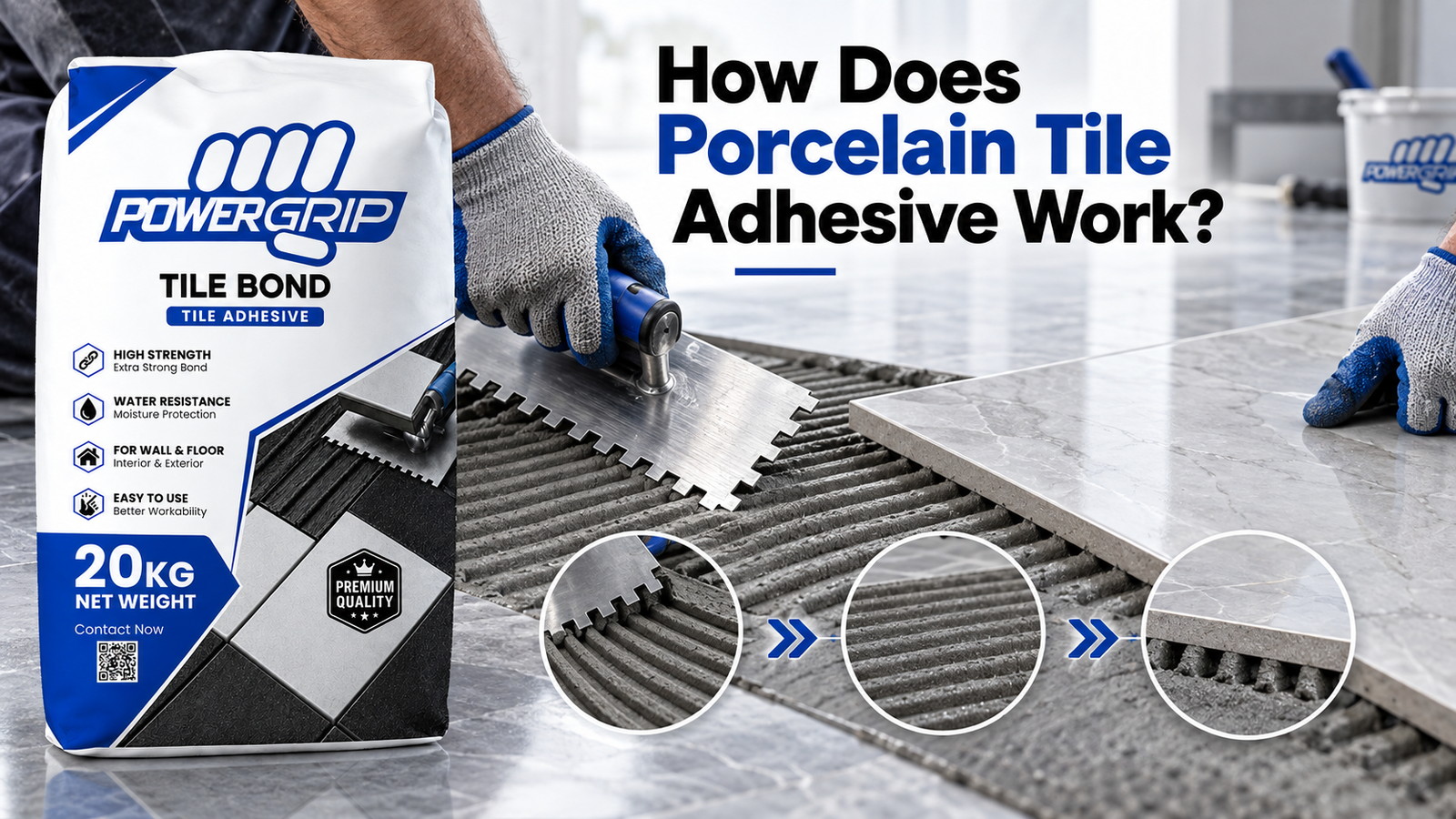
How Does Porcelain Tile Adhesive Work?
Porcelain tile adhesive sits between the tile and the surface. It helps hold the tile in place as it dries and cures.
The adhesive needs good contact with both surfaces. Dust, oil, loose material, or paint can reduce the bond.
The way the adhesive is mixed also matters. Too much water can change how the adhesive works. The wrong trowel size can also lead to poor coverage.
For this reason, a good tile job needs more than the right adhesive. It also needs proper surface preparation and correct application.
What Type of Adhesive Is Used for Porcelain Tiles?
The right adhesive depends on the tile and the place where it will be installed.
A product made for porcelain or low water absorption tiles can be suitable for many indoor projects. Other projects may need an adhesive with different properties.
For example, an adhesive may be selected for:
- Indoor porcelain wall tiles
- Indoor porcelain floor tiles
- Large porcelain tiles
- Bathroom and kitchen tiles
- Outdoor tile areas
- Heavy tiles
- Commercial floors
Always check the product instructions before use. The label should tell you where the product can be used.
Tile Adhesive vs Cement and Sand
Many people still use cement and sand for tile work. Tile adhesive is different because it is made for tile bonding.
The two methods can work in different types of projects. The choice depends on the tile, surface, installation method, and project needs.
Factor | Tile Adhesive | Cement and Sand |
Main use | Tile bonding | Traditional tile installation |
Mixing | Usually follows a set product ratio | Mixed on site |
Application | Usually applied with a notched trowel | Often used as a thicker layer |
Porcelain tiles | Product should state suitability | Depends on the method |
Large tiles | Needs careful product selection | Needs careful installation |
Consistency | More controlled when mixed correctly | Can change with site mixing |
The important point is not to choose a method based only on habit. Check what works for the tile and surface.
How to Choose Tile Adhesive for Porcelain Tiles
Choosing the right adhesive starts with the project.
First, check the type of porcelain tile. Then look at the surface where the tile will be installed.
A wall, indoor floor, bathroom, balcony, and outdoor floor may have different needs.
Tile size also matters. Large tiles need good support and good adhesive coverage. Heavy tiles may also need a product made for that type of use.
Before buying an adhesive, check the product label and technical information. Make sure it is suitable for porcelain tiles and your planned application.
What Surface Can Be Used for Porcelain Tiles?
The tile surface must be strong, clean, and suitable for tile work.
Common surfaces can include concrete and cement-based surfaces. But the surface must be checked before installation.
A weak or dusty surface can cause bonding problems. Paint, oil, loose dust, and other materials can also affect the adhesive.
The surface should be as even as required for the tile. Do not use a large amount of adhesive to fix a badly uneven floor unless the product instructions allow it.
Major surface problems should be fixed before the tile work starts.
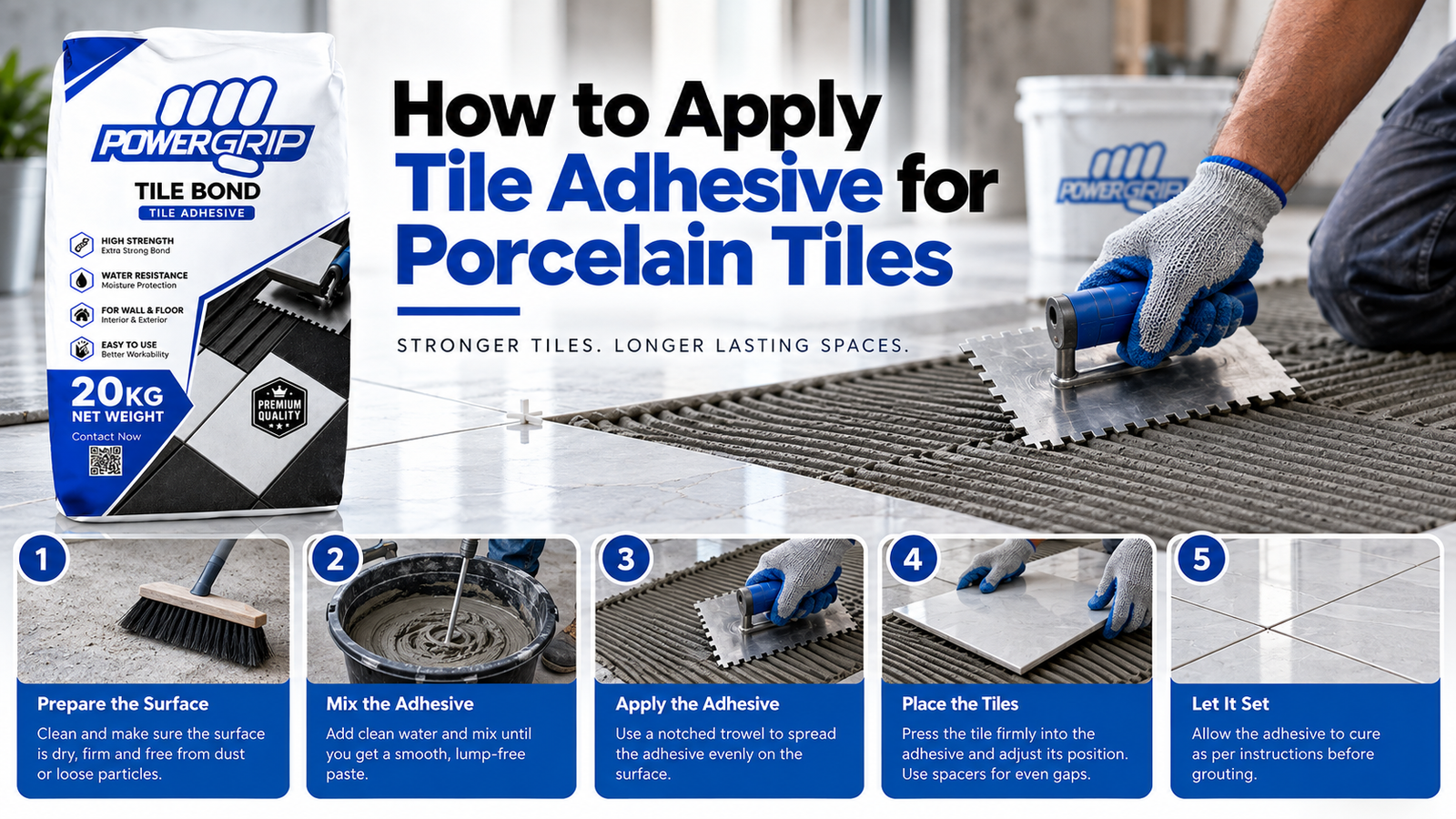
How to Apply Tile Adhesive for Porcelain Tiles
Good application can make a big difference. Even a suitable adhesive can fail if it is used in the wrong way.
Step 1: Clean the Surface
Remove dust, dirt, oil, loose material, and other substances from the surface.
The surface should be firm and ready for tile installation.
Step 2: Check the Surface
Look for cracks, weak areas, or large uneven spots.
Fix major problems before applying the adhesive.
Step 3: Mix the Adhesive
Follow the mixing instructions on the product pack.
Use the recommended amount of water. Do not add extra water just to make the mix thinner.
Mix the product until it reaches the recommended texture.
Step 4: Apply the Adhesive
Use a suitable notched trowel to spread the adhesive.
Do not spread too much adhesive at one time. The tile should be placed within the working time given by the manufacturer.
Step 5: Place the Tile
Place the porcelain tile carefully on the adhesive.
Press it down with suitable movement so the tile makes good contact with the adhesive.
Large tiles need extra care. The installer should make sure that the adhesive covers the required area below the tile.
Step 6: Check the Tile Position
Check the tile level and joint size while the adhesive is still workable.
Clean extra adhesive from the tile joints before it becomes hard.
Step 7: Allow the Adhesive to Cure
Do not use the tiled area too soon.
Follow the manufacturer’s instructions for drying, curing, and foot traffic.
Is Tile Adhesive Good for Large Porcelain Tiles?
Large porcelain tiles need careful installation. Their size makes it harder to get good contact across the full tile.
The surface should be flat enough for the tile. The correct adhesive should also be selected.
The installer should use the correct trowel and application method. In some cases, adhesive may also be applied to the back of the tile. This is often called back buttering.
The exact method depends on the tile, adhesive, and installation instructions.
Do not assume that adding more adhesive will solve an uneven surface. The surface should be prepared before the tiles are installed.
Tile Adhesive for Bathroom and Kitchen Tiles
Bathrooms and kitchens are areas where moisture is common.
A suitable tile adhesive can help fix the tile, but adhesive alone should not always be treated as a waterproofing system.
A bathroom may need a separate waterproofing system before tile installation. The floor also needs proper slope so water can move toward the drain.
Kitchens also need careful work around sinks and other wet areas.
The full installation should be planned as a system. This can include the surface, waterproofing, adhesive, tile, grout, and movement joints.
Can Porcelain Tile Adhesive Be Used Outdoors?
Some tile adhesives are made for outdoor use. Others may be designed only for indoor applications.
Outdoor areas can face sunlight, rain, heat, moisture, and temperature changes. These conditions can place more stress on a tile installation.
Before using an adhesive outside, check the product instructions. Confirm that the product is suitable for the planned outdoor surface and tile.
In Karachi, outdoor areas can also become very hot during summer. Proper installation and correct working conditions are important.
Common Mistakes When Installing Porcelain Tiles
Tile problems do not always mean that the adhesive is bad. Many problems happen because of poor surface preparation or incorrect installation.
Common mistakes include:
- Using an adhesive that is not suitable for porcelain tiles
- Applying adhesive over a dusty surface
- Adding too much water during mixing
- Using the wrong trowel
- Applying too much adhesive at one time
- Leaving empty areas under the tile
- Using adhesive to fix a badly uneven surface
- Walking on the tiles too soon
- Ignoring movement joints where they are needed
- Using an indoor product for an outdoor project
Following the product instructions can help reduce these problems.
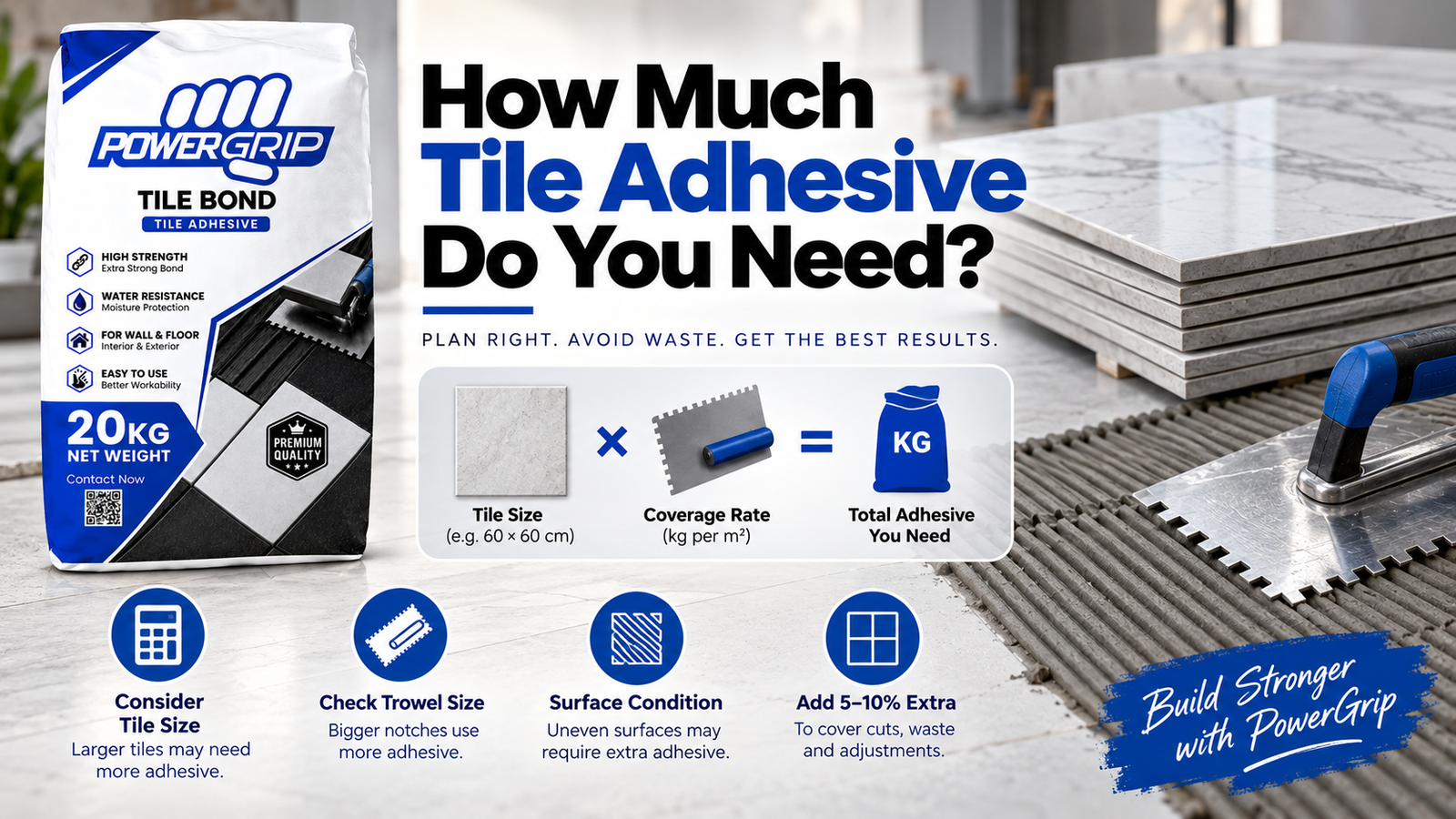
How Much Tile Adhesive Do You Need?
There is no single amount that works for every tile project.
The amount needed depends on the size of the tiles, surface condition, trowel size, adhesive thickness, and application method.
Large tiles may require more adhesive than small tiles. An uneven surface can also change material use.
The best way to estimate the amount is to check the coverage information on the product pack.
Measure the total tile area first. Then compare it with the product’s stated coverage.
It is also useful to allow for some material loss during installation.
Tile Adhesive for Porcelain Tiles in Karachi
Karachi has hot weather for much of the year. Outdoor surfaces can become very hot under direct sunlight.
This can affect the working time of some tile adhesives. The surface temperature and weather should be considered before starting the work.
Do not leave mixed adhesive unused for too long. Follow the product instructions for working time and curing.
For outdoor projects, also consider rain, moisture, heat, and movement.
For indoor projects, focus on surface preparation, tile size, adhesive coverage, and correct mixing.
Can Power Grip Be Used for Porcelain Tiles?
Power Grip can be considered when looking for tile bonding products in Pakistan.
If you plan to use Power Grip for porcelain tiles, check the exact product information first. Confirm that the product is made for porcelain or low water absorption tiles.
Also check the recommended surface, tile size, indoor or outdoor use, mixing instructions, and coverage.
The right product should always be matched to the project.
Do not choose an adhesive only because of its brand name. Look at the product information and installation needs before buying.
What Should You Check Before Buying Tile Adhesive?
Before buying tile adhesive for porcelain tiles, take a few simple steps.
- Check that the product is suitable for porcelain or low absorption tiles.
- Check if it can be used on your wall or floor surface.
- Check if it is suitable for indoor or outdoor use.
- Consider the size and weight of the tiles.
- Check the product mixing instructions.
- Check the coverage information.
- Ask about special requirements for large format tiles.
- Check the curing and waiting time.
- For difficult projects, ask a skilled installer or product expert for advice.
These checks can help you avoid buying a product that does not match your project.
When Should You Get Professional Help?
Small tile jobs may be simple when the surface is already prepared. Large or difficult projects can need more care.
Consider professional help when you are installing large format porcelain tiles, working on an uneven surface, tiling a large outdoor area, or working in a commercial building.
A skilled installer can check the surface before starting. They can also choose the right tools and application method.
This can help reduce the risk of loose tiles, poor coverage, and other installation problems.
Frequently Asked Questions
What is tile adhesive for porcelain tiles?
Tile adhesive for porcelain tiles is a bonding material used to fix porcelain tiles to suitable walls and floors. It should be selected according to the tile, surface, and place of installation.
Can normal tile adhesive be used for porcelain tiles?
It depends on the product. Porcelain tiles have very low water absorption. Always check the product label to make sure the adhesive is suitable for porcelain tiles.
Is cement better than tile adhesive for porcelain tiles?
The answer depends on the installation method and project. Tile adhesive is made for tile bonding, while cement and sand are used in traditional installation methods. The right choice depends on the tile and surface.
Can tile adhesive be used for large porcelain tiles?
Yes, some tile adhesives are suitable for large porcelain tiles. The product must be suitable for the tile size and weight. Good surface preparation and adhesive coverage are also important.
Can porcelain tile adhesive be used outdoors?
Some products are made for outdoor use. Others are only for indoor applications. Always check the product instructions before using adhesive outdoors.
Is porcelain tile adhesive waterproof?
Not always. Tile adhesive helps bond the tile to the surface. It should not automatically be treated as a waterproofing system. Some areas may need a separate waterproofing system.
Why do porcelain tiles become loose?
Loose tiles can happen for many reasons. These include poor surface preparation, low adhesive coverage, wrong adhesive, poor mixing, early foot traffic, or movement in the surface.
Which tile adhesive should I use in Karachi?
Choose a product that matches your porcelain tile, surface, and installation area. Also check if the product is suitable for Karachi’s indoor or outdoor conditions. For large or difficult projects, professional advice can help.
Conclusion
Choosing the right tile adhesive for porcelain tiles can help create a strong and long-lasting tile installation. Porcelain tiles have low water absorption, so the adhesive should be suitable for this type of tile.
The surface also needs to be clean, strong, and ready for installation. Correct mixing, proper adhesive coverage, and enough curing time are just as important as product selection.
For a project in Karachi, consider the tile size, surface, location, moisture, heat, and installation method before buying an adhesive.
If you are considering Power Grip, check the specific product information to make sure it matches your porcelain tile and project needs. A suitable product and correct installation method can help reduce common tile problems and support a better finish.