



Choosing the right marble tile adhesive Pakistan can make a noticeable difference in the strength, appearance, and long-term performance of a tile installation.
Marble is heavier and more sensitive to installation conditions than many ordinary ceramic tiles, so the adhesive needs to be suitable for the marble, substrate, tile size, and application environment.
For homeowners, contractors, tile fixers, architects, dealers, and property developers in Karachi, understanding these factors can help avoid common installation problems.
This guide explains what marble tile adhesive is, how it differs from traditional cement-sand mortar, what to check before buying, how substrate preparation affects performance, and when professional technical guidance may be useful.
Understanding Marble Tile Adhesive pakistan
and Its Applications
What Is Marble Tile Adhesive?
Marble tile adhesive pakistan is a formulated bonding material used to fix marble and other stone tiles to suitable surfaces.
Unlike a basic cement-sand mixture, a manufactured adhesive can be formulated with cementitious binders, graded aggregates, and performance-enhancing additives designed to improve adhesion, workability, water retention, and application characteristics.
The exact performance depends on the adhesive formulation and its intended application.
A product suitable for a particular marble installation should be selected according to the manufacturer’s technical information rather than simply choosing an adhesive because it is marketed as a general-purpose tile product.
Why Does Marble Need the Right Adhesive?
Marble tiles can vary considerably in thickness, size, porosity, weight, and surface characteristics.
Large-format marble also places greater demands on the bonding system because the adhesive needs to provide adequate contact between the tile and substrate.
A good installation is not determined by the adhesive alone. The condition of the substrate, mixing procedure, adhesive coverage, tile placement, curing conditions, and workmanship all influence the final result.
For example, a high-quality adhesive may still perform poorly if it is applied over a dusty, weak, damp, uneven, or unsuitable substrate.
Similarly, using too little adhesive or failing to achieve adequate contact beneath a large marble tile can create voids that may contribute to movement or breakage.
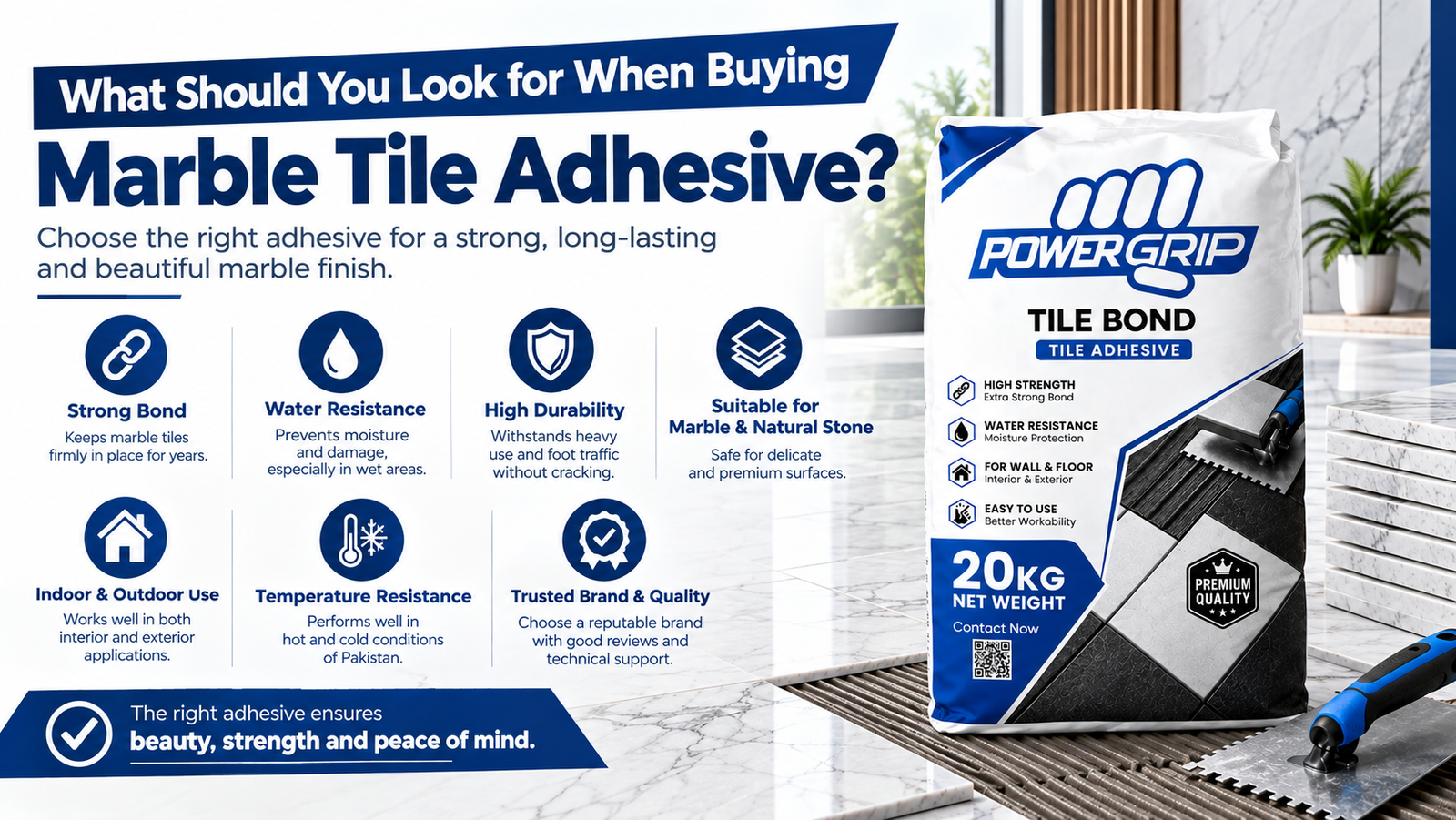
What Should You Look for When Buying Marble Tile Adhesive?
The first consideration should be compatibility. Check whether the product is intended for marble, natural stone, or the particular tile application you are planning.
Other practical considerations include:
- Tile size, thickness, weight, and type of marble.
- Whether the installation is on a floor, wall, façade, wet area, or another surface.
- The type and condition of the substrate.
- Indoor or outdoor exposure and expected environmental conditions.
- Required working time, open time, and adjustment characteristics.
- Coverage and recommended application thickness stated by the manufacturer.
- Product instructions, technical data, storage requirements, and mixing instructions.
- Whether additional technical guidance is needed for large-format or demanding installations.
A contractor or tile installer should also consider the condition of the existing surface. Adhesive selection cannot compensate for a structurally weak or poorly prepared substrate.
Marble Tile Adhesive vs Cement-Sand Mortar
Traditional cement-sand mortar has been used for tile and stone installation for many years, but a formulated tile adhesive is engineered differently.
The most suitable system depends on the project rather than a simple rule that one material is always better.
|
Installation Consideration |
Formulated Marble/Stone Adhesive |
Traditional Cement-Sand Mortar |
|
Composition |
Factory-formulated bonding material with controlled ingredients |
Cement, sand and water mixed for the installation |
|
Consistency |
Designed for more controlled product characteristics |
Can vary with sand quality, proportioning and mixing |
|
Application |
Generally applied according to specified adhesive techniques |
Commonly used as a thicker mortar bed |
|
Large-format tiles |
Product suitability should be checked carefully |
Installation method and mortar-bed design become important |
|
Substrate requirements |
Requires a suitable, prepared substrate |
May accommodate certain traditional installation methods |
|
Technical guidance |
Manufacturer instructions are important |
Correct proportioning and workmanship are important |
|
Best choice |
Depends on tile, substrate and project requirements |
Depends on the installation system and site conditions |
The comparison does not mean that every marble installation should automatically use one system.
Tile dimensions, substrate, construction method, site conditions, and project specifications should be considered before selecting the installation approach.
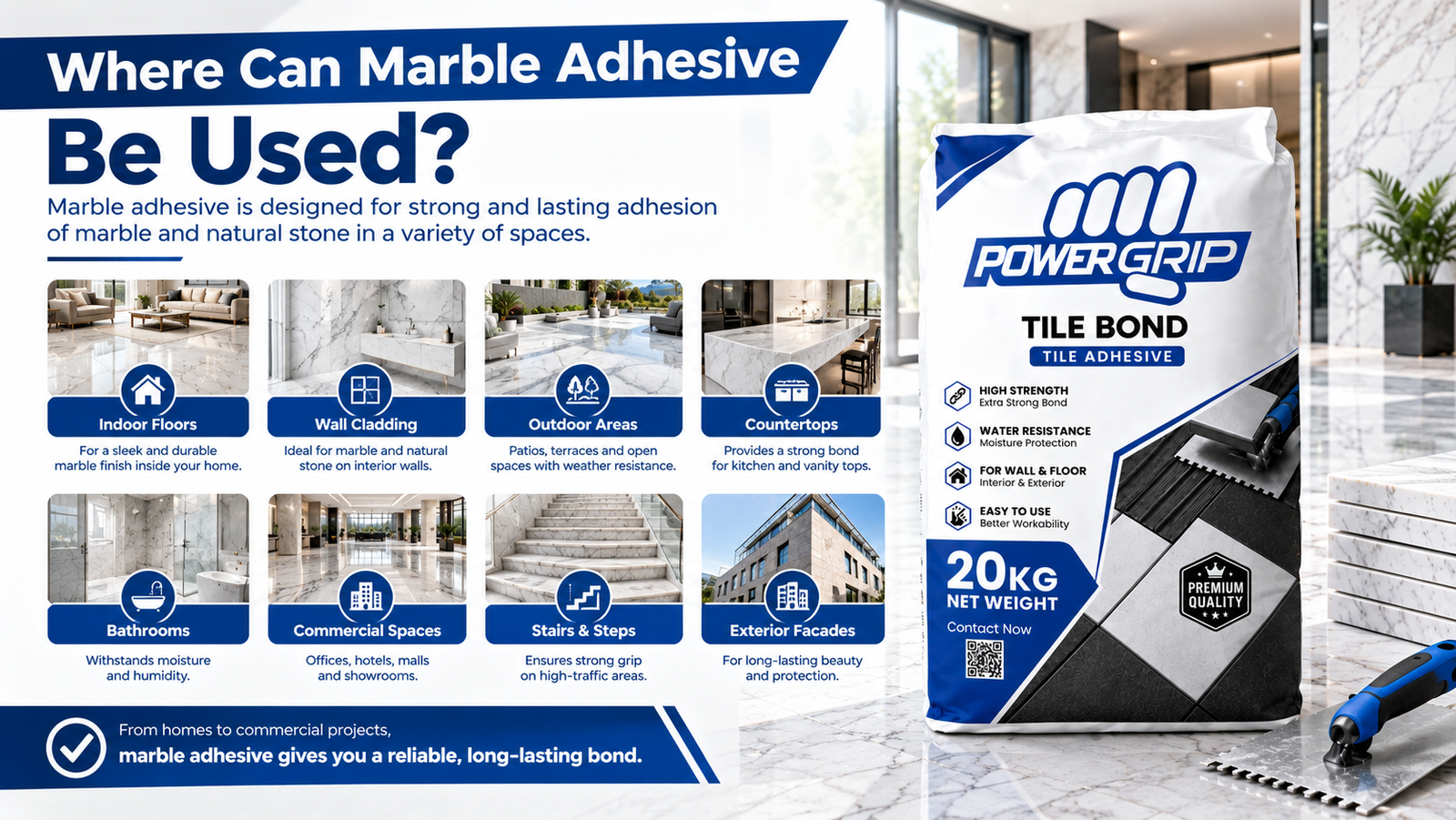
Where Can Marble Adhesive Be Used?
The appropriate adhesive depends on the specific application. Common project situations can include marble flooring, interior walls, selected wet-area applications, renovations, and other stone-tile installations.
Outdoor or particularly demanding environments require more careful product selection.
Temperature changes, moisture exposure, substrate movement, tile dimensions, and installation height can all affect the requirements.
For vertical installations involving heavy marble, product suitability and installation method deserve particular attention.
The installer should follow the manufacturer’s stated application limitations rather than assuming that an adhesive suitable for ordinary wall tiles is automatically appropriate for heavy stone.
What Problems Can Incorrect Adhesive Selection Cause?
Choosing a product without considering the marble and substrate can contribute to installation problems.
Some problems may be related to the adhesive, while others originate from poor surface preparation, incorrect application, movement in the substrate, moisture, or inadequate workmanship.
Common issues that deserve attention include debonding, hollow-sounding areas, cracked or loose tiles, uneven surfaces, excessive adhesive shrinkage, and visible installation defects.
A recurring problem with large tiles is insufficient adhesive contact. Voids underneath a heavy tile can reduce support and create weak areas.
Proper application technique and adequate coverage are therefore just as important as choosing an appropriate product.
Installation, Buying Advice and Technical Guidance
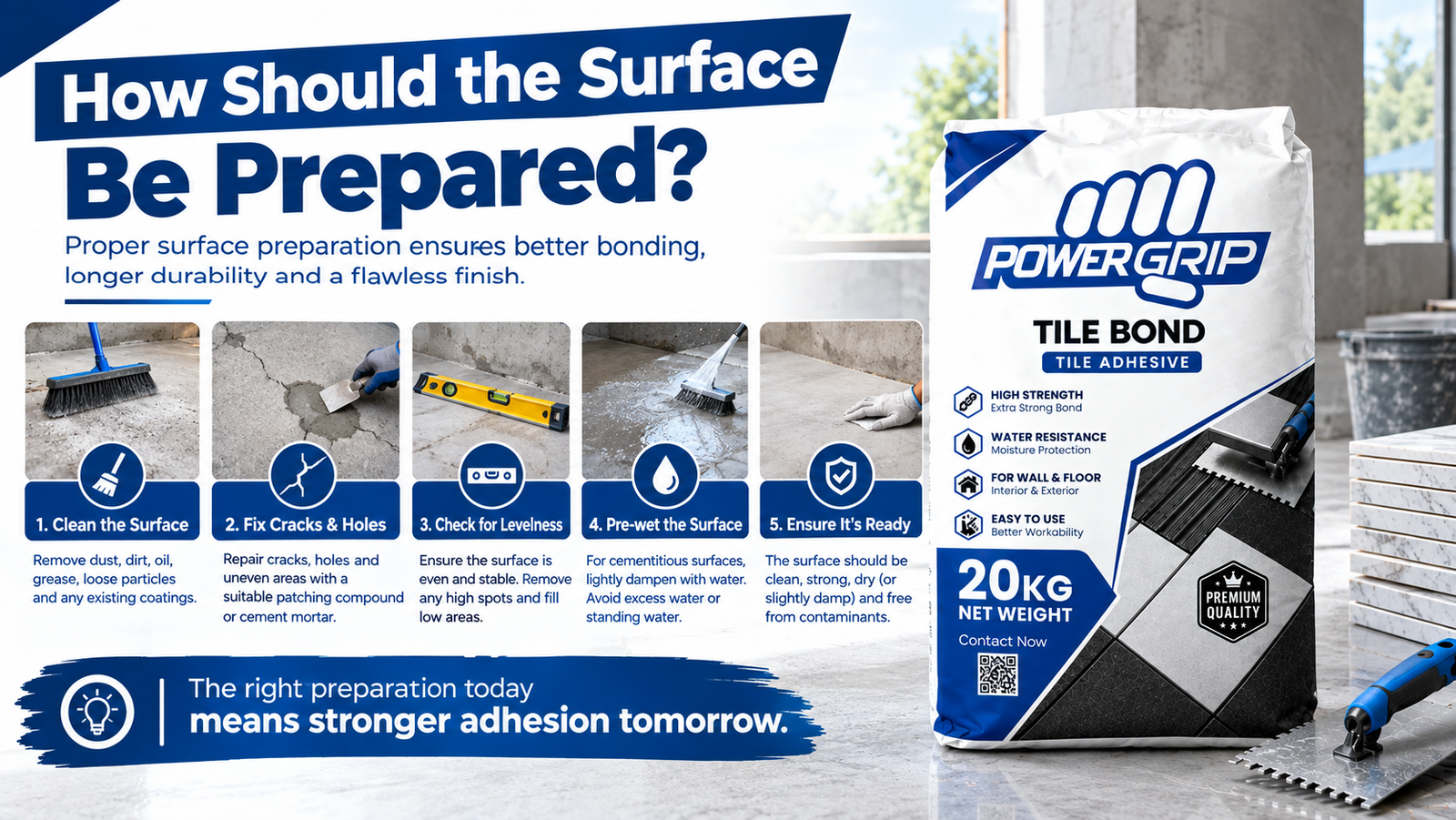
How Should the Surface Be Prepared?
Before applying adhesive, the substrate should be stable, sufficiently strong, clean, and appropriately prepared for the selected installation system.
Dust, loose particles, grease, paint residues, and other contaminants can interfere with bonding.
Uneven surfaces may need correction before tile installation rather than relying on excessive adhesive thickness to compensate for major irregularities.
The manufacturer’s instructions should be followed regarding acceptable substrate conditions, preparation, priming where applicable, and moisture requirements.
For renovation work, it is especially important to determine what is underneath the existing finish.
A new adhesive layer cannot reliably solve problems caused by loose plaster, weak screed, structural movement, or a failing old surface.
How Is Marble Tile Adhesive Normally Applied?
Application should always follow the instructions supplied with the selected product.
In general, the installer prepares the adhesive using the specified mixing method and applies it with a suitable notched trowel or other recommended tool.
The marble is then positioned while the adhesive remains within its usable working period.
The installer needs to ensure appropriate contact between the adhesive and tile and avoid leaving significant unsupported voids beneath the stone.
For large-format marble, installation technique becomes even more important.
Depending on the product and application, techniques such as applying adhesive to the substrate and/or the back of the tile may be specified to improve contact.
These requirements should come from the manufacturer’s technical guidance and the project’s installation specifications.
What About Marble Discoloration?
Natural stone can have particular sensitivity to moisture, staining, and discoloration depending on its composition and finish.
This is one reason why adhesive selection for marble should not be based solely on bonding strength.
Before installation, check whether the selected adhesive is recommended for the specific type of marble.
A small test area may also be appropriate for visually sensitive stone when recommended by the manufacturer or project professional.
The installer should also consider grout, substrate moisture, curing conditions, and other materials used around the marble.
A successful stone installation is a complete system rather than an adhesive-only decision.
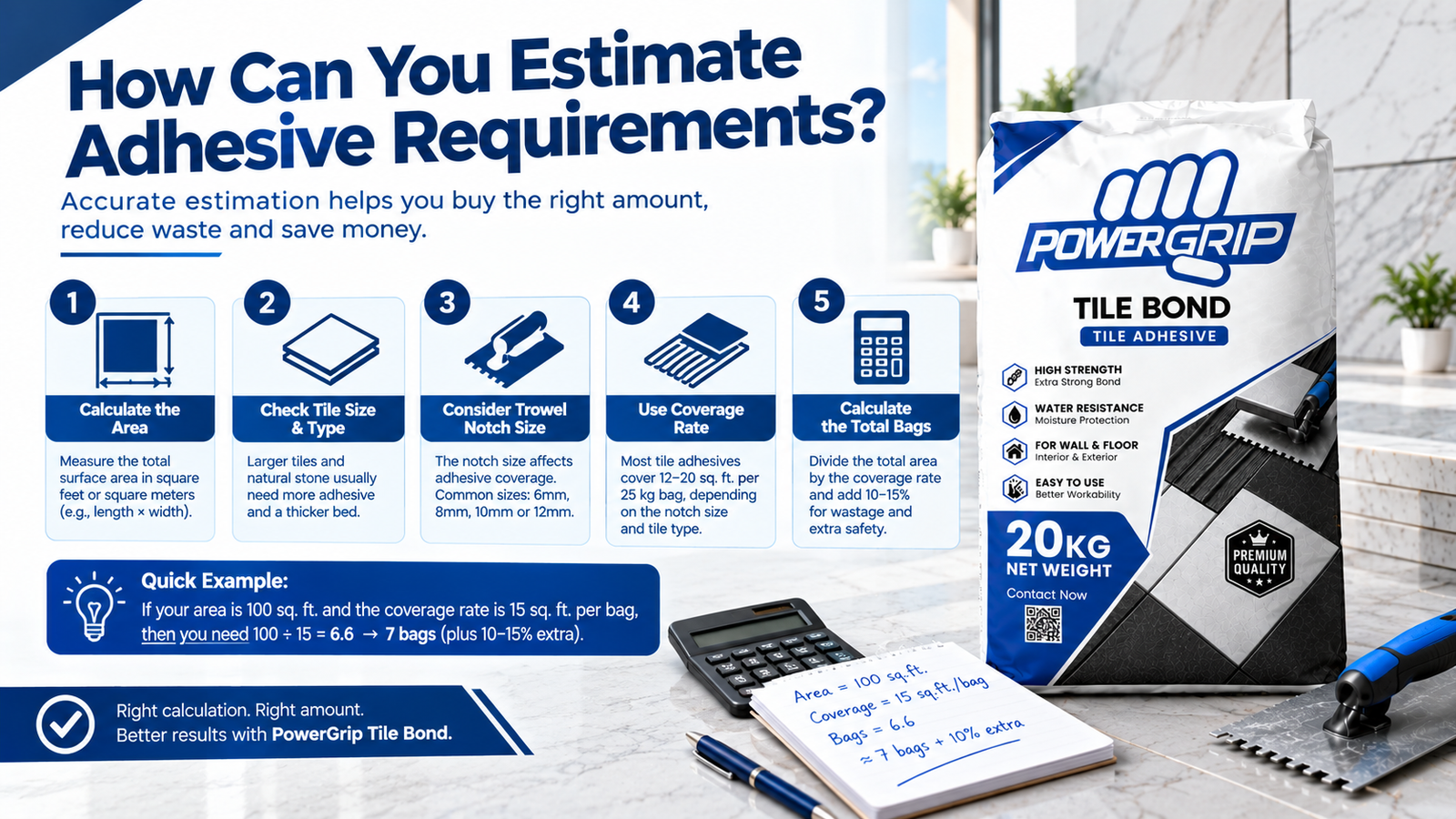
How Can You Estimate Adhesive Requirements?
Coverage depends on several variables, including tile dimensions, substrate flatness, trowel size, application technique, adhesive thickness, and installer workmanship.
Therefore, a printed coverage figure should be treated as an estimate rather than a guarantee of actual site consumption.
For project planning, contractors and dealers should refer to the product’s technical information and allow for reasonable site conditions and application losses.
Large-format marble or uneven substrates may require more material than a basic coverage estimate suggests.
What Should Homeowners Check Before Buying?
A homeowner does not necessarily need to understand every technical specification, but asking a few practical questions can prevent unsuitable purchases.
Check the product’s intended use, the type and size of marble being installed, the substrate, indoor or outdoor location, and the manufacturer’s application instructions.
If the installation involves unusually large or heavy marble, a difficult substrate, or a demanding environment, technical advice before purchasing may be worthwhile.
For projects in Karachi, local site conditions can also matter.
Heat, dust, construction practices, substrate conditions, and the availability of suitable installation materials can affect the practical outcome.
The adhesive should therefore be selected according to the actual project rather than simply choosing the most familiar product.
How Does Power Grip Fit Into the Buying Decision?
For buyers considering Power Grip.pk, the most useful approach is to evaluate the specific adhesive product against the project’s requirements rather than relying on broad marketing descriptions.
Contractors, dealers, and homeowners can compare the product’s stated application areas, technical specifications, mixing instructions, recommended thickness, coverage information, storage requirements, and suitability for marble or natural stone.
Where the project has unusual requirements, obtaining product-specific technical guidance before installation can help the installer use the material correctly.
The goal should be a compatible adhesive and a properly executed installation—not simply choosing a product because it has a familiar name.
Common Installation Mistakes to Avoid
Several avoidable mistakes can reduce the quality of a marble installation.
These include applying adhesive over a contaminated substrate, ignoring manufacturer instructions, using an unsuitable mixing ratio, allowing mixed adhesive to remain unused beyond its recommended working period, and failing to achieve sufficient tile contact.
Another common mistake is attempting to correct a significantly uneven substrate by creating an unnecessarily thick adhesive layer.
If the substrate needs leveling, it is generally better to address that issue using an appropriate preparation method before the final tile-bonding stage.
When Should You Ask for Technical or Professional Guidance?
Technical guidance is particularly useful when the project involves large-format marble, heavy stone, exterior exposure, wet areas, unusual substrates, renovation over existing surfaces, or other conditions outside a standard installation.
A professional installer can assess the substrate and installation method, while the adhesive manufacturer or supplier can clarify product-specific requirements.
This is especially valuable when the appearance and replacement cost of marble make installation mistakes expensive to correct.
Before starting a significant project, it is reasonable to confirm the recommended adhesive, substrate preparation, application method, expected coverage, curing requirements, and any limitations listed by the manufacturer.
Frequently Asked Questions
Is marble tile adhesive better than cement mortar?
Not necessarily in every project. A formulated adhesive and traditional cement mortar are different installation systems, and the appropriate choice depends on the marble, substrate, tile dimensions, location, and project requirements.
For a particular product, always follow the manufacturer’s stated applications and installation instructions.
Can ordinary tile adhesive be used for marble?
It depends on the product. Some adhesives may be suitable for particular natural-stone applications, while others may be designed for ceramic or porcelain tiles and may not be appropriate for every type of marble.
Check the manufacturer’s technical information before using an adhesive for marble.
What is the best marble tile adhesive in Pakistan?
There is no single product that is automatically the best for every marble installation.
The right choice depends on the marble type, tile size, substrate, installation location, environmental conditions, and application method. Product specifications should be compared with the actual project requirements.
Can marble adhesive be used on walls?
Some products may be suitable for marble wall applications, but the adhesive must be appropriate for the tile’s weight, size, substrate, and installation environment.
Heavy marble on vertical surfaces requires careful attention to product suitability and installation technique.
How much marble tile adhesive do I need?
There is no universal quantity because consumption varies with tile size, substrate flatness, adhesive thickness, trowel selection, coverage, and installation technique.
Use the manufacturer’s coverage information as a planning guide and account for actual site conditions.
Can marble be installed outdoors with tile adhesive?
Some adhesive systems are designed for exterior applications, but not every marble adhesive is suitable for outdoor exposure.
The product’s technical documentation should specifically support the intended environment and conditions before installation.
How do I choose marble adhesive in Karachi?
Start with the marble type, tile dimensions, substrate, and installation location.
Then check the adhesive’s stated suitability and technical requirements. For large, heavy, exterior, or technically demanding installations, discuss the application with the product supplier or an experienced installer before purchasing.
Can Power Grip help with marble tile adhesive selection?
Power Grip.pk can be considered as part of the product-selection process, but the correct product should be matched to the actual installation requirements.
Buyers should review the relevant product specifications and seek technical guidance where the project has unusual or demanding conditions.
Conclusion
Choosing marble tile adhesive in Pakistan is not simply about finding an adhesive that sticks to stone.
The marble type, tile dimensions, substrate condition, installation location, moisture exposure, application technique, and manufacturer’s specifications all matter.
For homeowners and professionals working in Karachi, a careful selection process can help reduce avoidable installation problems.
Whether you are comparing products for a home renovation, commercial project, new development, or dealer inventory, focus on documented product suitability and correct installation practices.
Power Grip.pk can be considered alongside other available options, with the final selection based on the requirements of the specific project.