

Choosing the right adhesive is one of the most important steps in achieving a strong, long-lasting tile installation.
Whether you are renovating a home, installing tiles in a commercial building, or working on a large construction project, the quality of the adhesive can directly affect tile bonding, stability, and durability.
High Strength Tile Adhesive is designed to provide a reliable bond between tiles and suitable surfaces.
Compared with ordinary bonding materials, a high-strength formulation can be a better choice for demanding applications where tiles may face moisture, temperature changes, regular foot traffic, or heavier loads.
In Pakistan, where construction conditions can vary significantly between indoor and outdoor environments, selecting an appropriate tile adhesive is especially important.
This guide explains what high-strength tile adhesive is, where it can be used, what factors to consider before buying it, and how products such as Powergrip can fit into a tile installation project.
What Is High Strength Tile Adhesive?
High-strength tile adhesive is a specially formulated bonding material used to fix ceramic, porcelain, marble, stone, and other suitable tiles to prepared surfaces.
Its main purpose is to create a strong connection between the tile and substrate while helping maintain stability during and after installation.
Depending on the formulation, tile adhesives may be suitable for walls, floors, kitchens, bathrooms, balconies, commercial areas, and other applications.
A good adhesive does more than simply hold a tile in place. It should provide appropriate adhesion, workability, coverage, and durability for the intended application.
The correct product should always be selected according to the tile type, substrate, environment, and manufacturer’s technical instructions.
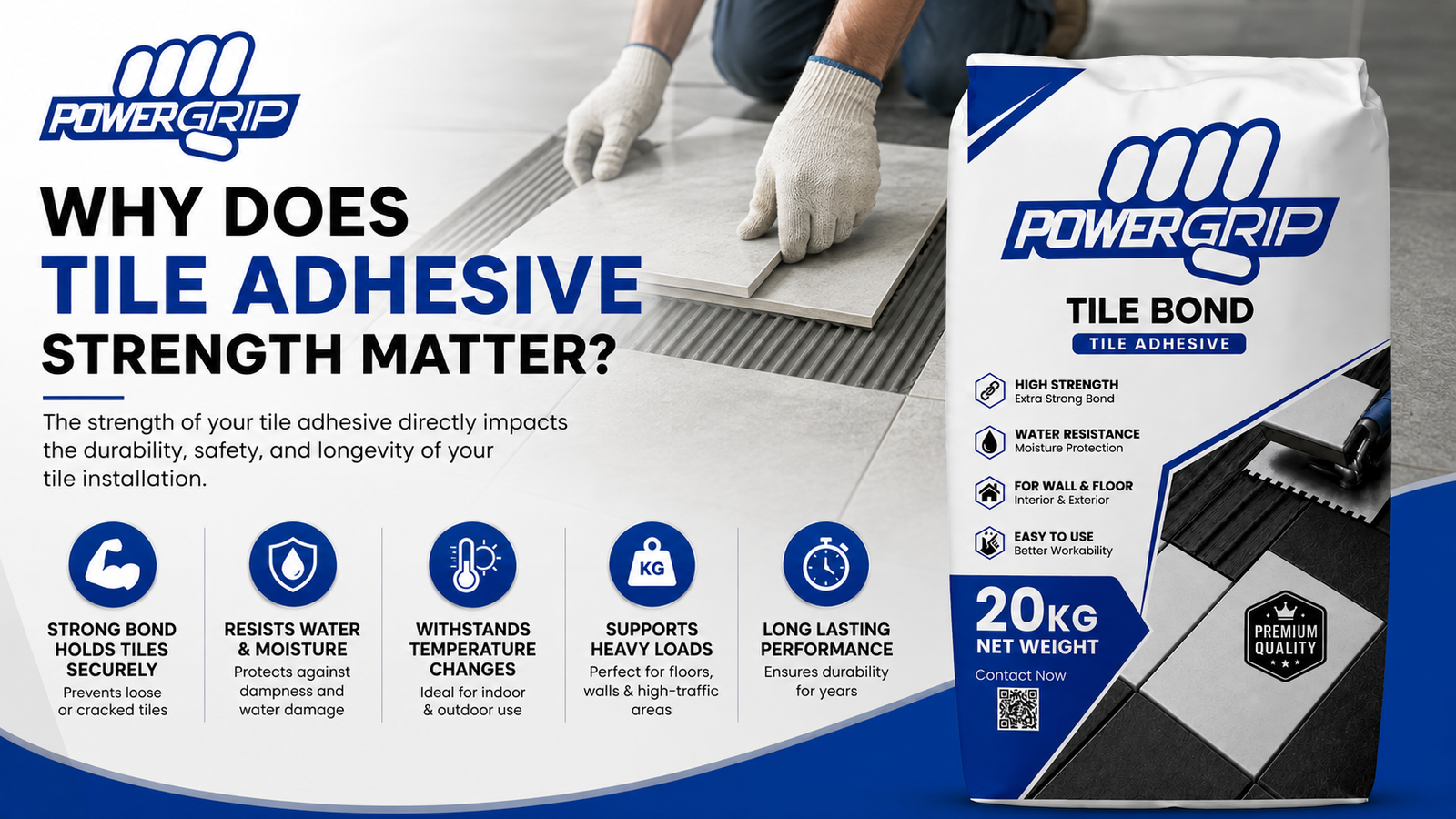
Why Does Tile Adhesive Strength Matter?
Tile installation is exposed to several stresses over time. Temperature changes, moisture, movement in the substrate, foot traffic, and improper installation can all affect the bond.
A suitable high strength adhesive can help reduce the risk of common installation problems when it is correctly matched to the project.
For example, a bathroom floor may require an adhesive suitable for a moisture-exposed environment, while a large-format porcelain tile may require a product designed for the specific tile and substrate combination.
The adhesive should therefore not be selected only because it is advertised as “strong.” The product’s technical specifications and intended use are equally important.
Key Benefits of High-Strength Tile Adhesive
The right adhesive can provide several practical benefits during a tile installation project.
Strong Tile Bonding
A quality adhesive is designed to establish a dependable bond between the tile and a properly prepared substrate. This can help tiles remain stable when installation instructions are followed correctly.
Better Installation Reliability
Poor adhesive selection can contribute to loose tiles, cracks, hollow-sounding areas, or other installation problems. Choosing a suitable formulation helps create a more reliable installation system.
Suitable for Different Tile Applications
Different tile materials have different characteristics. Ceramic, porcelain, stone, and larger tiles may require different adhesive properties.
Always check whether the selected product is recommended for the particular tile and surface.
Improved Workability
A professional tile adhesive should not only provide bonding strength.
It should also be practical for installers to mix, spread, and apply according to the manufacturer’s instructions.
Good workability can help achieve more consistent coverage across the installation area.
Long Term Performance
Tile durability depends on several factors, including the substrate, adhesive, tile quality, environmental conditions, installation technique, and maintenance.
A suitable adhesive is one important part of achieving a durable finished surface.
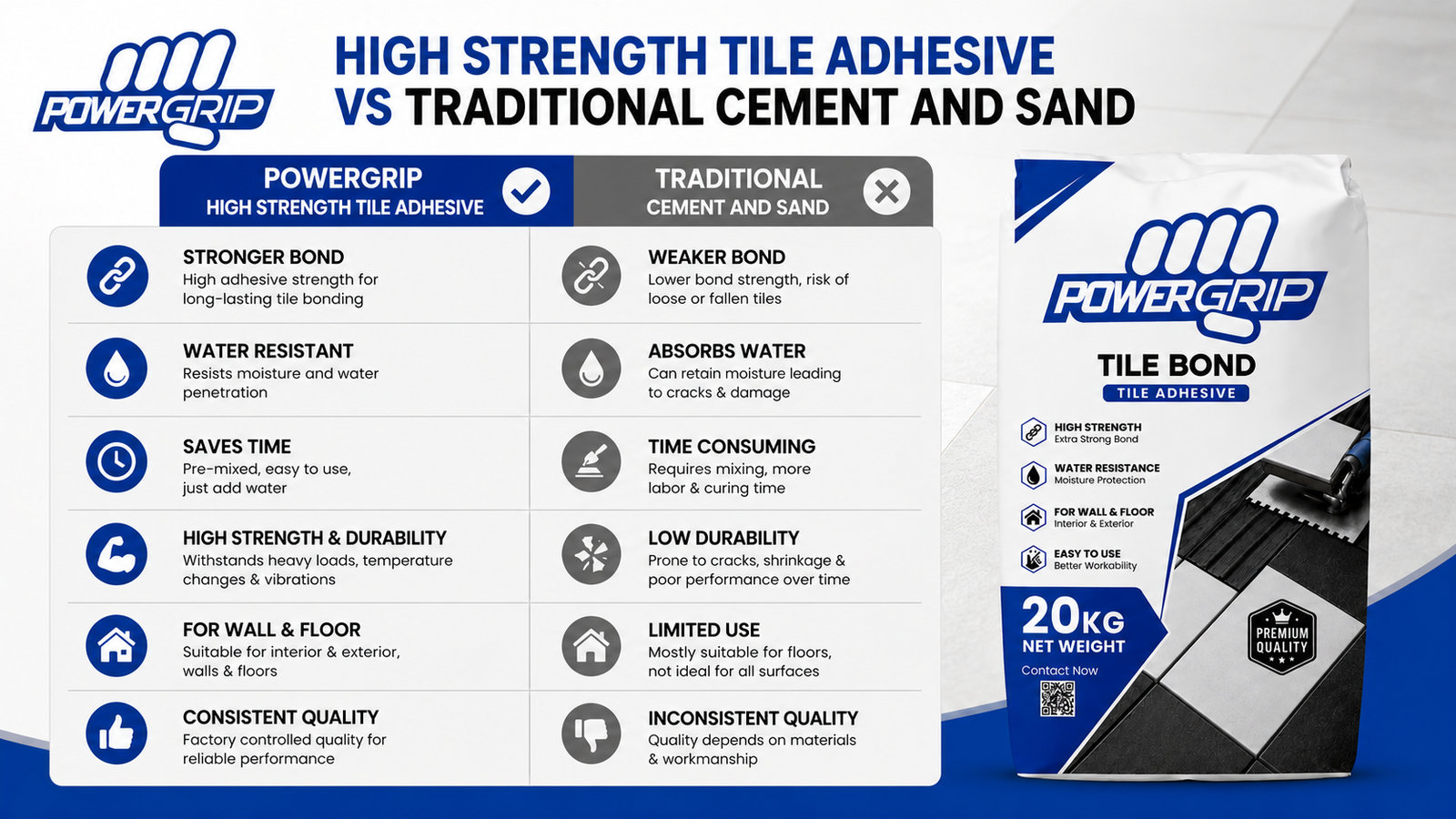
High Strength Tile Adhesive vs Traditional Cement and Sand
Traditional cement and sand mixtures have historically been used for tile installation in many construction projects.
However, modern tile adhesive products are formulated specifically for tile bonding and can offer more controlled application characteristics.
Feature | High Strength Tile Adhesive | Traditional Cement and Sand |
Main purpose | Specifically formulated for tile bonding | General construction and bedding applications |
Application | Usually spread as an adhesive layer | Typically used as a mortar or bedding layer |
Workability | Designed for controlled tile installation | Depends heavily on mixing and workmanship |
Consistency | Manufactured to a controlled formulation | Can vary according to site mixing |
Suitable application | Depends on product specification | Depends on the mortar mix and installation method |
Best selection method | Based on tile, substrate, and environment | Based on project requirements and traditional practice |
This does not mean that one material is automatically suitable for every project. The correct choice depends on the installation system and technical requirements.
How to Choose the Right Tile Adhesive
Selecting an adhesive requires more than looking at the price of one bag. Consider the following factors before purchasing.
1. Consider the Tile Type
The tile material should be one of the first considerations.
Ceramic tiles, porcelain tiles, natural stone, mosaic tiles, and large-format tiles may have different installation requirements.
Porcelain, for example, has low water absorption, so the adhesive should be suitable for bonding this type of tile.
2. Check the Substrate
The surface receiving the tile must be suitable for the selected adhesive.
Common substrates can include:
- Concrete
- Cement based screeds
- Cement plaster
- Suitable masonry surfaces
- Properly prepared existing surfaces
The substrate should generally be clean, stable, adequately cured, and free from contaminants that can interfere with adhesion.
3. Consider Indoor or Outdoor Use
An adhesive suitable for an indoor wall may not automatically be appropriate for an exposed outdoor area.
Outdoor installations can experience rain, heat, temperature variation, and other environmental stresses.
For balconies, terraces, exterior walls, and similar areas, check the manufacturer’s recommendations before application.
4. Consider Moisture Exposure
Bathrooms, kitchens, laundry areas, and other wet locations require careful material selection.
The adhesive should be compatible with the complete installation system and the environmental conditions in which it will be used.
5. Check Large Format Tile Requirements
Large-format tiles can require more careful installation because of their size and weight.
The adhesive, substrate preparation, coverage, and application method should all be suitable for the tile dimensions.
Professional installation may be particularly useful for large or technically demanding tile projects.
Powergrip as a Tile Adhesive Option
Powergrip can be considered when looking for a tile adhesive option for construction and renovation projects.
When selecting Powergrip or any other adhesive, buyers should review the product packaging and technical information to determine the recommended tile types, substrates, application areas, mixing requirements, and coverage.
The best product is not necessarily the one with the strongest marketing claim. It is the product whose specifications match the actual requirements of the installation.
For a project involving porcelain, large-format tiles, wet areas, exterior surfaces, or other demanding conditions, check the specific Powergrip product grade and its technical recommendations before purchasing.
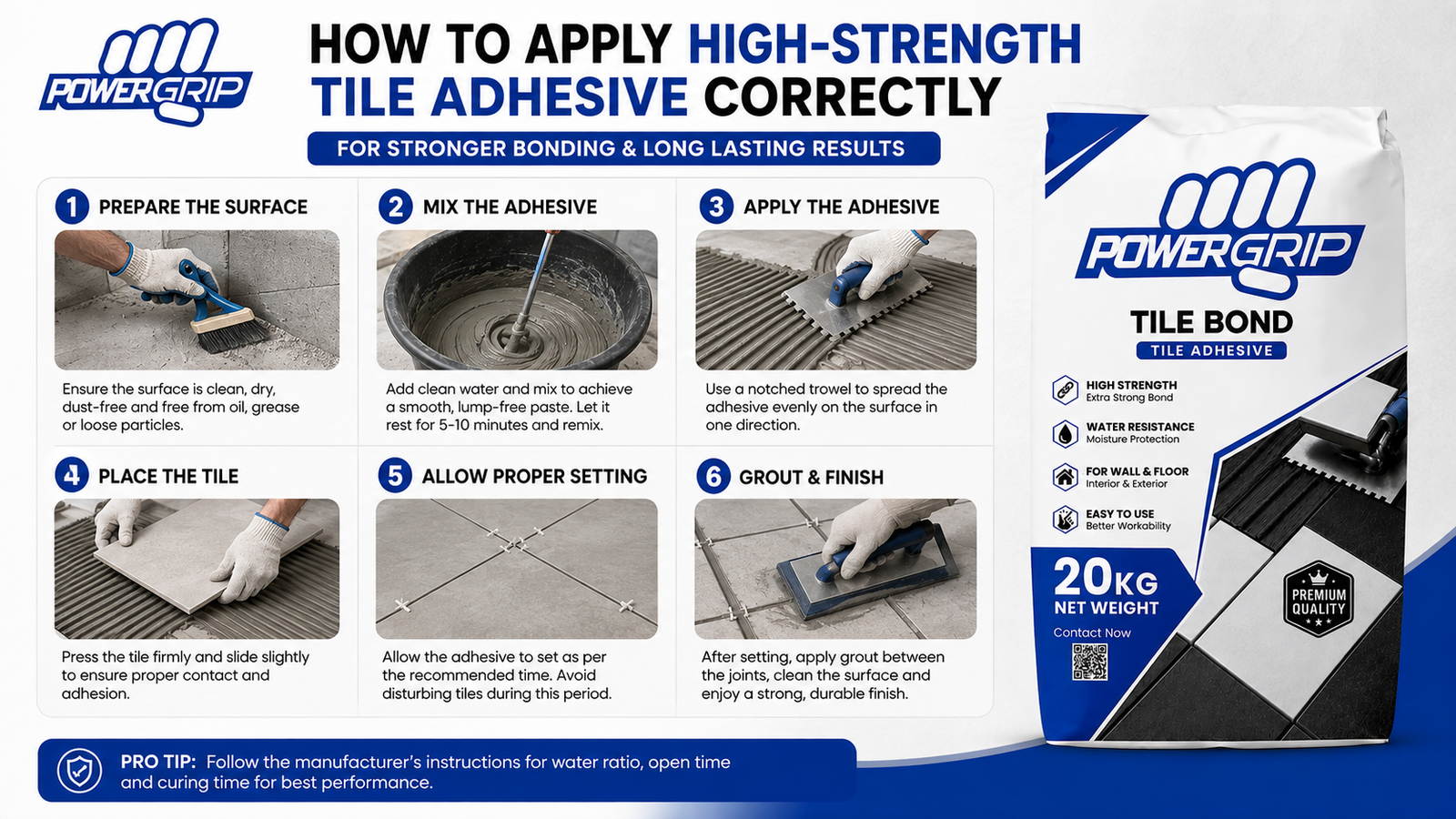
How to Apply High-Strength Tile Adhesive Correctly
Even a good adhesive may perform poorly if installation is carried out incorrectly. Proper preparation is therefore just as important as product selection.
Prepare the Surface
Remove dust, loose particles, grease, paint residues, and other contaminants from the substrate.
The surface should be stable and appropriately prepared before adhesive application.
Mix According to Instructions
If the adhesive requires mixing with water, use the quantity and mixing method specified by the manufacturer.
Avoid adding excessive water because changing the recommended mixing ratio can affect the material’s performance.
Apply the Adhesive Evenly
Spread the adhesive using the recommended notched trowel or appropriate tool.
The goal is to create suitable adhesive coverage between the substrate and tile.
Place the Tile Carefully
Position the tile over the adhesive and apply appropriate pressure or movement according to the installation method.
Avoid allowing the adhesive to form a dry skin before the tile is placed.
Maintain Proper Tile Alignment
Use appropriate spacers where required to maintain consistent joints.
Regularly check alignment during installation rather than waiting until the entire surface has been completed.
Allow Appropriate Setting Time
Do not expose the newly installed surface to unnecessary stress before the adhesive has had sufficient time to set according to the manufacturer’s instructions.
Grouting should also be performed according to the recommended waiting period.
Common Mistakes That Can Reduce Tile Adhesion
Many tile problems are caused by installation errors rather than the adhesive itself.
One common mistake is applying adhesive over a dirty or unstable surface. Dust and loose material can prevent proper contact between the adhesive and substrate.
Another problem is incorrect mixing. Adding too much or too little water can change the adhesive’s intended properties.
Installers may also spread too much adhesive at once. If the adhesive begins to dry before tiles are placed, proper bonding may not occur.
Insufficient adhesive coverage is another concern, particularly with larger tiles. The installation method should be selected according to the tile and the manufacturer’s recommendations.
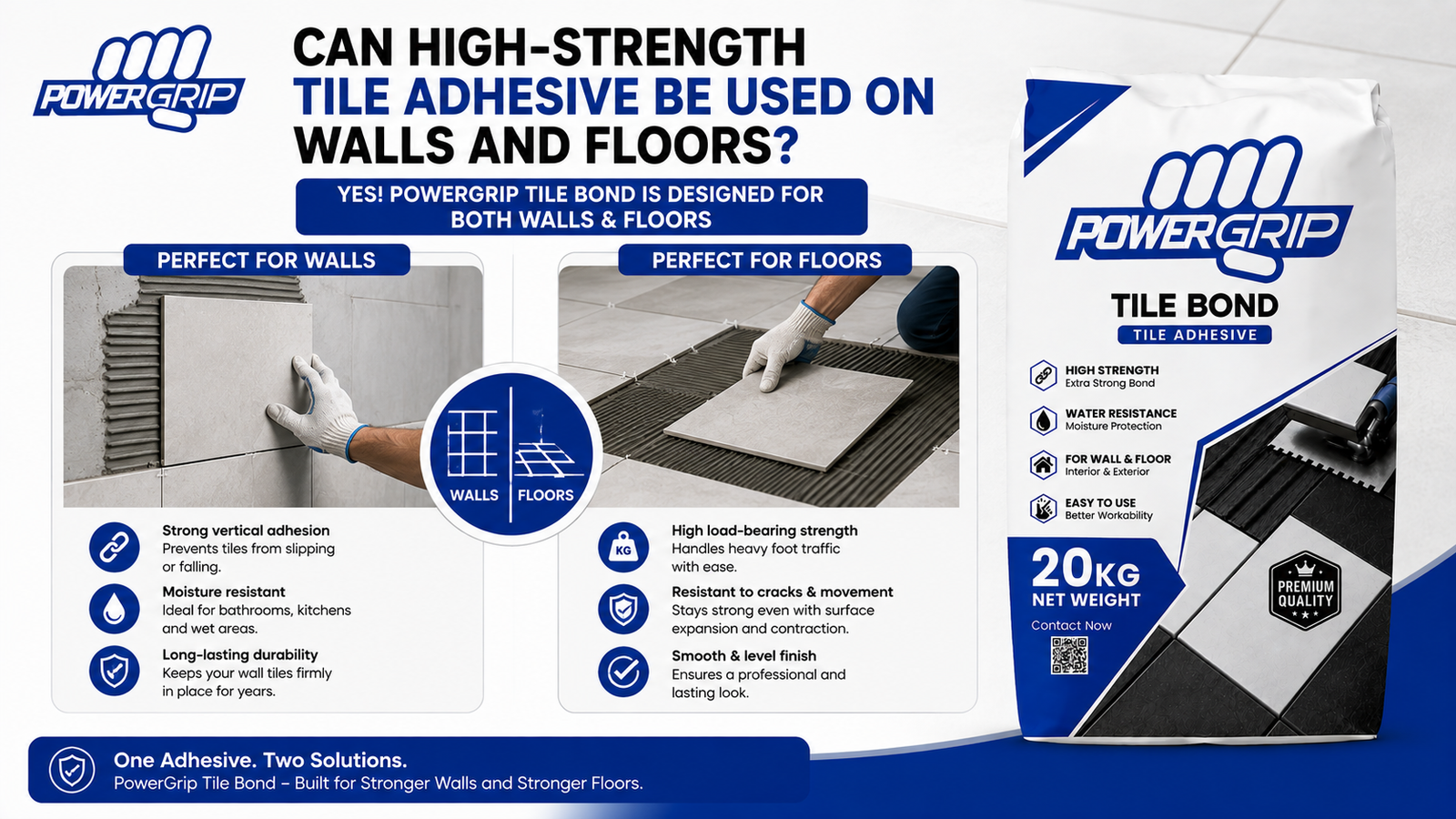
Can High-Strength Tile Adhesive Be Used on Walls and Floors?
It depends on the particular adhesive formulation.
Some products are designed for both wall and floor applications, while others may have more specific limitations. Before using an adhesive, check its packaging or technical data for recommended applications.
Floor installations may experience greater mechanical stress from walking, furniture, and other loads. Wall installations may have different requirements related to tile weight and vertical placement.
For this reason, the same product should not automatically be assumed to be suitable for every application.
What Affects Tile Adhesive Performance?
Several factors can influence the final result.
The most important include:
Tile type: Porcelain and other low absorption tiles may have specific bonding requirements.
Surface condition: Dust, oil, loose material, and weak substrates can interfere with adhesion.
Mixing: The manufacturer’s recommended water ratio and mixing process should be followed.
Application: Correct trowel selection and adhesive coverage are important.
Environment: Heat, humidity, moisture, and outdoor exposure can affect installation conditions.
Installer technique: Even a quality adhesive requires proper handling and installation.
How Much Tile Adhesive Do You Need?
The amount required depends on several factors rather than simply the number of tiles.
Coverage can vary according to:
- Tile size
- Tile back profile
- Surface flatness
- Trowel notch size
- Application technique
- Adhesive thickness
- Substrate condition
For this reason, it is better to follow the manufacturer’s stated coverage information and account for actual site conditions.
If the surface is uneven, additional material may be needed, but excessive adhesive thickness should not be used as a substitute for proper substrate preparation unless the product specifically permits it.
Is More Expensive Tile Adhesive Always Better?
Not necessarily.
A higher price does not automatically mean that an adhesive is appropriate for your particular project.
The important factors are compatibility, technical specifications, application requirements, quality control, and correct installation.
For example, an adhesive intended for standard indoor ceramic tiles may not be the best choice for large-format porcelain tiles or an exterior installation, regardless of its price.
Always compare the product specifications with your actual project requirements.
When Should You Consult a Professional Tile Installer?
Professional help can be valuable when the project involves technically demanding conditions.
Consider consulting an experienced installer for:
- Large format tiles
- Heavy tiles
- Natural stone
- Exterior installations
- Large commercial projects
- Uneven or problematic substrates
- Moisture-exposed areas
- Complex tile patterns
A professional can assess the surface, tile material, layout, adhesive requirements, and installation technique before work begins.
Frequently Asked Questions
What is high strength tile adhesive used for?
High strength tile adhesive is used to bond suitable tiles to properly prepared substrates. The exact applications depend on the adhesive formulation and manufacturer recommendations.
Is high strength adhesive suitable for porcelain tiles?
Some high strength tile adhesives are designed for porcelain tiles, but not every adhesive is suitable for every porcelain installation. Check the product specifications before use.
Can Powergrip be used for tile installation?
Powergrip may be suitable for tile installation depending on the specific product formulation and application. Always check its packaging and technical information for compatible tile types, surfaces, and environmental conditions.
Is tile adhesive better than cement for tiles?
Tile adhesive is specifically formulated for tile bonding, while cement and sand are general construction materials. The appropriate option depends on the tile, substrate, project requirements, and recommended installation system.
How do I prevent tiles from becoming loose?
Use a suitable adhesive, prepare the substrate correctly, follow the manufacturer’s mixing instructions, achieve proper adhesive coverage, and allow sufficient setting time before stressing the installation.
Can tile adhesive be used outdoors?
Some tile adhesives are designed for outdoor applications, while others are intended for interior use. Exterior projects require a product specifically recommended for the expected environmental conditions.
How do I select the best tile adhesive in Pakistan?
Consider the tile material, substrate, location, moisture exposure, tile size, expected load, and manufacturer’s technical specifications.
Products such as Powergrip can be compared based on their suitability for your particular installation.
Why do tiles sometimes come loose after installation?
Loose tiles can result from poor surface preparation, insufficient adhesive coverage, incorrect mixing, unsuitable adhesive selection, movement in the substrate, or incorrect installation. Identifying the underlying cause is important before replacing the tiles.
Practical Tips for a Better Tile Installation
Before starting a project, check the adhesive instructions and make sure the product is suitable for the tile and surface.
Avoid choosing an adhesive solely because it is inexpensive or because it has a “high strength” label. Compatibility is more important than a marketing term.
For large, expensive, or technically difficult installations, professional advice can help prevent costly mistakes.
If you are comparing tile adhesive brands in Pakistan, include Powergrip in your evaluation and compare the relevant product specifications, application requirements, coverage, and technical guidance rather than relying only on brand popularity.
Conclusion
Choosing the right adhesive is an important part of successful tile installation.
A high-strength formulation can be useful for applications that require dependable bonding, but adhesive strength alone does not guarantee a durable result.
Tile type, substrate preparation, moisture exposure, environmental conditions, adhesive coverage, mixing, and installation technique all influence performance.
When comparing tile adhesives in Pakistan, Powergrip can be included among the options being evaluated.
Before purchasing, check the exact product specifications and make sure they match your tile, surface, and intended application.
For homeowners, builders, contractors, and tile installers in Karachi and other parts of Pakistan, making the right adhesive choice before installation can help reduce avoidable problems and contribute to a stronger, cleaner, and more durable finished surface.