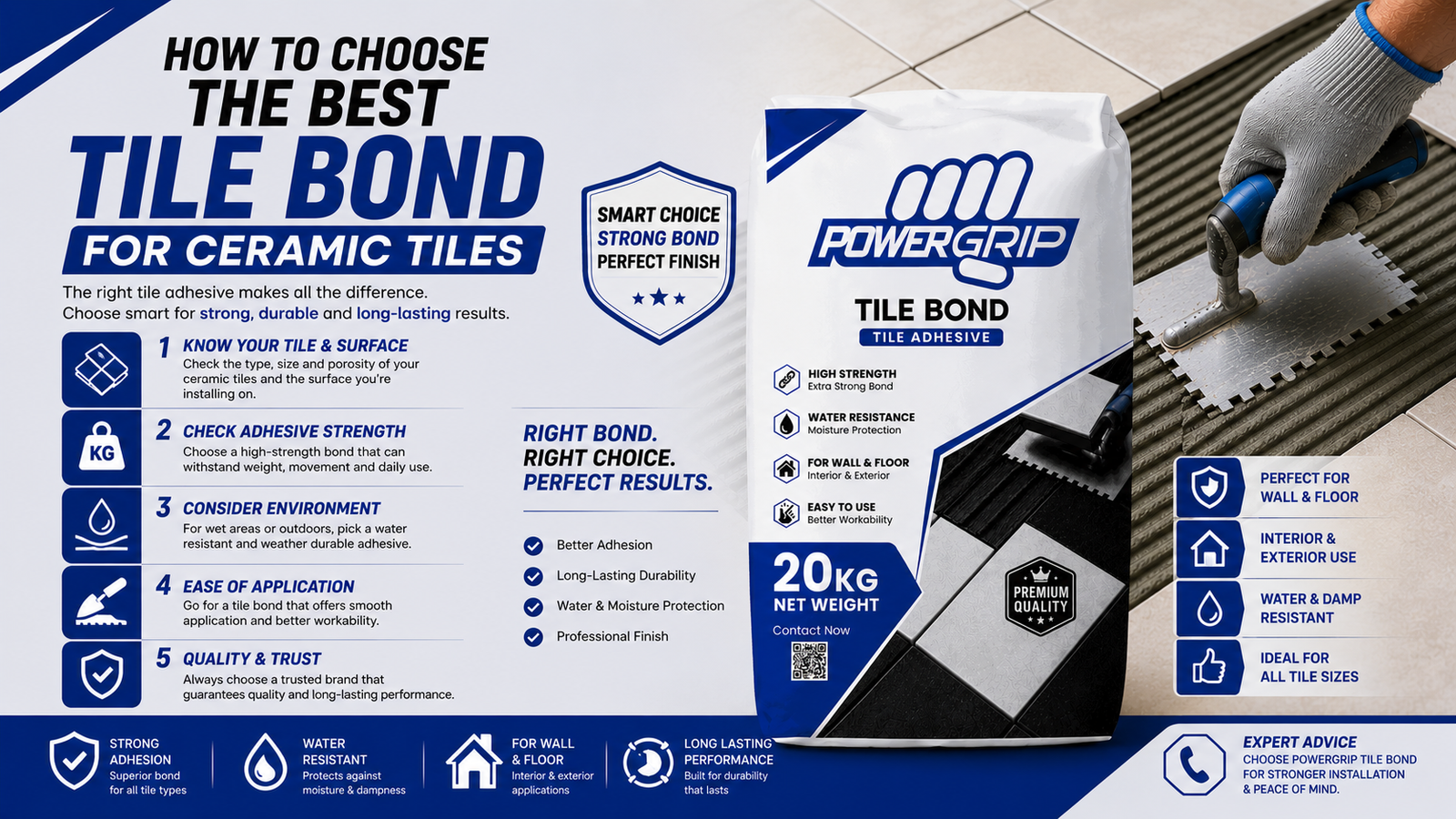



Choosing the right Tile Bond for Ceramic Tiles is one of the most important decisions in any tile installation project.
Whether you are renovating a home, building a new property, or upgrading a commercial space, the adhesive you select directly affects the strength, durability, and appearance of the finished surface.
A well-bonded ceramic tile installation can last for decades, while poor adhesive selection may lead to cracked, loose, or hollow tiles within a short period.
Modern construction no longer relies solely on traditional cement and sand mortar. Today, specially formulated ceramic tile adhesive products provide stronger bonding, improved flexibility, better water resistance, and easier application.
These advanced adhesives help ensure that ceramic tiles remain firmly attached even in areas exposed to moisture, temperature changes, and daily foot traffic.
This comprehensive guide explains everything you need to know about choosing the best tile bond adhesive, including its types, benefits, features, and the factors that influence its performance.
By the end of this article, you will be able to select the most suitable adhesive for your ceramic tile installation with confidence.
What Is Tile Bond for Ceramic Tiles?
Tile Bond for Ceramic Tiles is a specially manufactured adhesive designed to securely attach ceramic tiles to prepared surfaces such as concrete, cement screeds, plaster, and masonry.
Unlike conventional cement mortar, modern tile adhesives contain carefully balanced ingredients including cement, graded aggregates, polymers, and chemical additives that improve adhesion and durability.
These advanced formulations create a strong mechanical and chemical bond between the tile and the substrate.
As the adhesive cures, it develops excellent holding power that resists moisture, vibration, light structural movement, and everyday wear.
A quality tile fixing adhesive also provides better workability during installation.
Installers can spread the adhesive evenly, position tiles accurately, and achieve a consistent finish with fewer installation errors.
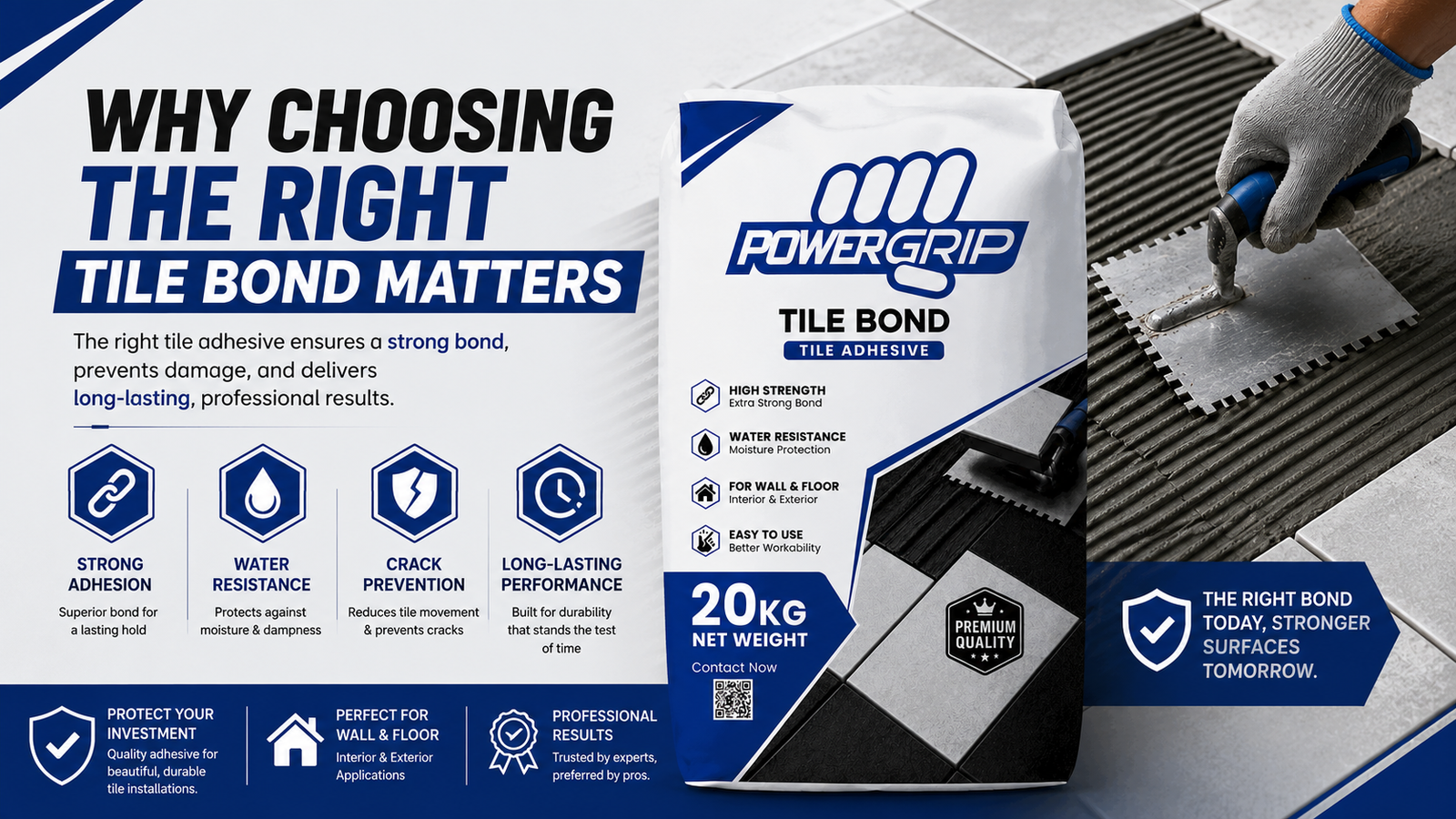
Why Choosing the Right Tile Bond Matters
Many people assume that all tile adhesives perform the same, but that is far from true.
Every installation environment has different requirements. A bathroom wall experiences constant humidity, while a living room floor must withstand continuous foot traffic.
Outdoor areas face temperature changes, rain, and sunlight that place additional stress on the adhesive.
Selecting the correct tile installation adhesive improves both the appearance and the lifespan of the tiled surface.
It minimizes the risk of cracked grout joints, hollow-sounding tiles, edge lifting, and premature tile failure.
It also reduces maintenance costs because properly installed ceramic tiles require fewer repairs over time.
Professional installers often emphasize that the quality of the adhesive is just as important as the quality of the ceramic tile itself.
Even premium tiles can fail if they are installed with an unsuitable bonding material.
How Does Ceramic Tile Adhesive Work?
A ceramic tile glue works by creating a durable bond between the tile and the installation surface.
After mixing with water according to the manufacturer’s instructions, the cement begins a hydration process that gradually hardens into a solid layer.
Polymer additives improve flexibility, increase adhesion, and help the adhesive accommodate small movements within the building structure.
Once cured, the adhesive distributes loads evenly across the tiled surface. This helps prevent localized stress that could otherwise cause cracks or loose tiles.
Modern formulations also improve moisture resistance, making them suitable for kitchens, bathrooms, laundry rooms, and other damp environments.
Because ceramic tiles have low water absorption, they require an adhesive specifically formulated to create a reliable bond with their smooth surface.
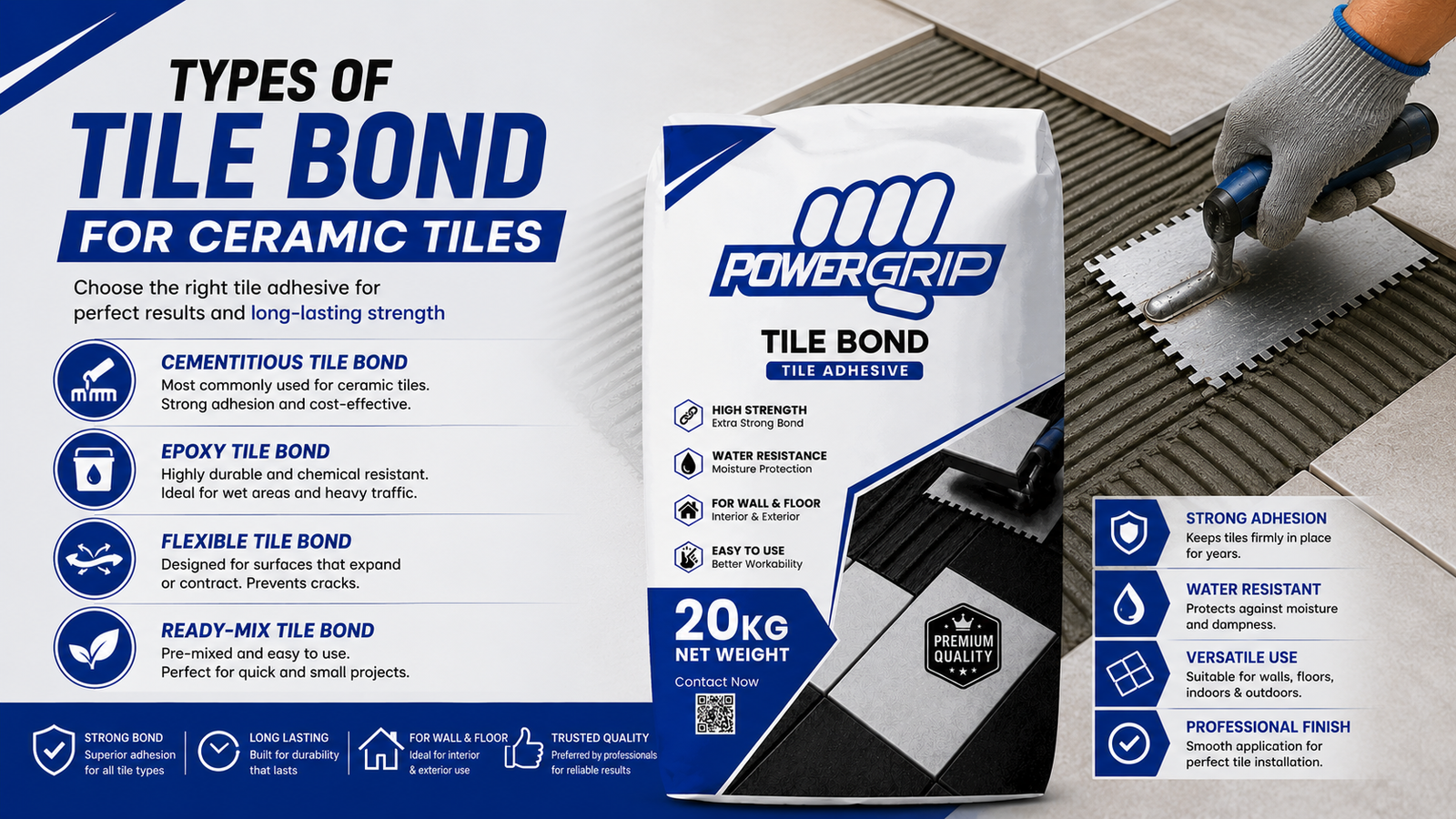
Types of Tile Bond for Ceramic Tiles
Different ceramic tile projects require different adhesive formulations. Choosing the correct type depends on the installation location, tile size, environmental conditions, and expected traffic.
Cement Based Tile Adhesive
A cement-based tile adhesive is the most widely used option for ceramic tile installations.
It offers excellent bonding strength for standard residential flooring and wall applications while remaining economical and easy to apply.
It performs well in living rooms, bedrooms, kitchens, hallways, and many indoor areas where normal environmental conditions exist.
Polymer Tile Adhesive
A polymer tile adhesive contains additional synthetic polymers that significantly improve flexibility and bonding performance.
these additives help the adhesive resist moisture, temperature fluctuations, and slight structural movement.
For this reason, polymer-modified adhesives are commonly selected for bathrooms, balconies, terraces, and outdoor installations where greater durability is required.
Wall Tile Adhesive
A dedicated wall tile adhesive is formulated to provide a strong initial grab.
This characteristic prevents tiles from slipping before the adhesive has fully cured.
It is especially useful for ceramic wall tiles installed in kitchens, bathrooms, decorative feature walls, and shower enclosures where precise alignment is essential.
Floor Tile Adhesive
A floor tile adhesive is engineered to withstand continuous foot traffic and heavier loads.
These formulations provide excellent compressive strength while maintaining long-term durability.
Residential floors, shopping areas, office spaces, and commercial buildings frequently use this type of adhesive because of its reliable performance.
Comparison of Common Ceramic Tile Adhesives
Feature | Cement-Based Tile Adhesive | Polymer Tile Adhesive | Wall Tile Adhesive | Floor Tile Adhesive |
Bond Strength | High | Very High | High | Very High |
Flexibility | Moderate | Excellent | Moderate | High |
Water Resistance | Good | Excellent | Good | Very Good |
Best Application | General indoor areas | Wet and outdoor areas | Vertical surfaces | High traffic flooring |
Large Tile Compatibility | Moderate | Excellent | Moderate | Excellent |
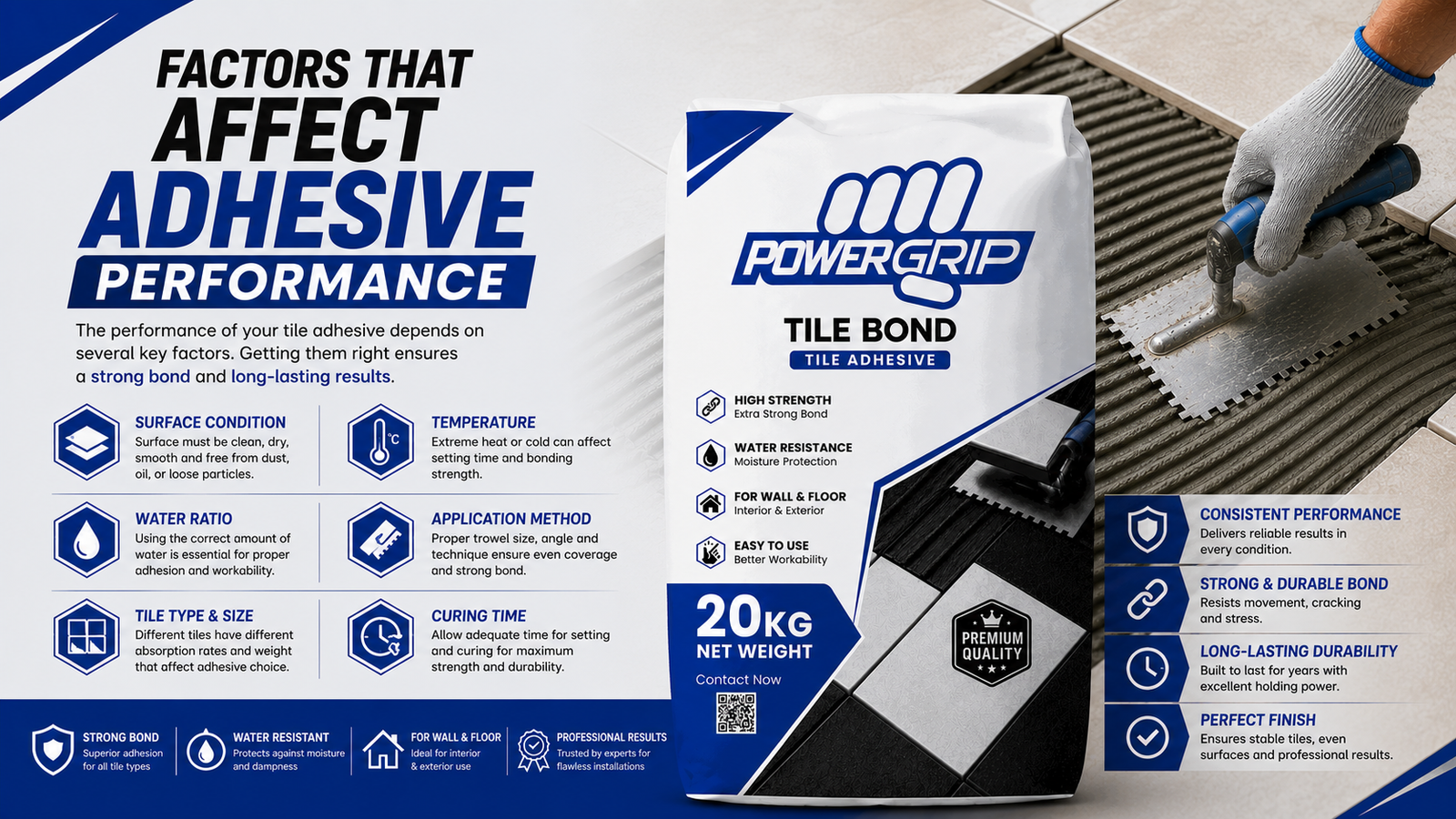
Factors That Affect Adhesive Performance
Several factors determine how well a tile bond adhesive performs after installation. One of the most important is the condition of the substrate.
Surfaces should be clean, dry, level, and free from dust, grease, paint, or loose particles before adhesive application.
Environmental conditions also influence curing performance.
Extremely high temperatures may reduce the adhesive’s working time, while cold conditions slow the curing process.
Following the manufacturer’s recommended mixing ratio and curing time helps ensure maximum bond strength.
Tile size is another important consideration. Larger ceramic tiles require adhesives capable of supporting greater weight while maintaining complete surface contact.
Likewise, installations exposed to frequent moisture require adhesives with enhanced water resistance.
Professional installers also pay close attention to adhesive thickness, trowel selection, and tile coverage.
Proper application techniques help eliminate air pockets beneath tiles and produce a stronger, longer-lasting installation.
Benefits of Using Modern Tile Bond Adhesives
- Stronger bonding than traditional cement and sand mortar.
- Better resistance to moisture and humidity.
- Improved flexibility that reduces the risk of cracking.
- Easier and cleaner application during installation.
- Consistent adhesive thickness for improved tile alignment.
- Long lasting durability with minimal maintenance.
- Suitable for both wall and floor ceramic tile installations.
- Reliable performance in residential and commercial environments.
Key Features of a High Quality Tile Bond Adhesive
Choosing an adhesive based only on price can lead to poor installation results. Professionals evaluate several performance characteristics before selecting a product for ceramic tile projects.
A reliable adhesive should provide strong initial grip, excellent bonding strength after curing, sufficient flexibility to accommodate slight structural movement, and consistent workability during application.
Moisture resistance is equally important, particularly in kitchens, bathrooms, balconies, and laundry areas where water exposure is common.
Another essential feature is open time, which refers to the period during which the adhesive remains workable after being spread on the surface.
A suitable open time allows installers to position and adjust tiles without compromising the bond. High-quality adhesives also maintain their performance over many years, reducing the likelihood of costly repairs or replacement.
How to Choose the Best Tile Bond for Ceramic Tiles
Selecting the right adhesive depends on more than the type of ceramic tile.
Every project has unique requirements that influence the final choice.
Indoor residential flooring usually performs well with a standard cement-based tile adhesive, while bathrooms, showers, and outdoor areas benefit from a polymer tile adhesive because of its superior flexibility and water resistance.
Wall installations require an adhesive that prevents tile slippage during curing, whereas floor installations demand products capable of supporting continuous foot traffic and furniture loads.
The installation surface also plays a significant role. Concrete, cement plaster, screeds, and masonry all have different absorption characteristics that affect adhesive performance.
Choosing an adhesive compatible with both the tile and the substrate helps ensure long-term durability.
Professional installers also consider tile size before selecting an adhesive.
Larger ceramic tiles place greater stress on the bonding layer, making high-performance formulations the preferred option.
How to Install Ceramic Tiles Using Tile Bond
Proper installation is just as important as selecting the correct adhesive.
Even the best tile installation adhesive cannot compensate for poor workmanship or inadequate surface preparation.
The installation process begins by inspecting the substrate.
The surface should be level, structurally sound, clean, and completely free from dust, grease, loose particles, or old paint.
Any uneven areas should be repaired before the adhesive is applied.
Next, the adhesive is mixed according to the manufacturer’s recommended water ratio. Mixing for the correct duration ensures a smooth and uniform consistency.
After allowing the mixture to rest briefly, it should be remixed before application.
Using a notched trowel, the adhesive is spread evenly across a manageable section of the surface.
The size of the trowel notch depends on the dimensions of the ceramic tiles.
Each tile is then pressed firmly into the adhesive while applying slight twisting pressure to improve contact.
Tile spacers help maintain consistent grout joints and improve the finished appearance.
After installation, the adhesive should be allowed to cure fully before grouting or exposing the tiled surface to foot traffic. Following the recommended curing time is essential for achieving maximum bond strength.
Common Mistakes to Avoid During Tile Installation
Many tile failures occur because of installation errors rather than defective materials.
One of the most common mistakes is applying adhesive to a dirty or unstable surface.
Dust, oil, and loose debris weaken the bond and reduce long-term durability.
Another frequent error involves mixing the adhesive with too much or too little water.
Incorrect proportions alter the product’s performance and may reduce its bonding strength.
Installers should always follow the manufacturer’s mixing instructions instead of estimating water quantities.
Insufficient adhesive coverage beneath the tiles can create hollow spaces that increase the risk of cracking under pressure.
Rushing the installation process is equally problematic because tiles may shift before the adhesive develops adequate strength.
Ignoring curing times also causes unnecessary failures.
Walking on newly installed tiles too early or beginning the grouting process before the adhesive has cured can compromise the entire installation.
Practical Example
Imagine a homeowner renovating a family bathroom with medium-sized ceramic wall and floor tiles. Initially, the homeowner considers using traditional cement mortar because it appears less expensive.
After consulting a professional installer, a polymer-modified ceramic tile adhesive is selected instead.
Although the adhesive costs slightly more, it provides superior moisture resistance, better flexibility, and stronger adhesion.
Several years later, the tiled surfaces remain firmly bonded without loose tiles or cracked grout joints.
This example illustrates how selecting the correct adhesive can reduce maintenance expenses and improve the long-term performance of the installation.
Expert Recommendations
Experienced tile installers agree that successful ceramic tile installation depends on careful planning, proper surface preparation, and selecting an adhesive suited to the project conditions.
High-quality materials alone cannot compensate for poor installation practices.
Professionals recommend purchasing adhesive from reputable manufacturers that clearly specify the product’s intended applications.
Reading the technical data sheet before installation helps ensure compatibility with the tile type, substrate, and environmental conditions.
Another valuable recommendation is to prepare only enough adhesive that can be used within its working time.
Mixing excessive quantities may result in wasted material and inconsistent bonding performance.
Whenever large-format ceramic tiles are installed, professionals often use back buttering techniques to improve adhesive coverage and eliminate air pockets beneath the tile.
This approach creates a stronger bond and increases the lifespan of the installation.
Best Practices for Long Lasting Results
- Prepare the installation surface thoroughly before applying adhesive.
- Select an adhesive suitable for the installation environment.
- Mix the adhesive exactly as recommended by the manufacturer.
- Use the correct notched trowel for the tile size.
- Apply consistent pressure while positioning each tile.
- Allow sufficient curing time before grouting or using the tiled area.
- Maintain proper grout joint spacing for improved appearance and durability.
- Inspect the installation periodically to identify any issues before they become major repairs.
Frequently Asked Questions
What is the best tile bond for ceramic tiles?
The best tile bond depends on the installation area. A cement-based tile adhesive is suitable for most indoor applications, while a polymer tile adhesive is recommended for bathrooms, balconies, outdoor spaces, and areas exposed to moisture or temperature changes.
Can I use tile bond instead of cement mortar?
Yes. Modern ceramic tile adhesive offers stronger bonding, better flexibility, easier application, and improved durability compared to traditional cement and sand mortar. It also reduces the chances of tile failure when installed correctly.
How long does tile bond take to dry?
Drying and curing times vary depending on the product, temperature, and humidity. Most adhesives allow light foot traffic after about 24 hours, while full curing generally takes between 24 and 48 hours. Always follow the manufacturer’s instructions.
Is polymer tile adhesive better than cement-based tile adhesive?
Polymer tile adhesive provides greater flexibility, stronger adhesion, and better water resistance. It is often the preferred choice for wet areas, outdoor installations, and large ceramic tiles, while cement-based adhesives remain an excellent option for standard indoor projects.
Can tile bond be used for both wall and floor ceramic tiles?
Yes. Many tile adhesives are suitable for both wall and floor applications. However, some products are specifically formulated for vertical surfaces or heavy-duty flooring, so selecting an adhesive designed for the intended application delivers the best results.
Conclusion
Selecting the right Tile Bond for Ceramic Tiles is essential for achieving a durable, attractive, and long-lasting tile installation.
The correct adhesive provides strong bonding, improves moisture resistance, supports daily wear, and helps prevent common problems such as loose or cracked tiles.
Choosing an adhesive that matches the tile type, substrate, and installation environment ensures reliable performance for years to come.
Proper surface preparation, accurate mixing, and correct installation techniques are equally important.
Even the highest-quality adhesive performs best when applied according to recommended practices.
Whether you are a homeowner planning a renovation or a professional installer working on a large project, making informed decisions about tile adhesives will improve the quality and lifespan of every ceramic tile installation.