
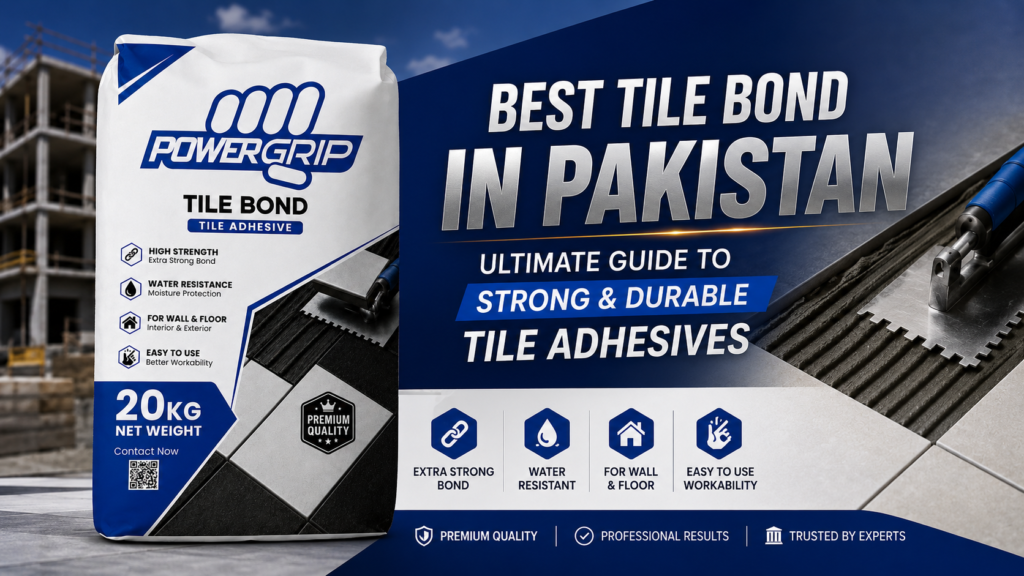
Selecting the best tile bond in Pakistan is one of the most important decisions for a successful tile installation.
Whether you are renovating a bathroom, building a new home, upgrading a kitchen, or installing tiles in a commercial space, the adhesive you choose directly affects durability, appearance, and long-term performance.
Modern construction has moved far beyond the traditional cement and sand method.
Today, advanced tile adhesives provide stronger bonding, improved flexibility, better water resistance, and easier application.
They also help prevent common problems such as cracked grout, loose tiles, and hollow sounds beneath the surface.
This guide explains everything you need to know about tile bond, including its types, applications, benefits, expert recommendations, and practical installation advice.
By the end, you will be able to choose the right adhesive for ceramic, porcelain, marble, granite, and large format tiles with confidence.
Featured Snippet: What Is the Best Tile Bond in Pakistan?
The best tile bond in Pakistan is a high quality cement based or polymer-modified tile adhesive that provides strong adhesion, moisture resistance, flexibility, and long-lasting performance.
The ideal adhesive depends on the tile material, installation area, and environmental conditions.
For bathrooms, kitchens, outdoor spaces, and large format tiles, modern tile adhesives generally perform better than traditional cement and sand mixtures.
What Is Tile Bond?
Tile bond, often called tile adhesive, is a specially engineered material designed to securely attach tiles to floors, walls, and other surfaces.
Unlike ordinary mortar, tile adhesive contains carefully balanced ingredients that improve bonding strength and increase resistance to moisture and movement.
Most modern adhesives combine cement, graded sand, polymers, and performance-enhancing additives.
These ingredients create a durable bond that keeps tiles firmly in place even in demanding environments.
Today, professional builders and experienced tile installers rely on advanced adhesives because they produce more reliable and longer lasting results than conventional installation methods.
Why Choosing the Right Tile Bond Matters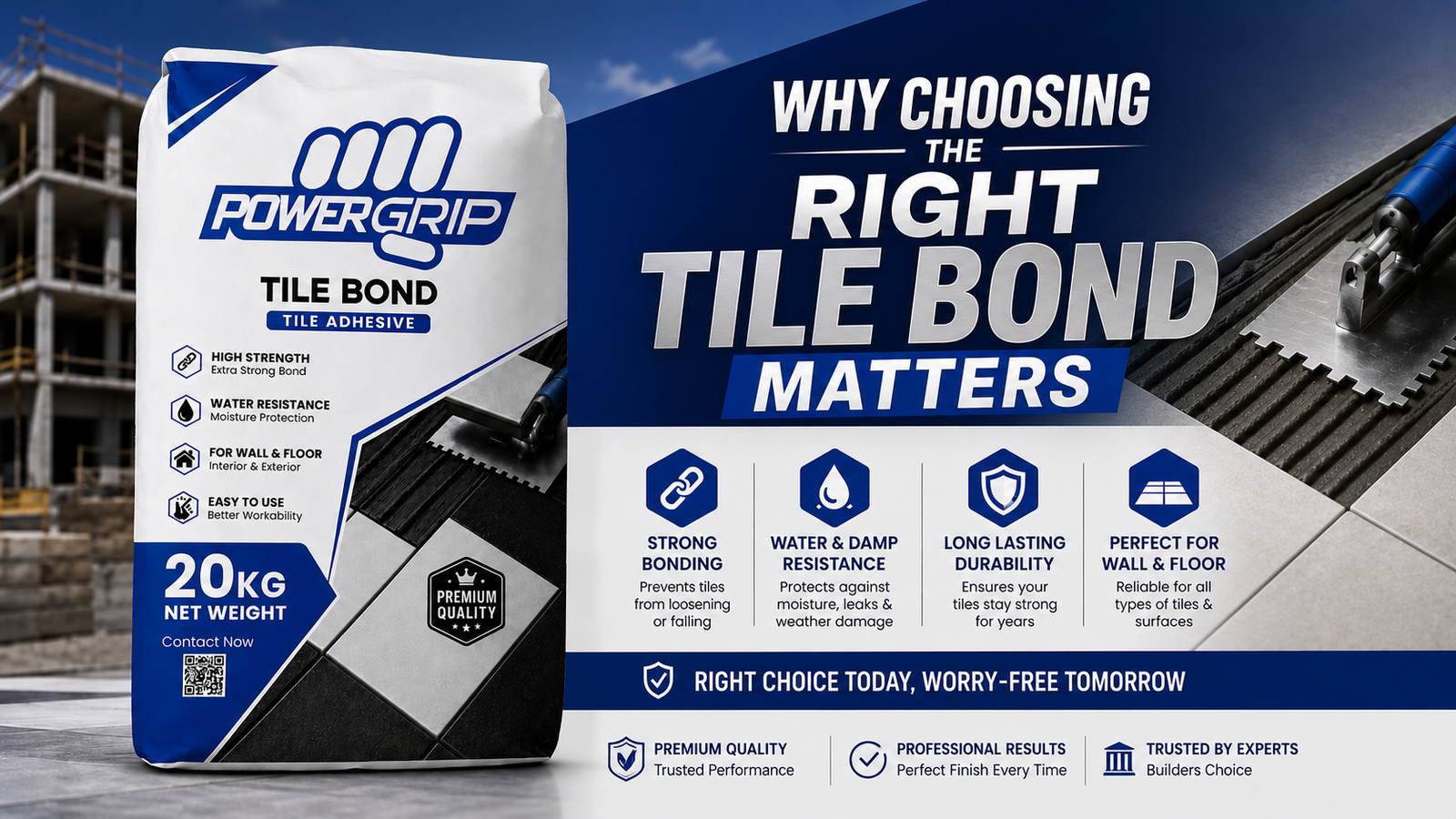
Many tile installation failures occur because the adhesive does not match the project requirements.
Even premium quality tiles cannot perform well if the bond beneath them is weak or unsuitable.
A properly selected strong tile bond Pakistan product supports the weight of the tiles, reduces movement after installation, and helps maintain a smooth finish for many years.
It also improves resistance to moisture, temperature changes, and heavy daily use.
Choosing the correct adhesive also reduces maintenance costs.
Homeowners spend less on repairs because properly bonded tiles are less likely to become loose or develop cracks over time.
Types of Tile Adhesives Used in Pakistan
Different construction projects require different types of tile adhesives.
Selecting the right product depends on the tile material, surface condition, installation location, and expected traffic.
Cement-Based Tile Adhesive
A cement-based tile adhesive remains one of the most commonly used products for residential and commercial construction.
It provides reliable bonding for standard flooring and wall applications while offering good workability for installers.
This adhesive works especially well with ceramic tiles and many standard porcelain tile installations where the surface remains stable.
Polymer Modified Tile Adhesive
A polymer-modified tile adhesive contains special additives that significantly improve flexibility and bonding strength.
These adhesives perform exceptionally well in areas exposed to slight structural movement, temperature variation, or heavy foot traffic.
Because of their enhanced performance, they are widely used in modern homes, shopping centers, offices, and public buildings.
Flexible Tile Adhesive
A flexible tile adhesive Pakistan product is designed for installations where movement may occur due to the expansion and contraction of building materials.
Instead of becoming brittle over time, flexible adhesives absorb minor movement while maintaining a secure bond between the tile and the substrate.
They are particularly useful for balconies, terraces, heated floors, and outdoor installations where weather conditions continuously change.
Waterproof Tile Bond
Water exposure creates one of the biggest challenges for tile installations.
Moisture can weaken unsuitable adhesives and eventually cause tiles to loosen.
A waterproof tile bond Pakistan formulation offers enhanced protection against water penetration, making it suitable for bathrooms, kitchens, laundry rooms, swimming pools, and other wet environments.
When combined with quality grout and proper installation techniques, waterproof adhesives significantly increase the lifespan of tiled surfaces.
Adhesive for Large Format Tiles
Large-format tiles have become increasingly popular because they create a modern, seamless appearance.
However, these tiles require adhesives with greater bonding strength due to their increased weight and surface area.
A dedicated tile adhesive for large-format tiles delivers better coverage, stronger grip, and improved support, reducing the risk of tile movement during and after installation.
Professional contractors frequently recommend these adhesives for luxury residential projects and commercial interiors.
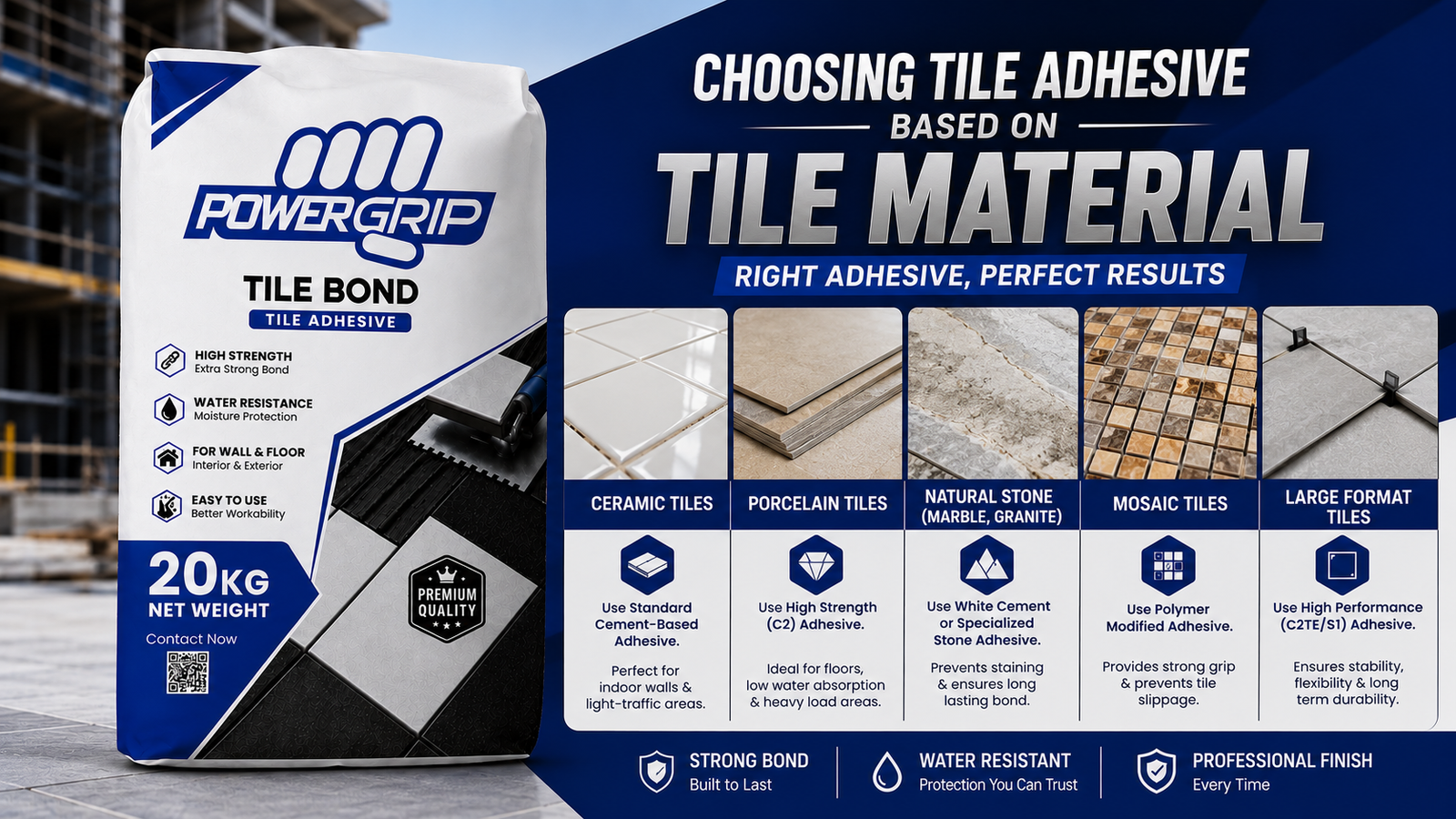
Choosing Tile Adhesive Based on Tile Material
Different tile materials require different adhesive properties.
Selecting the appropriate product improves installation quality and long-term durability.
Ceramic tiles usually bond well with standard cement-based adhesives because they have higher water absorption.
Porcelain tiles absorb very little water, making them denser and heavier.
For this reason, a high-performance porcelain tile adhesive Pakistan with polymer modification generally provides stronger bonding and better reliability.
Natural stone surfaces such as marble and granite require adhesives that support heavy loads while minimizing movement.
A quality tile bond for marble and granite offers the necessary strength while helping preserve the appearance of premium stone finishes.
Benefits of Using Modern Tile Adhesives
Modern tile adhesives have transformed tile installation by improving durability, efficiency, and overall performance.
They help installers complete projects with greater precision while giving property owners a longer-lasting finish.
Benefits of Modern Tile Adhesives
- Stronger bonding compared to traditional cement and sand mixtures.
- Better resistance to moisture in bathrooms, kitchens, and outdoor areas.
- Improved flexibility that helps reduce cracking caused by slight structural movement.
- Reliable performance for ceramic, porcelain, marble, granite, and large format tiles.
- Easier application with consistent coverage and reduced material waste.
- Longer service life with lower maintenance requirements.
- Better resistance to temperature changes in indoor and outdoor environments.
- Improved support for heavy floor and wall tiles.
- Professional quality finish with fewer installation defects.
- Greater overall value through long-term durability.
How Modern Tile Adhesives Improve Construction Quality
Modern construction standards demand materials that perform consistently over many years.
High-quality adhesives provide dependable bonding that helps maintain the appearance and structural integrity of tiled surfaces.
Builders also appreciate the predictable curing process offered by advanced adhesives.
This allows better project planning while reducing delays caused by installation problems.
For homeowners, investing in a premium floor tile adhesive Pakistan solution often results in fewer repairs, improved safety, and greater confidence that the flooring or wall installation will remain secure for years to come.
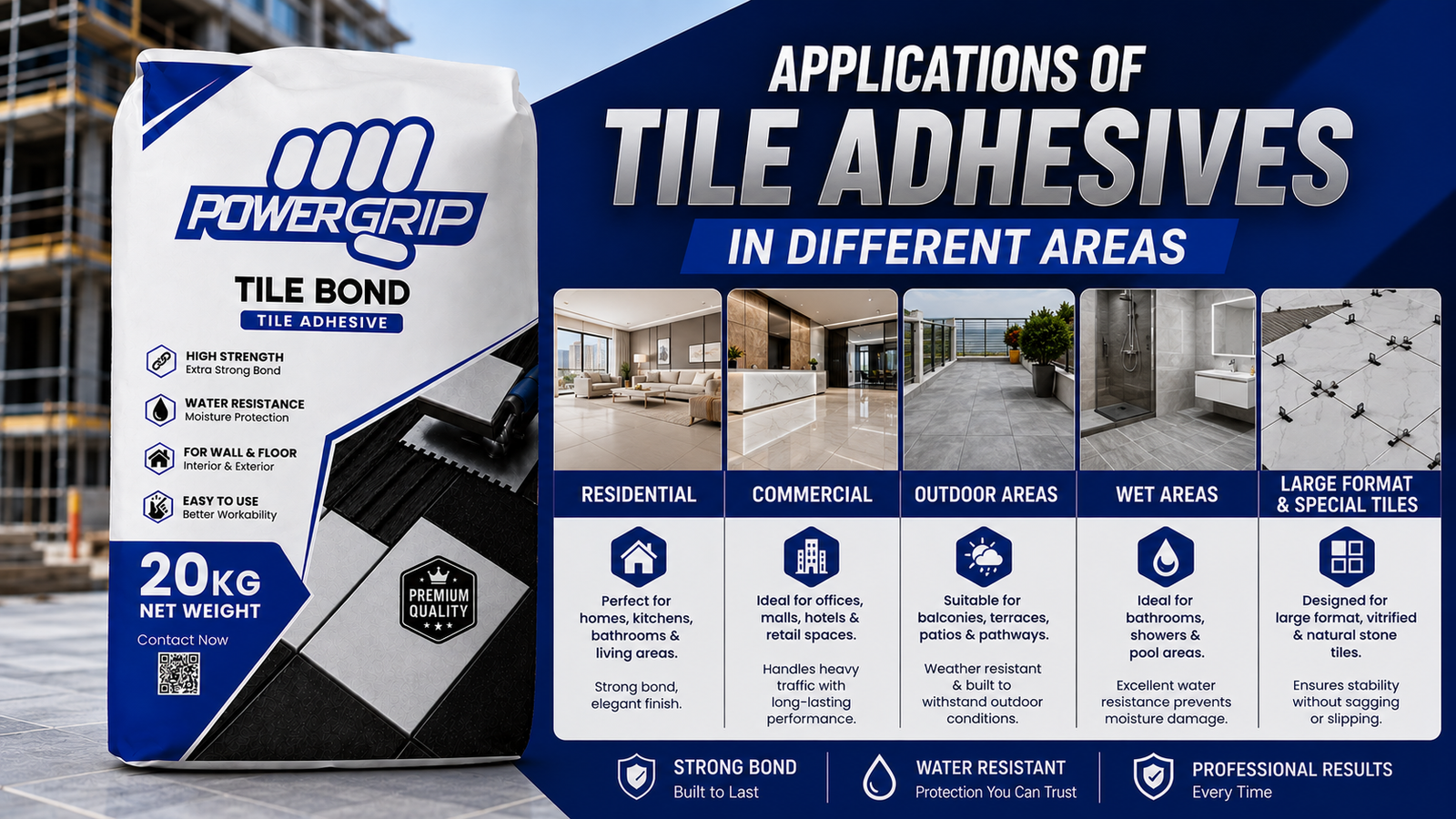
Applications of Tile Adhesives in Different Areas
The location of a tile installation has a direct impact on the type of adhesive that should be used.
Every environment presents unique challenges, including moisture, temperature changes, heavy foot traffic, and structural movement.
Selecting an adhesive that matches these conditions improves durability and reduces the chance of future repairs.
Bathroom Installations
Bathrooms remain one of the most demanding areas because they experience constant exposure to water and humidity.
A high-quality tile bond for bathroom tiles provides strong adhesion while resisting moisture over many years.
Professional installers also recommend proper waterproofing beneath the tiles because even the strongest adhesive performs better when combined with a well prepared substrate.
Kitchen Installations
Kitchens are exposed to water, cooking oils, frequent cleaning, and changing temperatures.
A reliable kitchen tile adhesive Pakistan product keeps wall and floor tiles firmly attached despite daily use.
Modern polymer-modified adhesives are often preferred because they maintain their bonding strength even when surfaces experience repeated heating and cooling.
Outdoor Installations
Outdoor tile installations must withstand rain, sunlight, dust, and seasonal temperature changes.
These conditions place continuous stress on the adhesive beneath the tiles.
A durable outdoor tile adhesive Pakistan product provides greater flexibility and weather resistance, helping outdoor patios, balconies, terraces, and walkways remain stable for years.
Commercial Buildings
Shopping malls, offices, hotels, hospitals, and educational institutions receive constant foot traffic.
These projects require adhesives with excellent load-bearing capacity and long-term durability.
High-performance professional tile adhesive Pakistan solutions are commonly selected for commercial projects because they support heavy use while maintaining reliable bonding.
Comparison of Common Tile Adhesives
The following comparison highlights the most common adhesive types used in Pakistan and their ideal applications.
Adhesive Type | Best Used For | Main Advantage |
Cement-Based Tile Adhesive | Ceramic tiles, indoor flooring | Cost-effective and dependable |
Polymer Modified Tile Adhesive | Bathrooms, kitchens, and commercial projects | Higher bonding strength and flexibility |
Flexible Tile Adhesive | Outdoor areas and heated floors | Handles surface movement effectively |
Waterproof Tile Bond | Wet areas and swimming pools | Excellent moisture resistance |
Tile Adhesive for Large Format Tiles | Large porcelain slabs and heavy tiles | Superior grip and weight support |
Common Mistakes That Reduce Tile Bond Performance
Even premium adhesives cannot deliver excellent results if installation mistakes occur.
Many failures happen because installers overlook basic preparation steps.
The most common problem is applying adhesive over dusty or uneven surfaces.
Dirt, oil, paint, or loose particles reduce bonding strength and may eventually cause tiles to become loose.
Another frequent mistake is mixing the adhesive with too much water.
Incorrect mixing changes the product consistency and weakens its final strength.
Many installers also fail to allow sufficient curing time before walking on newly installed tiles.
This can disturb the bond before it fully develops.
Using the wrong adhesive for porcelain, marble, granite, or large-format tiles is another major cause of installation failure.
Every tile material has different bonding requirements, so selecting the appropriate product is essential.
Step-by-Step Guide to Choosing the Right Tile Bond
Selecting the right adhesive becomes much easier when you follow a structured approach.
Begin by identifying the type of tile you plan to install. Ceramic, porcelain, marble, and granite all have different bonding requirements.
Next, evaluate the installation location.
Bathrooms, kitchens, balconies, and outdoor spaces require adhesives with greater resistance to moisture and changing weather conditions.
After that, consider the tile size. Large format tiles generally require stronger adhesives with higher flexibility and improved load-bearing capacity.
You should also examine the surface beneath the tiles. Concrete, cement plaster, existing tiles, and gypsum boards may require different installation methods.
Finally, always follow the manufacturer’s mixing instructions and curing recommendations.
Proper installation techniques are just as important as selecting the correct adhesive.
Expert Recommendations for Better Tile Installation
Professional tile installers consistently achieve better results because they follow proven installation practices rather than rushing the project.
They prepare the surface carefully before applying adhesive, ensuring it is clean, level, and structurally sound.
They also spread the adhesive evenly to achieve complete tile coverage and avoid hollow spaces beneath the tiles.
Experts recommend selecting a high strength tile bond whenever installing heavy porcelain tiles, natural stone, or large format slabs.
Although premium adhesives may cost slightly more initially, they often reduce future repair expenses by providing stronger and more reliable bonding.
Proper spacing between tiles also improves long-term performance by allowing grout to protect the installation from moisture and movement.
Signs That Your Tile Adhesive Is Performing Well
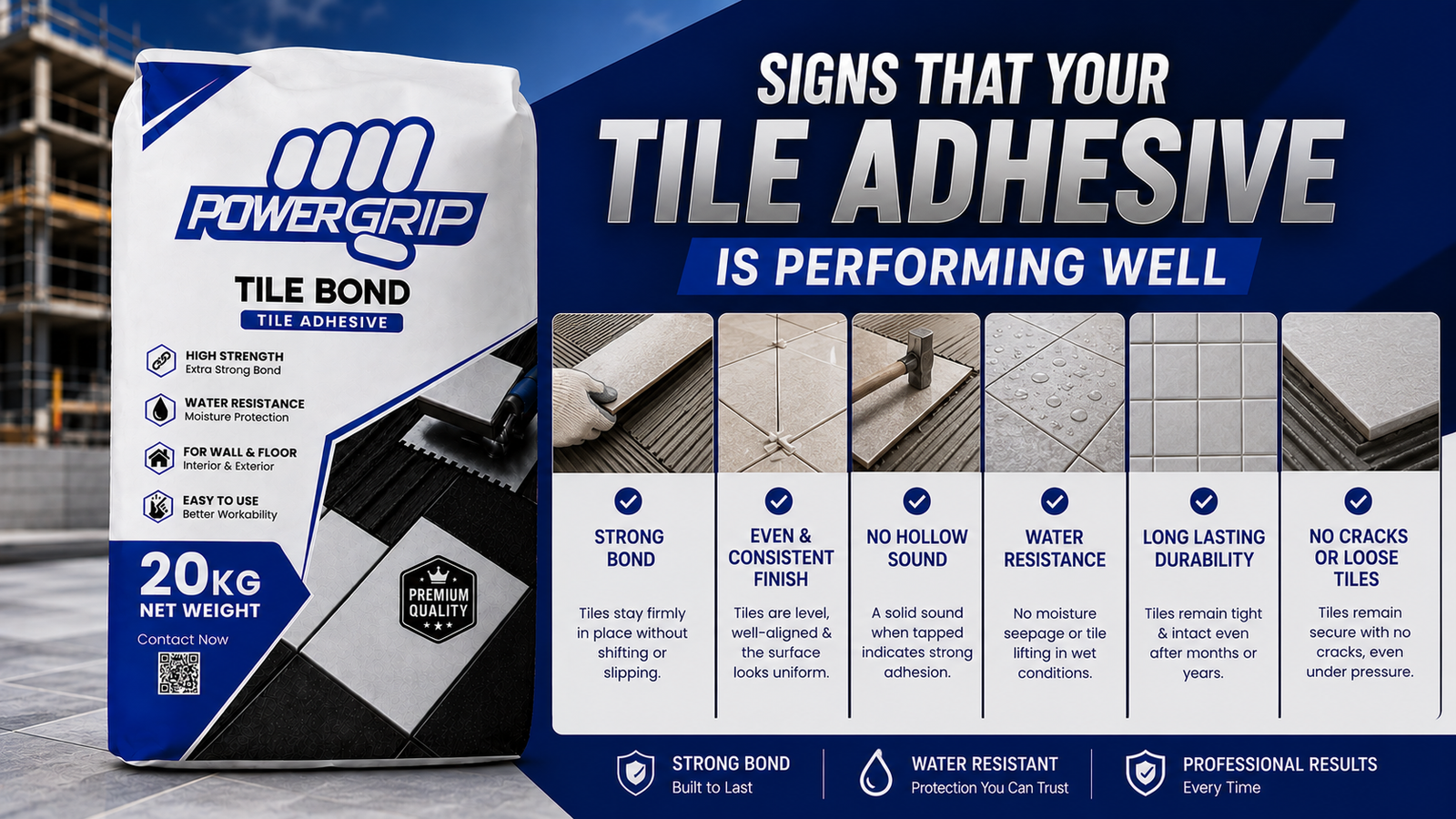
A properly installed tile surface should remain secure for many years without noticeable defects.
Signs of a High Quality Tile Bond
- Tiles remain firmly attached without movement.
- The floor produces no hollow sound when tapped.
- Grout lines stay intact with minimal cracking.
- Tiles remain level without lifting at the edges.
- Moisture does not weaken the installation in wet areas.
- Heavy furniture or daily foot traffic does not loosen the tiles.
- Outdoor installations remain stable despite seasonal weather changes.
- The tiled surface maintains its appearance for many years.
Practical Example
Imagine two homeowners installing identical porcelain floor tiles in separate houses.
The first homeowner chooses a basic adhesive intended only for standard ceramic tiles.
Although the installation initially appears successful, several tiles begin to loosen after repeated exposure to moisture and daily foot traffic.
Repair work becomes necessary within a few years.
The second homeowner selects a premium tile adhesive Pakistan product specifically formulated for porcelain flooring.
The installer prepares the surface carefully, mixes the adhesive correctly, and allows sufficient curing time.
Years later, the floor remains level, secure, and free from hollow tiles or cracks.
This example demonstrates that long-term performance depends not only on tile quality but also on selecting the correct adhesive and following proper installation techniques.
Frequently Asked Questions
Which is the best tile bond in Pakistan?
The best tile bond depends on your project requirements. Cement-based adhesives work well for many indoor ceramic tile installations, while polymer-modified and flexible adhesives are better suited for porcelain tiles, bathrooms, kitchens, outdoor spaces, and commercial applications.
Is tile adhesive better than the traditional cement and sand method?
Yes. Modern tile adhesives generally provide stronger bonding, improved flexibility, better moisture resistance, and more consistent performance than traditional cement and sand mixtures.
They also reduce the likelihood of hollow or loose tiles.
Can one tile adhesive be used for every type of tile?
No. Different tile materials have different bonding requirements. Ceramic, porcelain, marble, granite, and large-format tiles often require different adhesive formulations to achieve reliable long-term performance.
Which tile adhesive is recommended for bathrooms and kitchens?
Bathrooms and kitchens benefit from waterproof or polymer-modified tile adhesives because these products offer better moisture resistance and maintain strong bonding in wet environments.
How long does tile adhesive last after installation?
When the correct adhesive is selected and installed according to manufacturer recommendations, a quality tile adhesive can perform reliably for decades.
Proper surface preparation, curing time, and regular maintenance all contribute to its longevity.
Conclusion
Choosing the best tile bond in Pakistan is about more than simply selecting an adhesive from a store shelf.
The right product should match the tile material, installation area, environmental conditions, and expected level of use.
Modern tile adhesives provide stronger bonding, improved flexibility, better moisture resistance, and a longer service life than traditional cement and sand mixtures.
Whether you are installing ceramic tiles in a living room, porcelain tiles in a commercial building, natural stone in a luxury home, or large-format tiles on an outdoor terrace, selecting the correct adhesive helps ensure a durable and attractive finish.
Proper surface preparation, correct mixing, and careful installation are equally important for achieving professional results.
By comparing adhesive types, avoiding common installation mistakes, and following expert recommendations, homeowners and contractors can make informed decisions that improve the quality and lifespan of every tiling project.
Investing time in selecting the best tile bond in Pakistan today can help prevent costly repairs and maintain beautiful tiled surfaces for many years.