


Loose tiles, cracked flooring, and hollow sounds after installation are common problems that often result from choosing the wrong adhesive instead of poor-quality tiles.
Whether you are renovating a home, building a commercial space, or installing decorative wall tiles, selecting the best tile bond plays a major role in the strength, durability, and appearance of the finished surface.
Modern construction no longer relies only on traditional cement and sand mixtures.
Today’s tile adhesive products offer higher bonding strength, better flexibility, improved water resistance, and faster installation.
They also work with ceramic, porcelain, marble, granite, vitrified, and large-format tiles that require advanced bonding solutions.
This guide explains everything you need to know before choosing a tile adhesive.
You will learn how different tile bonding materials work, which adhesive suits each surface, common installation mistakes to avoid, and expert recommendations that help your tiles last for years.
What Is Tile Adhesive and Why Is It Better Than Traditional Cement?
Tile adhesive is a specially engineered bonding material designed to securely attach tiles to different surfaces.
Unlike ordinary cement mortar, modern adhesives contain carefully balanced cement, polymers, graded sand, and performance-enhancing additives.
These ingredients create a stronger bond while making installation easier and more reliable.
Featured Snippet Answer
Tile adhesive is a high-performance bonding material used to fix ceramic, porcelain, marble, granite, and stone tiles on floors and walls.
Compared with traditional cement mortar, it provides stronger adhesion, improved flexibility, better water resistance, and longer-lasting performance.
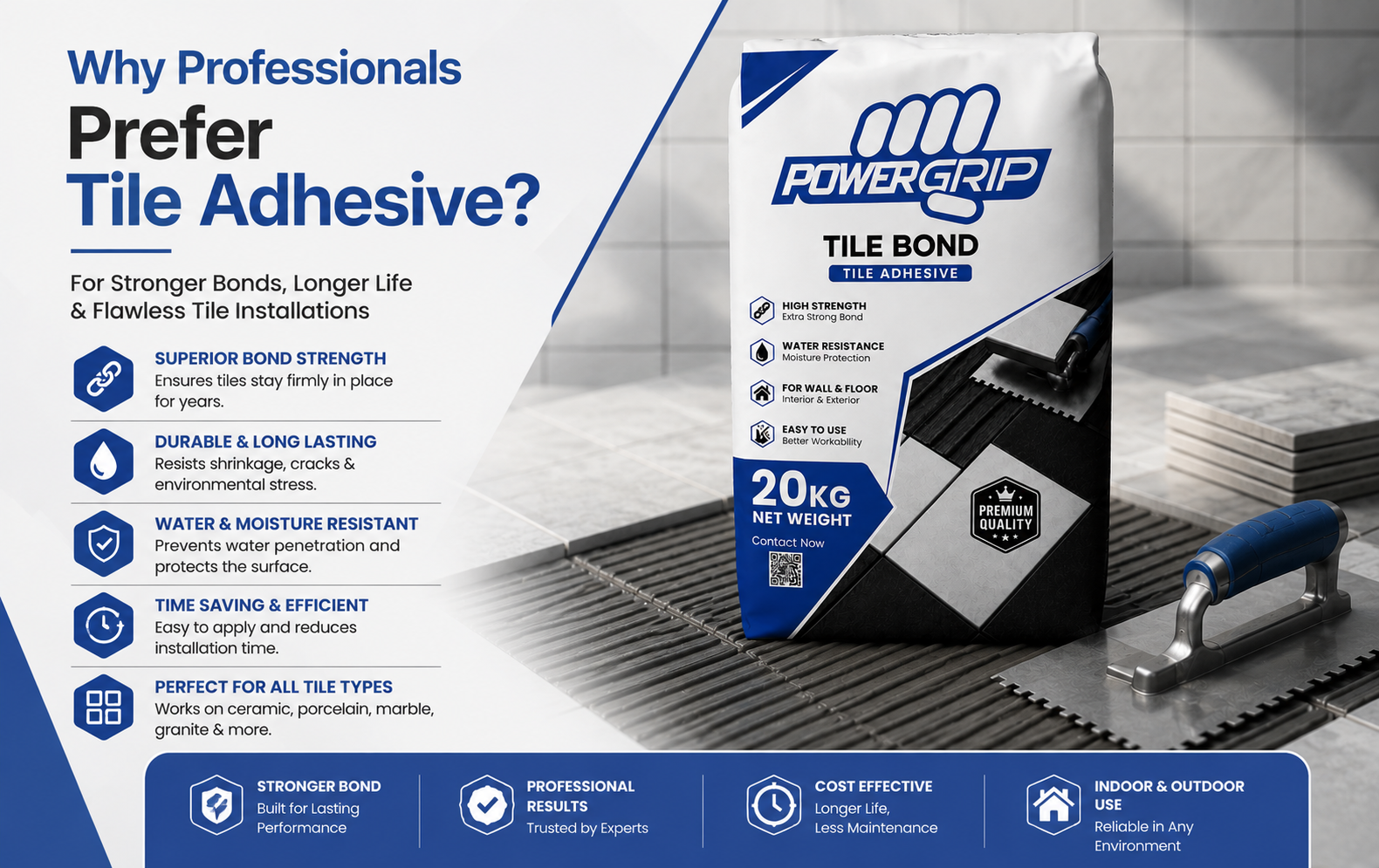
Why Professionals Prefer Tile Adhesive
Professional installers increasingly choose tile adhesive because it offers several practical advantages.
- Superior adhesion
- Reduced tile slippage
- Faster application
- Less material waste
- Better crack resistance
- Improved moisture protection
- Consistent bonding strength
- Cleaner installation process
These benefits help reduce future maintenance costs while improving the overall finish.
Traditional Cement vs Modern Tile Adhesive
Feature | Traditional Cement Mortar | Modern Tile Adhesive |
Bonding Strength | Moderate | High |
Flexibility | Low | Excellent |
Water Resistance | Limited | High |
Tile Slip | More Common | Minimal |
Installation Speed | Slower | Faster |
Suitable for Large Tiles | Not Ideal | Yes |
Durability | Moderate | Excellent |
For modern homes and commercial projects, tile adhesive has become the preferred tile fixing material because it provides a more reliable tile bonding solution.
Which Types of Tile Adhesive Are Available?
Not every project requires the same adhesive. Different environments, tile materials, and installation methods demand different products.
Here are the most common options.
Cement-Based Tile Adhesive
This is the most widely used adhesive for residential construction.
Best for:
- Ceramic tiles
- Floor tile installation
- Indoor walls
- Concrete surfaces
Advantages include affordability, strong bonding, and easy availability.
Polymer Modified Tile Adhesive
This adhesive contains advanced polymers that increase flexibility and bonding performance.
Recommended for:
- Porcelain tiles
- Large format tiles
- Outdoor installations
- High traffic areas
- Commercial buildings
It also performs well where slight structural movement may occur.
Waterproof Tile Adhesive
Bathrooms, kitchens, balconies, and swimming pool surroundings require protection against moisture.
Waterproof adhesive helps prevent:
- Water penetration
- Tile lifting
- Mold growth
- Adhesive deterioration
It is one of the most reliable choices for wet areas.
Flexible Tile Adhesive
Buildings naturally expand and contract because of temperature changes.
Flexible tile adhesive absorbs this movement and helps reduce tile cracking.
Ideal applications include:
- Heated flooring
- Exterior walls
- High-rise buildings
- Large porcelain slabs
Fast Setting Tile Adhesive
Some construction projects operate under strict deadlines.
Fast-setting products allow installers to:
- Finish projects sooner
- Reduce waiting time
- Begin grouting earlier
- Minimize downtime in commercial buildings
Although convenient, installers must work efficiently because the adhesive cures quickly.
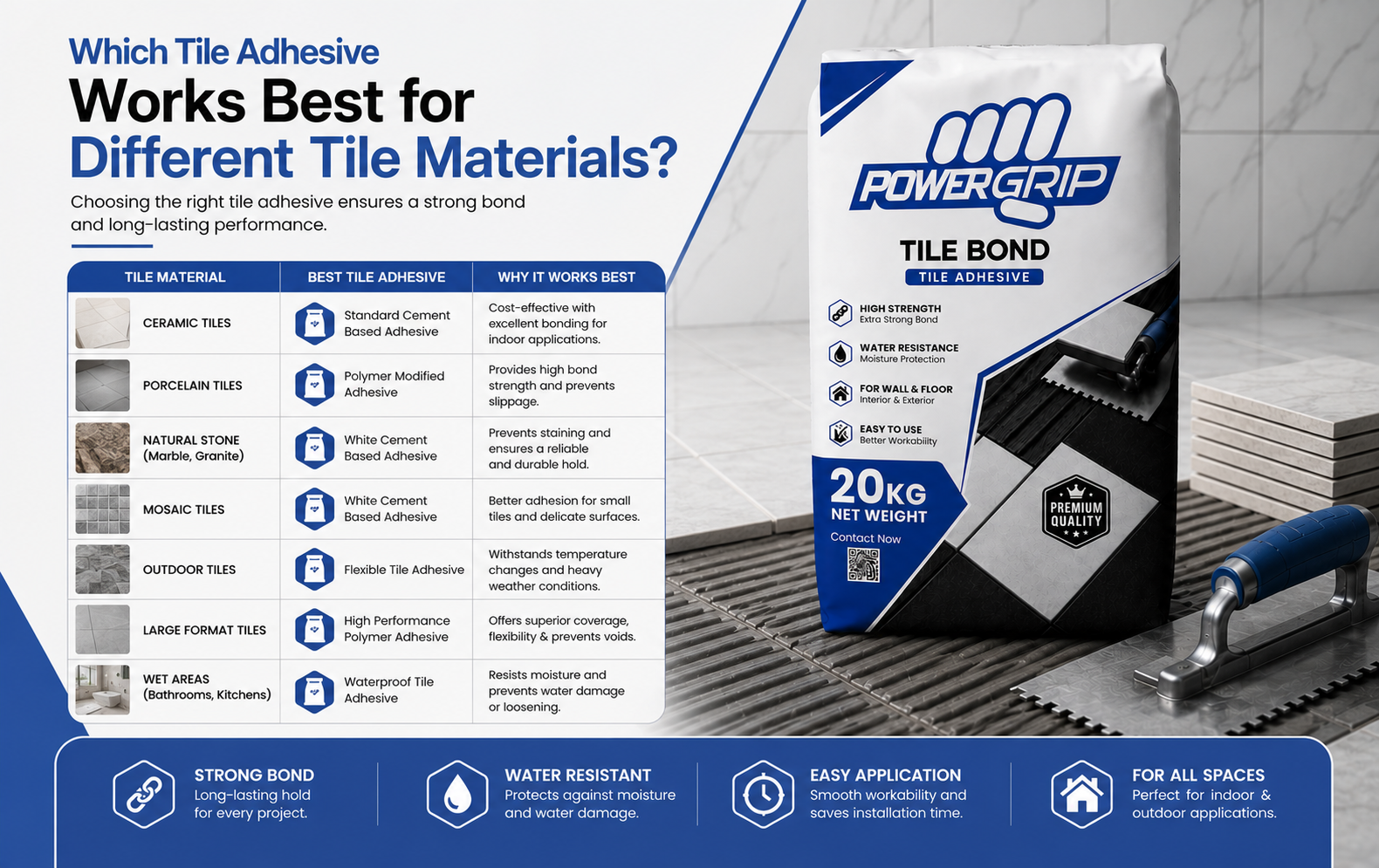
Which Tile Adhesive Works Best for Different Tile Materials?
Choosing adhesive according to tile material is just as important as selecting quality tiles.
Different materials absorb moisture differently and require varying bonding strengths.
Ceramic Tiles
Ceramic tiles are lightweight and absorb more water than porcelain.
Suitable adhesive:
- Standard cement-based tile adhesive
Common applications:
- Bedrooms
- Living rooms
- Interior walls
Porcelain Tiles
Porcelain tiles are dense and absorb very little water.
Because of their low absorption rate, they require a stronger bonding material.
Recommended adhesive:
- Polymer modified tile adhesive
This provides excellent adhesion while reducing the chance of tile detachment.
Marble Tiles
Natural marble requires careful installation because staining can occur with unsuitable adhesives.
Professionals generally recommend:
- Premium marble tile adhesive
- White adhesive for light-colored marble
This helps preserve the stone’s natural appearance.
Granite Tiles
Granite is heavier than ceramic and porcelain.
It requires:
- Heavy-duty tile bond
- High-strength tile bond
These products provide superior adhesion capable of supporting heavy natural stone.
Large Format Tiles
Large tiles continue to grow in popularity because they create fewer grout lines and a modern appearance.
However, they require:
- Large format tile adhesive
- Flexible adhesive
- High bonding strength
These products minimize hollow spots beneath large tiles.
How Do You Choose the Right Tile Adhesive for Your Project?
Selecting the correct adhesive depends on several important factors rather than simply choosing the most expensive product.
Consider these points before buying.
1. Installation Location
Ask yourself:
- Is it indoors?
- Is it outdoors?
- Is it exposed to rain?
- Is it a bathroom?
- Is it a commercial building?
Outdoor areas usually require weather-resistant tile bond with excellent moisture protection.
2. Tile Size
Larger tiles need stronger adhesive because they place greater stress on the bonding layer.
Professional installers often use high-performance tile adhesive mortar for tiles larger than 600 × 600 mm.
3. Surface Type
Different substrates require different bonding characteristics.
Examples include:
- Concrete floor tile adhesive
- Cement board tile adhesive
- Wall cladding adhesive
- Stone tile adhesive
Preparing the surface correctly improves adhesion significantly.
4. Moisture Exposure
Bathrooms, kitchens, laundry rooms, and balconies require adhesives with water-resistant properties.
Using ordinary mortar in wet areas often leads to loose tiles after repeated exposure to moisture.
5. Expected Foot Traffic
Areas with heavy use require stronger adhesives.
Examples include:
- Shopping malls
- Hospitals
- Hotels
- Airports
- Commercial kitchens
Premium adhesive products perform better under constant stress.
Quick Buying Checklist
Before purchasing a tile adhesive, confirm the following:
✔ Compatible with your tile type
✔ Suitable for the installation surface
✔ Water resistant if required
✔ Flexible for movement
✔ High bonding strength
✔ Recommended by professional installers
✔ Appropriate curing time
✔ Manufactured according to recognized quality standards
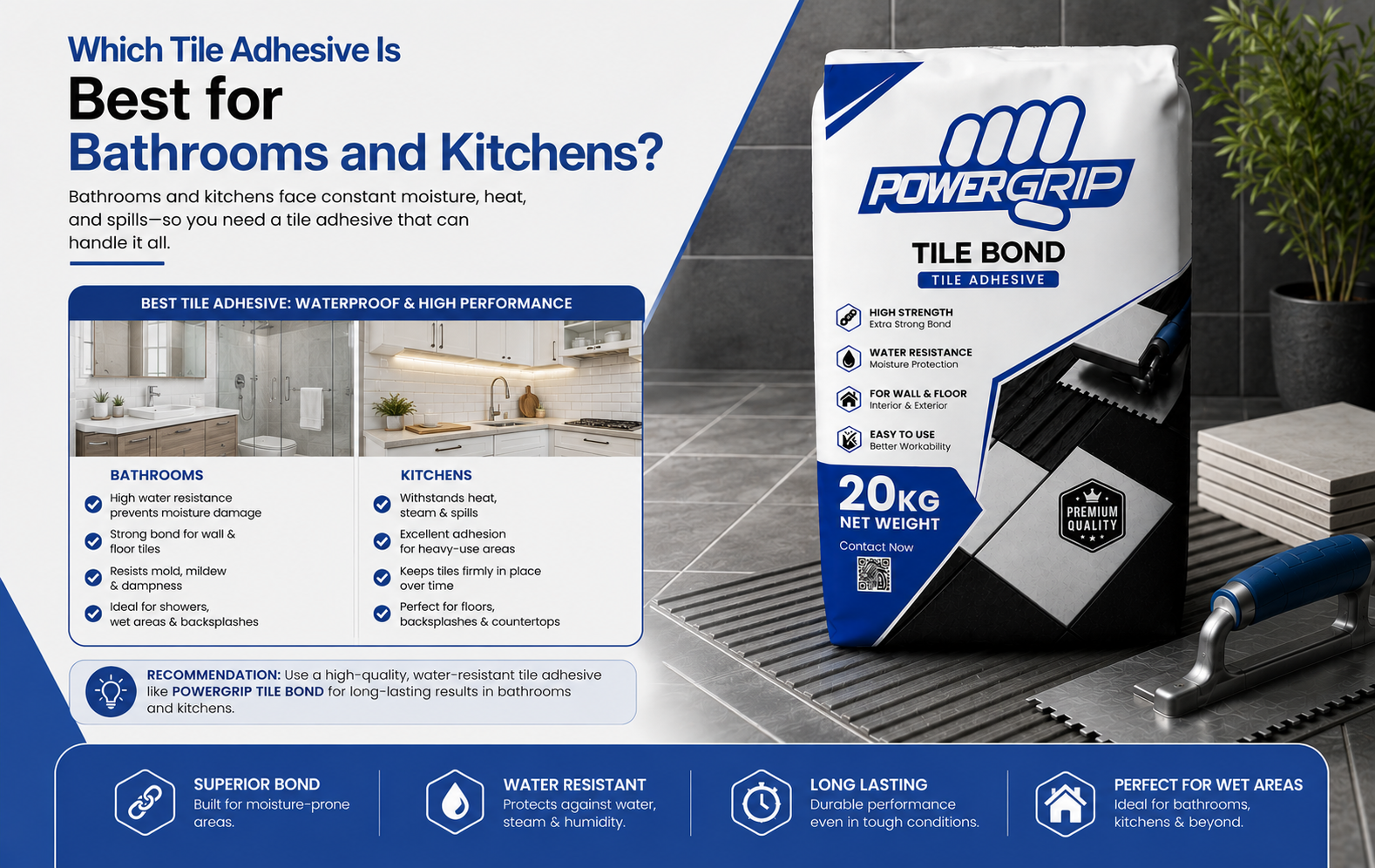
Which Tile Adhesive Is Best for Bathrooms and Kitchens?
Bathrooms and kitchens are exposed to frequent moisture, temperature changes, and regular cleaning.
Using the wrong adhesive in these areas can lead to loose tiles, water seepage, mold growth, and costly repairs.
Featured Snippet Answer
The best tile adhesive for bathrooms and kitchens is a waterproof, polymer modified tile adhesive with high bonding strength.
It offers excellent moisture resistance, reduces tile slippage, and provides long lasting performance in wet areas.
Recommended Adhesive by Area
Area | Recommended Adhesive | Why It Works |
Bathroom Walls | Waterproof tile adhesive | Prevents moisture damage |
Bathroom Floor | Flexible tile adhesive | Handles movement and humidity |
Kitchen Backsplash | Premium tile adhesive | Strong grip on vertical surfaces |
Kitchen Floor | High strength tile bond | Supports heavy daily use |
Shower Area | Waterproof polymer modified adhesive | Offers maximum water resistance |
Laundry Room | Moisture resistant adhesive | Performs well in damp conditions |
Pro Tip
Even the highest-quality adhesive cannot compensate for poor waterproofing.
Always waterproof wet areas before tile installation to improve durability.
Can Tile Bond Be Used Outdoors?
Yes, but only if the adhesive is designed for exterior conditions.
Outdoor tiles face continuous exposure to:
- Rain
- Sunlight
- Heat
- Cold weather
- Surface movement
A standard indoor adhesive may fail under these conditions.
Choose an Outdoor Tile Adhesive That Offers
- Weather resistance
- High bonding strength
- Crack resistance
- Flexibility
- Moisture protection
- Freeze-thaw durability (where applicable)
These features help keep tiles firmly attached even during seasonal weather changes.
Common Outdoor Applications
- Balconies
- Terraces
- Building facades
- Garden pathways
- Swimming pool surrounds
- Parking areas
- Outdoor kitchens
Expert Recommendation
Large outdoor porcelain or stone tiles should always be installed with a flexible adhesive and the correct expansion joints to accommodate structural movement.
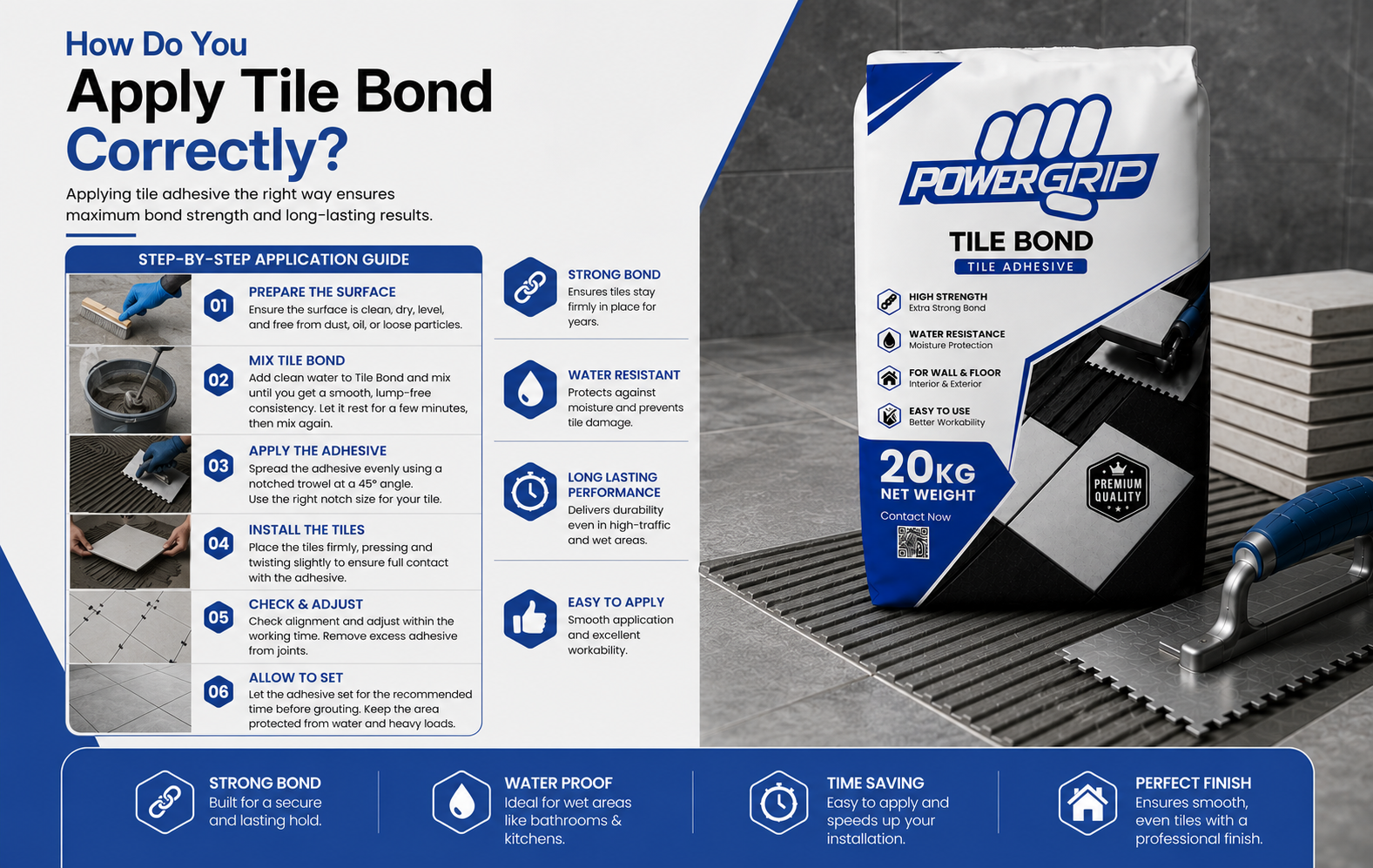
How Do You Apply Tile Bond Correctly?
Proper application is just as important as selecting the right adhesive.
Even a premium product can fail if installation is not done correctly.
Step 1: Prepare the Surface
The surface should be:
- Clean
- Dry
- Level
- Dust free
- Oil free
- Structurally sound
Repair any cracks or loose areas before starting.
Step 2: Mix the Adhesive
For cement based tile adhesive:
- Add clean water according to the manufacturer’s instructions.
- Mix until smooth and lump free.
- Let the mixture rest for a few minutes if recommended.
- Remix before use.
Avoid adding extra water, as it reduces bonding strength.
Step 3: Apply the Adhesive
Use a notched trowel to spread the adhesive evenly.
Maintain a consistent thickness to ensure full tile support.
For large format tiles, apply adhesive to both:
- The substrate
- The back of the tile (back buttering)
This method improves coverage and minimizes hollow spots.
Step 4: Install the Tiles
Press each tile firmly into place with slight twisting motion.
Use tile spacers to maintain even grout lines.
Regularly check alignment with a spirit level.
Step 5: Allow Proper Curing
Avoid walking on newly installed floor tiles until the adhesive has cured.
Curing time depends on:
- Product type
- Temperature
- Humidity
- Tile size
Following the manufacturer’s recommendations helps achieve maximum bonding strength.
What Are the Most Common Tile Installation Mistakes?
Many tile failures are caused by installation errors rather than poor-quality materials.
Avoid these common mistakes:
Using Ordinary Cement Instead of Tile Adhesive
Traditional cement mortar often lacks the bonding strength required for modern porcelain and large-format tiles.
Applying Adhesive on a Dirty Surface
Dust, grease, paint, and loose particles reduce adhesion.
Always clean the substrate thoroughly.
Incorrect Mixing Ratio
Adding too much water weakens the adhesive.
Follow the recommended water-to-powder ratio.
Using the Wrong Trowel Size
A trowel that is too small may leave insufficient adhesive beneath the tile.
Choose the notch size recommended for the tile dimensions.
Not Filling the Entire Back of the Tile
Voids beneath the tile can cause:
- Cracking
- Hollow sounds
- Tile breakage
- Water penetration
Proper adhesive coverage improves durability.
Skipping Expansion Joints
Buildings naturally move over time.
Without movement joints, tiles may crack or lift.
Walking on Tiles Too Soon
Allow the adhesive to cure fully before applying weight.
Premature traffic can weaken the bond.
Which Features Should You Look for Before Buying Tile Adhesive?
Instead of choosing based only on price, compare products according to performance.
Essential Features
✔ High bonding strength
✔ Water resistance
✔ Crack resistance
✔ Flexible formulation
✔ Easy application
✔ Low shrinkage
✔ Long working time
✔ Strong vertical grip
✔ Excellent durability
✔ Compatibility with your tile type
A quality adhesive saves money by reducing future repairs and replacement costs.
Which Type of Tile Adhesive Should You Choose?
The best choice depends on your project requirements.
Project | Recommended Adhesive |
Ceramic floor tiles | Cement-based tile adhesive |
Porcelain flooring | Polymer-modified tile adhesive |
Marble installation | Premium marble tile adhesive |
Granite flooring | Heavy-duty tile bond |
Bathroom walls | Waterproof tile adhesive |
Kitchen floor | High-strength tile bond |
Outdoor paving | Flexible weather-resistant adhesive |
Large format tiles | Large format tile adhesive |
Commercial flooring | Premium high-performance adhesive |
There is no single adhesive that suits every application. Matching the adhesive to the tile material and installation environment delivers the best results.
What Do Professionals Recommend for Long-Lasting Tile Installation?
Experienced tile installers follow a few proven practices that greatly improve durability.
Best Practices
- Buy adhesive from a trusted manufacturer.
- Select the adhesive according to tile type.
- Prepare the surface carefully.
- Use the correct notched trowel.
- Mix only the amount you can use within the working time.
- Check tile alignment frequently.
- Maintain proper grout spacing.
- Allow sufficient curing before use.
- Use expansion joints in large installations.
- Follow the manufacturer’s installation instructions.
Real-World Example
A homeowner installed porcelain tiles in a bathroom using ordinary cement mortar to save money.
Within a year, several tiles became loose due to constant exposure to moisture and temperature changes.
After replacing them with a waterproof, polymer-modified tile adhesive, the installation remained secure and crack-free for years.
This example highlights that investing in the right adhesive from the beginning often prevents expensive repairs later.
According to industry reports, tile failures are commonly caused by improper installation or the use of unsuitable adhesives rather than defective tiles.
Using polymer-modified tile adhesive can significantly improve bond strength and reduce maintenance costs over time.
What Should You Consider Before Buying Tile Adhesive?
Choosing the right adhesive is not just about selecting the highest-priced product.
The best option depends on your tile type, installation area, environmental conditions, and project budget.
Buying Checklist
Before making a purchase, consider the following:,
- Tile material (ceramic, porcelain, marble, granite, or vitrified)
- Tile size and thickness
- Indoor or outdoor installation
- Floor or wall application
- Wet or dry environment
- Surface type (concrete, cement board, plaster, or existing tiles)
- Expected foot traffic
- Working and curing time
- Manufacturer’s warranty
- Compliance with recognized quality standards
Reviewing these factors helps you choose a product that delivers reliable performance and long service life.
Professional tile installers generally recommend selecting tile adhesive based on tile type, substrate, moisture exposure, and expected load instead of choosing products solely by price.
Why Does Tile Adhesive Price Vary?
Many buyers compare products based only on price, but several factors influence the overall cost.
These include:
- Type of adhesive
- Polymer content
- Waterproof properties
- Bonding strength
- Flexibility
- Brand reputation
- Packaging size
- Intended application
Premium products generally cost more because they contain advanced additives that improve durability, moisture resistance, and bonding performance.
Instead of choosing the cheapest option, consider the long-term value.
A quality adhesive reduces maintenance costs and minimizes the risk of tile failure.
Which Mistakes Should You Avoid When Buying Tile Adhesive?
Many installation problems begin before the first tile is laid.
Avoid these common purchasing mistakes:
- Buying adhesive without checking tile compatibility
- Selecting indoor adhesive for outdoor projects
- Ignoring moisture exposure
- Choosing products based only on price
- Purchasing more material than required
- Using expired adhesive
- Skipping the manufacturer’s installation instructions
Making informed decisions at the buying stage can prevent expensive repairs later.
Many homeowners initially choose ordinary cement to save money, but after a few years, they often face loose tiles, hollow sounds, and costly repairs.
Investing in the right tile adhesive from the start usually provides better long-term value.
What Do Industry Experts Recommend?
Professional tile installers consistently emphasize that preparation is just as important as product selection.
Experts recommend:
- Preparing a clean, level substrate
- Using the correct adhesive for the tile type
- Applying adhesive with the proper notched trowel
- Ensuring full adhesive coverage beneath each tile
- Following the recommended curing time
- Using high-quality grout after installation
- Installing movement joints where required
These best practices improve adhesion, reduce cracking, and extend the life of the tiled surface.
Frequently Asked Questions
Which tile adhesive is best for porcelain tiles?
Polymer-modified tile adhesive is generally the preferred choice for porcelain tiles because it offers excellent bonding strength, flexibility, and durability. It performs especially well with large-format porcelain tiles.
Is tile adhesive better than cement?
Yes. Modern tile adhesive provides stronger adhesion, better flexibility, improved water resistance, and easier application than traditional cement mortar.
It is also suitable for a wider variety of tile materials and installation conditions.
Can tile adhesive be used for outdoor applications?
Yes. Outdoor installations require weather-resistant and flexible tile adhesive that can withstand moisture, temperature changes, and surface movement.
Always choose a product specifically designed for exterior use.
How long does tile adhesive take to dry?
Drying and curing times vary depending on the product, temperature, humidity, and tile size.
Most adhesives allow light foot traffic after about 24 hours, while full curing may take several days.
Always follow the manufacturer’s recommendations.
How much tile adhesive do I need?
The required quantity depends on:
- Tile size
- Surface condition
- Trowel notch size
- Adhesive thickness
- Installation method
As a general guideline, larger tiles require more adhesive than smaller tiles.
Checking the coverage information provided by the manufacturer helps estimate the correct quantity.
Conclusion
Choosing the best tile bond is one of the most important decisions for a successful tile installation.
A high-quality adhesive provides strong bonding, better flexibility, improved water resistance, and long-term durability for both residential and commercial projects.
Whether you are installing ceramic tiles in a living room, porcelain tiles in a bathroom, marble in a luxury home, or granite in a commercial building, selecting the right adhesive for the specific application delivers better results and reduces future maintenance costs.
Before purchasing, compare the tile material, installation surface, moisture exposure, and performance requirements instead of focusing only on price.
A well-matched adhesive, combined with proper installation techniques, ensures that your tiled surfaces remain secure, attractive, and durable for many years.
If you are planning your next renovation or construction project, invest in a premium-quality tile adhesive and follow professional installation practices to achieve a finish that stands the test of time.