
PowerGrip Tile Bond in Pakistan: Features, Benefits, Applications & Complete Installation Guide
Jump To
PowerGrip Tile Bond in Pakistan: Features, Benefits, Applications & Complete Installation Guide
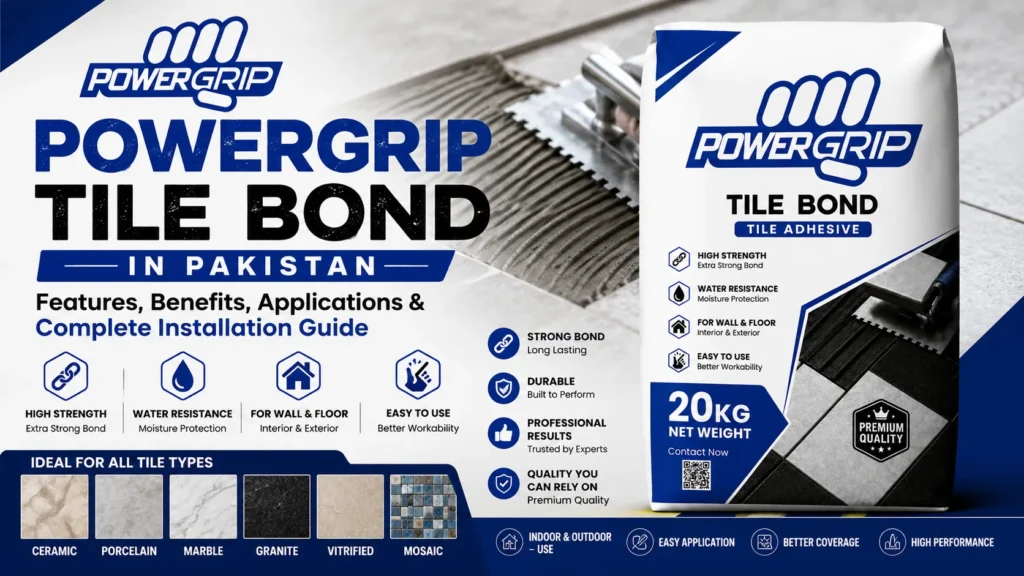
Tiles are one of the most popular flooring and wall finishing solutions used in homes, commercial buildings, offices, hospitals, educational institutions, and retail projects across Pakistan. However, even the highest-quality tiles can fail if they are not installed using the right adhesive.
This is where PowerGrip Tile Bond plays an important role. Modern tile installations require strong adhesion, durability, flexibility, and resistance to moisture. Traditional cement-sand mortar methods may still be used in some projects, but many contractors and builders now prefer tile adhesives because they offer more consistent performance and better long-term results.
PowerGrip Tile Bond is designed to provide a strong bond between tiles and various surfaces while helping reduce common installation problems such as tile debonding, hollow spots, cracking, and uneven placement.
In this guide, you will learn what PowerGrip Tile Bond is, where it can be used, its key benefits, installation best practices, comparisons with traditional methods, and why it has become a preferred choice for modern construction projects in Pakistan.
What Is PowerGrip Tile Bond?
PowerGrip Tile Bond is a cement-based tile adhesive developed for the installation of ceramic, porcelain, vitrified, and other modern tile types on floors and walls. Unlike conventional cement-sand mortar, tile adhesives are formulated with carefully selected additives and bonding agents that improve adhesion, flexibility, and durability.
PowerGrip Tile Bond is a professional tile adhesive that helps create a stronger and more reliable bond between tiles and substrates compared to traditional installation methods. Its purpose is to improve tile performance, reduce installation failures, and support long-lasting tile applications in residential and commercial environments.
Why Has Tile Installation Changed in Modern Construction?
The construction industry has changed significantly over the past decade. Modern tiles are larger, denser, and often less porous than traditional ceramic tiles. Porcelain and vitrified tiles, in particular, require stronger bonding solutions because they absorb very little water.
Traditional mortar methods may not always provide the level of adhesion required for these modern materials. As a result, professional installers increasingly use tile adhesives because they offer:
- Better adhesion
- Improved workability
- Enhanced durability
- Faster installation
- More consistent results
This shift has made tile bond products an essential part of modern construction practices.
What Are the Key Features of PowerGrip Tile Bond?
Several characteristics make PowerGrip Tile Bond suitable for a wide range of tile installation projects.
Strong Adhesion Performance
A tile adhesive must hold tiles firmly in place for many years. PowerGrip Tile Bond is formulated to create a strong bond between the tile and substrate, helping reduce the risk of tile movement and detachment.
Improved Flexibility
Buildings naturally expand and contract due to temperature changes and structural movement. A flexible adhesive layer can help accommodate minor movement without placing excessive stress on the tiles.
Consistent Application
Installers generally prefer materials that mix easily and spread smoothly. PowerGrip Tile Bond is designed to provide a workable consistency that supports accurate tile placement.
Moisture Resistance
Moisture is one of the most common causes of tile installation problems. A quality tile adhesive helps maintain bonding performance in moisture-prone areas such as bathrooms, kitchens, balconies, and utility spaces.
Compatibility with Modern Tiles
Modern tile projects often involve porcelain, vitrified, and large-format tiles. PowerGrip Tile Bond is suitable for a variety of tile types commonly used in Pakistan.
PowerGrip Tile Bond Technical Specifications
The exact specifications may vary depending on the product variant and project requirements. The following table provides a general overview of common tile adhesive characteristics.
Property | Details |
Product Type | Cement-Based Tile Adhesive |
Application | Wall & Floor Installation |
Suitable Tiles | Ceramic, Porcelain, Vitrified |
Usage Area | Indoor & Outdoor |
Bonding Performance | High Adhesion |
Moisture Resistance | Yes |
Professional Application | Recommended |
Residential Projects | Suitable |
Commercial Projects | Suitable |
Surface Compatibility | Multiple Substrates |
Always refer to the product packaging and manufacturer recommendations for project-specific guidance.
Where Can PowerGrip Tile Bond Be Used?
One of the advantages of tile adhesive systems is their versatility.
Residential Applications
PowerGrip Tile Bond can be used in various residential spaces including:
- Living rooms
- Bedrooms
- Kitchens
- Bathrooms
- Staircases
- Rooftops
- Balconies
Commercial Applications
Commercial projects often require dependable tile installation systems. Common applications include:
- Shopping malls
- Corporate offices
- Hotels
- Educational institutions
- Hospitals
- Retail stores
Renovation Projects
Tile adhesives are often preferred in renovation projects where improved adhesion and efficient installation are important considerations.
Which Tile Types Work Best with PowerGrip Tile Bond?
Different tiles have different installation requirements.
Ceramic Tiles
Ceramic tiles remain a popular choice for both walls and floors. PowerGrip Tile Bond provides reliable adhesion for ceramic tile installations.
Porcelain Tiles
Porcelain tiles are denser and absorb less water than ceramic tiles. Because of this, many professionals prefer tile adhesives rather than traditional mortar.
Vitrified Tiles
Vitrified tiles require strong and consistent bonding due to their density and surface characteristics. Tile adhesive systems help achieve better installation performance.
Large Format Tiles
Large-format tiles place greater demands on the bonding layer. Using a quality tile adhesive helps support long-term stability and alignment.
Why Do Contractors Choose PowerGrip Tile Bond?
Professional installers often evaluate products based on performance, consistency, and ease of application. Many contractors prefer tile adhesives that provide enough working time to position and align tiles properly before the material begins setting. On residential and commercial projects, installers generally look for products that offer:
- Reliable bonding performance
- Consistent mixing characteristics
- Reduced tile slippage
- Better tile alignment
- Improved installation efficiency
- Long-term durability
These practical benefits contribute to the growing adoption of tile adhesive systems across Pakistan.
PowerGrip Tile Bond vs Traditional Cement-Sand Mortar
Many property owners ask whether tile adhesive is actually better than conventional mortar. The answer depends on the project, tile type, and performance expectations.
Feature | PowerGrip Tile Bond | Traditional Cement-Sand Morta |
Bond Strength | High | Moderate |
Application Thickness | Thin Bed | Thick Bed |
Tile Slippage | Lower | Higher |
Installation Speed | Faster | Slower |
Flexibility | Better | Limited |
Moisture Resistance | Better | Moderate |
Suitable for Porcelain Tiles | Yes | Often Challenging |
Consistency | Controlled | Varies On Site |
Long-Term Performance | Excellent | Moderate |
Maintenance Risk | Lower | Higher |
For many modern tile installations, tile adhesive systems offer significant performance advantages.
PowerGrip Tile Bond vs Generic Tile Adhesives
Not all tile adhesives are manufactured to the same standards.
Feature | PowerGrip Tile Bond | Generic Tile Adhesives |
Quality Consistency | Reliable | May Vary |
Adhesion Performance | Strong | Product Dependent |
Moisture Resistance | Enhanced | Varies |
Application Quality | Consistent | Inconsistent In Some Cases |
Tile Compatibility | Multiple Tile Types | Depends On Product |
Professional Preference | Commonly Used | Varies By Brand |
When selecting any tile adhesive, it is important to review technical data and installation recommendations.
How Does PowerGrip Tile Bond Improve Tile Durability?
Tile durability depends on several factors, including installation quality, substrate preparation, environmental conditions, and adhesive performance. A quality tile adhesive contributes to durability by:
Improving Bond Strength
A stronger bond helps keep tiles securely attached over time.
Reducing Hollow Areas
Proper adhesive coverage reduces voids beneath tiles.
Supporting Load Distribution
Even load distribution helps reduce stress concentrations.
Enhancing Moisture Protection
Moisture resistance helps maintain adhesive integrity in wet environments.
Minimizing Installation Defects
Consistent application can reduce the likelihood of common installation issues.
How to Apply PowerGrip Tile Bond Correctly
Proper installation is just as important as selecting the right product.
Step 1: Prepare the Surface
The substrate should be:
- Clean
- Dry
- Structurally sound
- Free from grease
- Free from dust
- Free from loose particles
Step 2: Mix the Adhesive
Follow the manufacturer’s instructions regarding water quantity and mixing procedures. Mix until a smooth and lump-free consistency is achieved.
Step 3: Apply Using a Notched Trowel
Spread the adhesive evenly using a suitable notched trowel. The trowel size should correspond to the tile dimensions.
Step 4: Install the Tiles
Press tiles firmly into the adhesive bed while maintaining alignment and spacing.
Step 5: Check Alignment
Adjust tiles before the adhesive begins setting.
Step 6: Allow Proper Curing
Follow manufacturer recommendations before grouting or exposing the surface to traffic.
Common Tile Installation Problems That Tile Bond Can Help Reduce
Proper tile adhesive selection can help minimize several common issues.
Tile Debonding
Weak adhesion may eventually cause tiles to detach.
Hollow Sounds
Insufficient bonding beneath tiles often creates hollow spots.
Tile Cracking
Poor installation practices and inadequate bonding can contribute to cracking.
Uneven Tile Placement
Modern adhesives help support accurate positioning.
Moisture-Related Problems
Wet areas benefit from improved adhesive performance.
Storage and Handling Recommendations
Proper storage contributes to product performance. Recommended practices include:
- Store bags in a dry area.
- Protect materials from rain and moisture.
- Keep packaging sealed until use.
- Avoid direct ground contact during storage.
- Follow manufacturer handling instructions.
Using properly stored material helps maintain installation quality.
Important Considerations Before Using PowerGrip Tile Bond
While PowerGrip Tile Bond is suitable for many residential and commercial applications, every project has unique requirements.
Users should consider:
- Tile type
- Surface condition
- Environmental exposure
- Moisture levels
- Project specifications
- Manufacturer recommendations
Specialized industrial environments or unusual substrates may require project-specific adhesive solutions. Consulting experienced installers is always recommended for complex projects.
Is PowerGrip Tile Bond Suitable for Indoor and Outdoor Use?
Yes, PowerGrip Tile Bond can be used for many indoor and outdoor tile installations when applied according to manufacturer guidelines and project requirements. Common areas include:
- Bathrooms
- Kitchens
- Living spaces
- Balconies
- Commercial flooring
- Wall installations
Proper substrate preparation remains essential regardless of the application area.
Frequently Asked Questions
What is PowerGrip Tile Bond used for?
PowerGrip Tile Bond is used for installing ceramic, porcelain, vitrified, floor, and wall tiles in residential and commercial projects.
Can PowerGrip Tile Bond be used in bathrooms?
Yes. It is commonly used in bathrooms, kitchens, and other moisture-prone areas.
Is PowerGrip Tile Bond suitable for porcelain tiles?
Yes. Porcelain tiles are one of the common applications for tile adhesive systems.
Why do professionals use tile adhesive instead of cement mortar?
Tile adhesives generally provide stronger adhesion, better flexibility, and more consistent installation performance.
Can PowerGrip Tile Bond be used outdoors?
Yes, many outdoor tile installations can utilize tile adhesive systems when proper installation procedures are followed.
How should PowerGrip Tile Bond be stored?
It should be stored in a dry, protected environment away from moisture and adverse weather conditions.
Conclusion
Modern tile installations demand more than traditional cement-sand mortar can consistently provide. As tile technology continues to evolve, professional installers increasingly rely on high-performance tile adhesives that offer stronger bonding, improved durability, and greater installation reliability.
PowerGrip Tile Bond is designed to support a wide range of residential and commercial tile applications across Pakistan. Its strong adhesion, compatibility with modern tile types, moisture resistance, and installation efficiency make it a practical solution for contractors, builders, architects, and homeowners alike.
Whether you are installing ceramic tiles in a home, porcelain tiles in a commercial space, or vitrified tiles in a modern construction project, selecting the right adhesive is essential for long-term performance. By following proper installation practices and project-specific recommendations, PowerGrip Tile Bond can help create durable and professional tile installations that stand the test of time.

admin